
Stile
#2854
Fujifilm Neopan 100: Stilreferenz und Prompts
Entdecken Sie die Stilreferenz „Fujifilm Neopan 100“ mit Mauerwerksstrukturen, einer monochromen Farbpalette und einer matten Oberfläche. Sehen Sie sich die Bilder an, kopieren Sie den Stil- oder Beispiel-Prompt und erkunden Sie weitere Stile auf Looksift.
Vergleichen Sie die Beispiele von Qwen Image 2.1 und GPT Image 2.5, wählen Sie die gewünschten Bildeigenschaften und kopieren Sie den Stil-Prompt für Ihr Projekt.
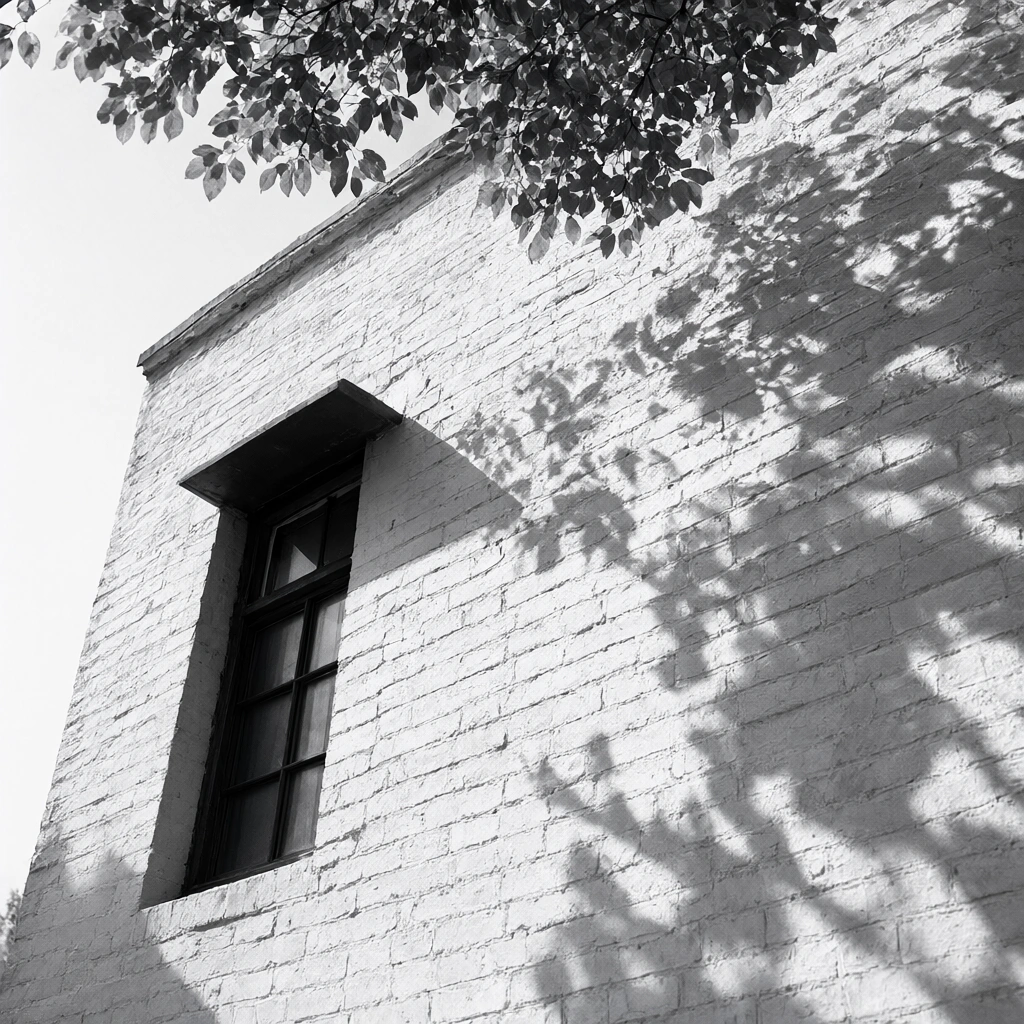 Qwen Image 2.1
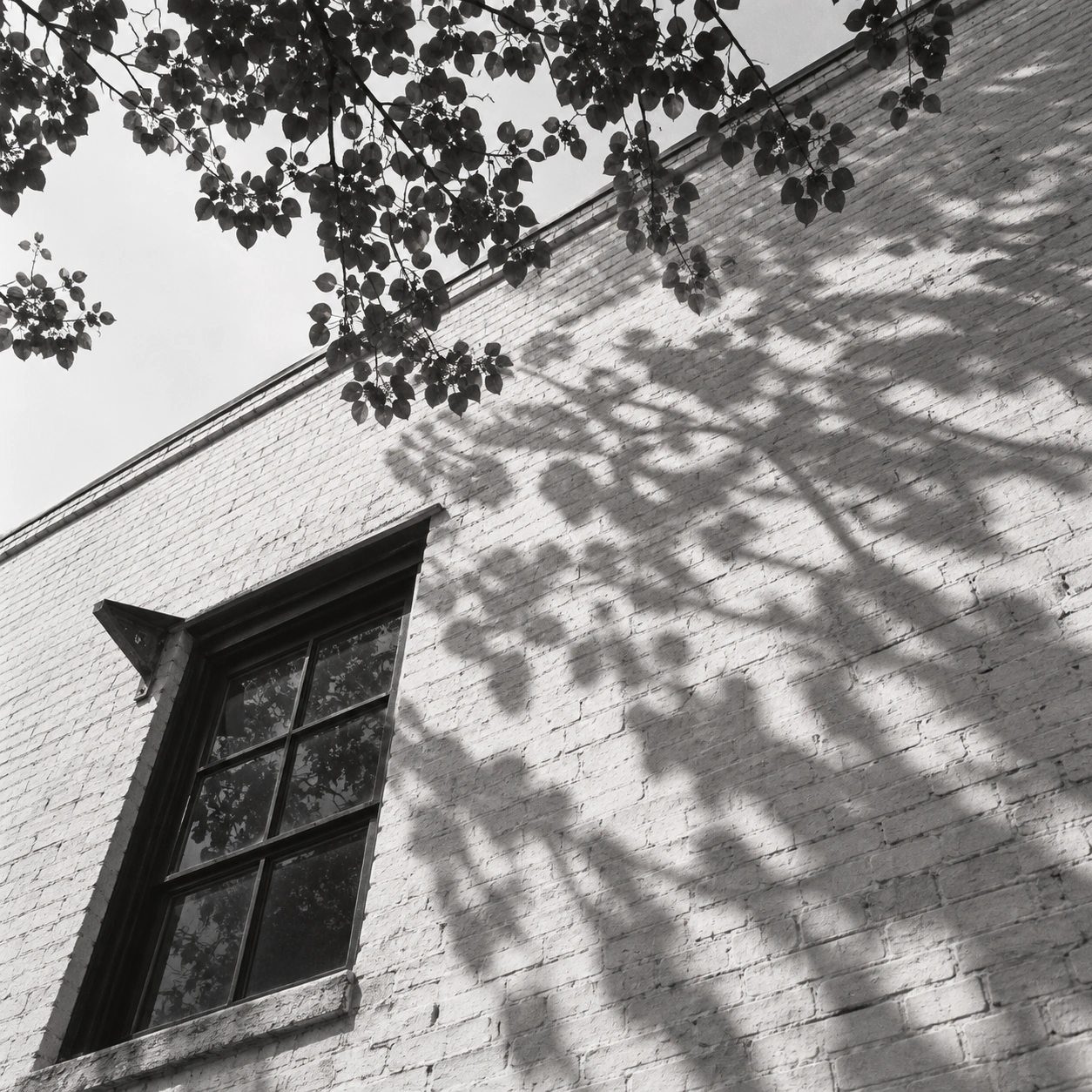 GPT Image 2.5
Referenzinformationen
- Referenz-ID
- 2854
- Kategorie
- Fotorealismus
Referenz-Prompts
Stil-Prompt
Tagged with ID 2854, this style involves daylit monochrome photography that discovers graphic structure in a few ordinary planes and cast natural shadows. The subject features pale textured masonry or a similar matte surface with dark rectangular openings, diagonal edges, and overlapping leaf patterns. Hard sunlight defines recognizable shadows, while slight softness keeps their edges photographic. Fine grain and mid-gray weathering retain material detail inside bright fields. An upward or oblique viewpoint allows familiar straight lines to tilt, creating dynamic geometry with very few objects. Nearby leaves can appear in a separate plane from their large shadows on the wall. The result is a spare, observational, and tactile composition, balancing strong black-white contrast with nuanced surface tone.Vollständiger Beispiel-Prompt
This image is a square black-and-white photograph that looks upward at a pale brick building with one dark rectangular window. The window occupies the lower left and has a black frame divided into smaller panes. A short angled projection or shade extends from its upper left. The wall rises diagonally toward the upper right, meeting a bright nearly blank sky at the far left. Overhanging branches with many small rounded leaves enter from the top. Sunlight passes through them, casting large soft-edged leaf and branch shadows across the white brick. These shadows are an important subject in themselves, widening and overlapping as they cross the wall. The bricks remain visible beneath the shadows through thin mortar lines and modest surface grain. The strongest contrast is between the dark window, bright wall, and black leaf shapes overhead. The photograph is not perfectly rectilinear: the upward camera angle makes the roof and window lines slant, giving the familiar facade a dynamic geometry. Light is hard enough to cast recognizable tree forms, but the shadow edges retain a little optical softness. Mid-gray tones appear in the leaves and on weathered brick, preventing the image from feeling like a simple black-and-white graphic cutout. No person appears, and no wider street context is supplied. The composition is spare: one window, one wall, a sky corner, and the moving pattern of foliage. Fine analog-looking grain and crisp sunshine make the surface tactile. The scene feels like a brief observation of how afternoon light transforms ordinary architecture, with depth created by the gap between near leaves, their shadows, and the solid wall.