
Styles
#0049
Louise Balaam style reference and prompts
Explore the “Louise Balaam” reference with scraped paint texture, tactile surfaces, and simplified forms. View the images, copy the style or example prompt, and discover related styles on Looksift.
Compare the Qwen Image 2.1 and GPT Image 2.5 examples, choose the visual qualities you want, and copy the style prompt for your own project.
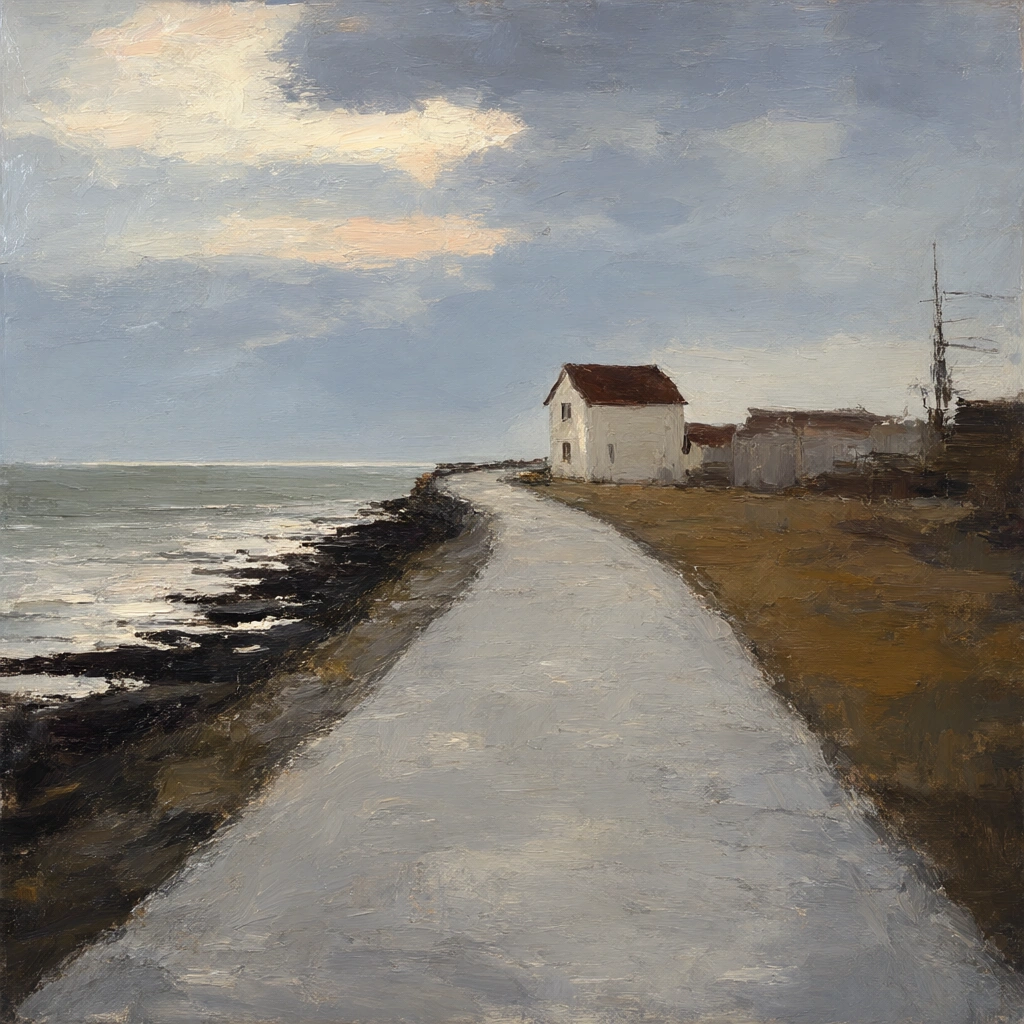 Qwen Image 2.1
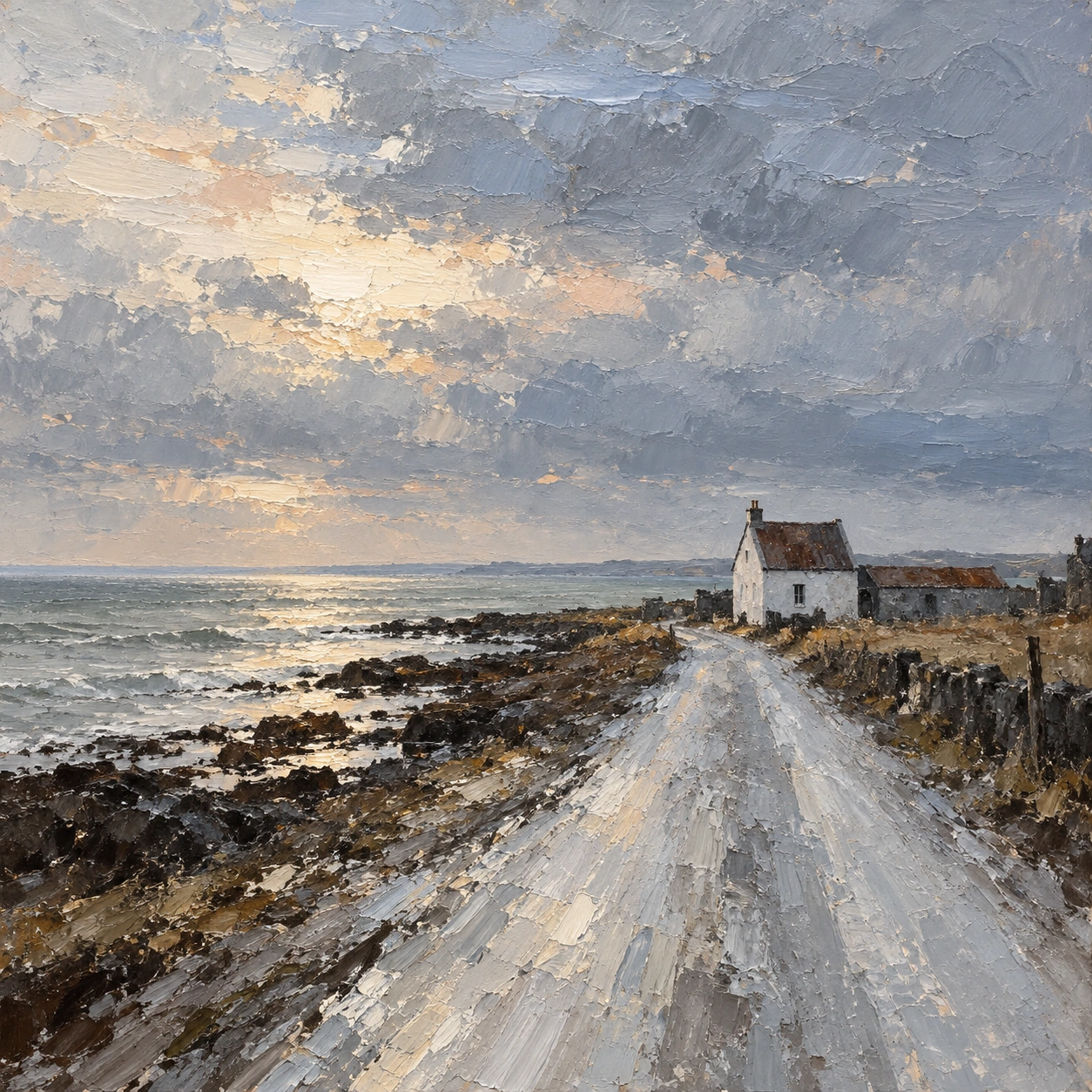 GPT Image 2.5
Reference details
- Reference ID
- 0049
- Category
- Painting
Reference prompts
Style prompt
Expressive oil painting combines broad atmospheric colour with thick broken deposits and scraped edges. Cool blue-grey, creamy white, muted earth brown, and restrained yellow-ochre form a limited palette, with small warm passages within larger cool areas. Directional strokes follow major planes while incidental marks remain loose. Soft light emerges through adjacent value masses rather than polished gradients, and dark accents anchor pale expanses without outlining every form. The overall composition favours quiet intervals interrupted by tactile ridges and vigorous local gestures, giving simple shapes solidity and atmospheric softness.Full example prompt
The image is an expressive oil painting of a pale coastal road leading toward a small white house beneath a broad grey-blue sky. The background combines thinly blended colour with thicker dragged strokes, and the sky occupies most of the upper half. Across the top, cool blue-grey paint gathers into horizontal cloud masses, their soft edges broken by visible brush or palette-knife movement. Toward the upper-left and centre, pale cream and warm peach patches open between clouds, suggesting low sunlight behind the overcast. The horizon sits well below the middle, where a narrow strip of quiet water meets the softened sky. On the left, the sea extends toward the edge in subdued grey-green and silver bands, without sharply separated individual waves. A dark shoreline curves inward from the lower-left, its black-brown marks alternating with pale strips that could be foam, wet stone, or reflected sky. Near the centre, the road begins at the distant buildings and broadens toward the viewer, forming a light wedge through darker coastal ground. Its surface is cool pale grey with creamy highlights and faint streaks following the direction of travel. Slightly right of centre, a small upright house stands beside the road, its off-white wall contrasting with a dark reddish-brown roof. A tiny dark window and narrow vertical accents suggest simple openings, but no readable signs interrupt the scene. Farther right, a lower building or attached structure extends horizontally, with a subdued warm roofline close to the horizon. Around the buildings, dull ochre and brown ground provides a modest warm counterweight to the sea and sky. Along the right edge, darker vertical and horizontal marks loosely indicate boundaries and the continuation of the settlement beyond the crop. Across the foreground, scraped and layered paint gives the road and shore tactile presence without defining every stone or patch of grass. The road remains the clearest directional element, while the small buildings allow the weather and surrounding space to dominate. The lighting is soft, low daylight filtered through clouds, with warmth in the sky reflected faintly across the wet-looking shore and pale road. Broad, subdued shadows rely on shifts between cool grey, dark earth, and creamy light instead of crisp outlines. The overall composition uses spacious sky and a converging pale road to balance quiet coastal distance with rough painterly texture and a restrained, unsettled calm.