
Styles
#0062
Jan van Haasteren style reference and prompts
Explore the “Jan van Haasteren” reference with geometric forms, repeated linear rhythms, and pale neutral tones. View the images, copy the style or example prompt, and discover related styles on Looksift.
Compare the Qwen Image 2.1 and GPT Image 2.5 examples, choose the visual qualities you want, and copy the style prompt for your own project.
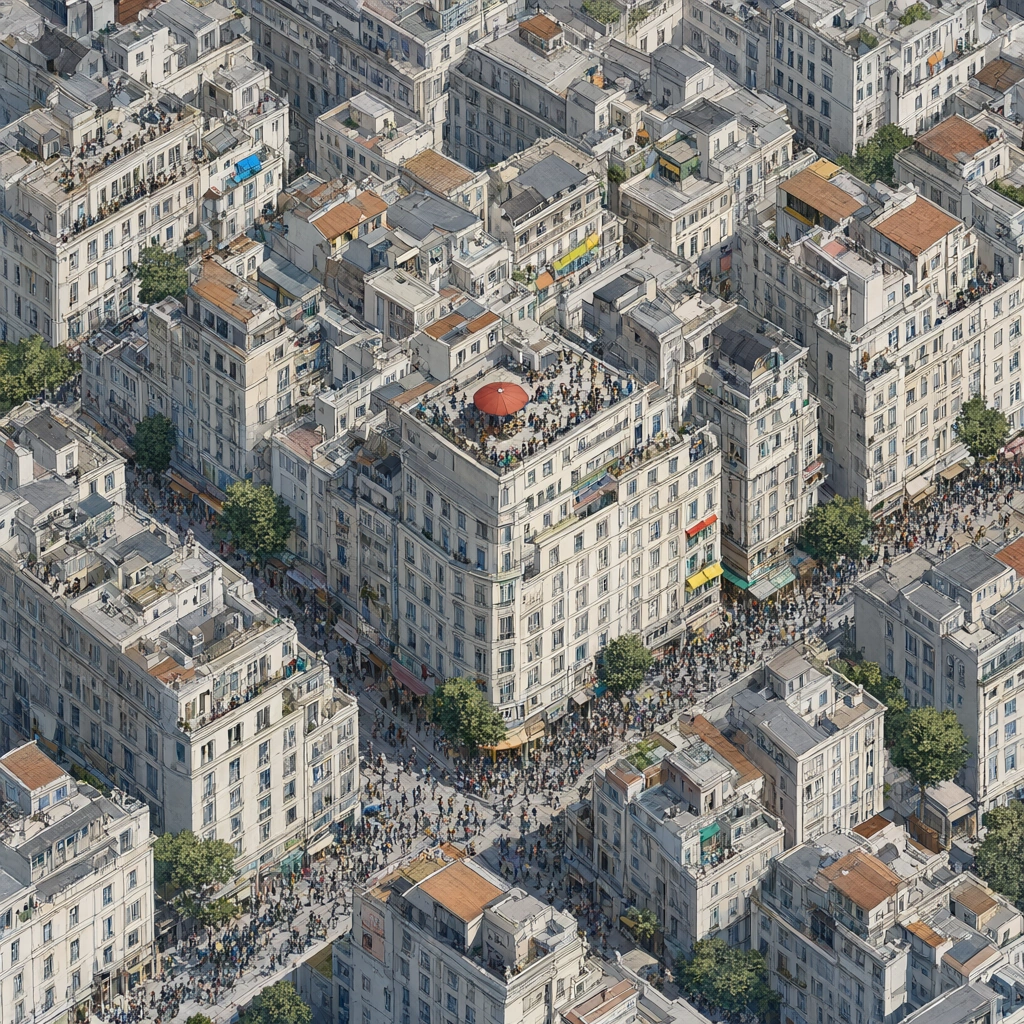 Qwen Image 2.1
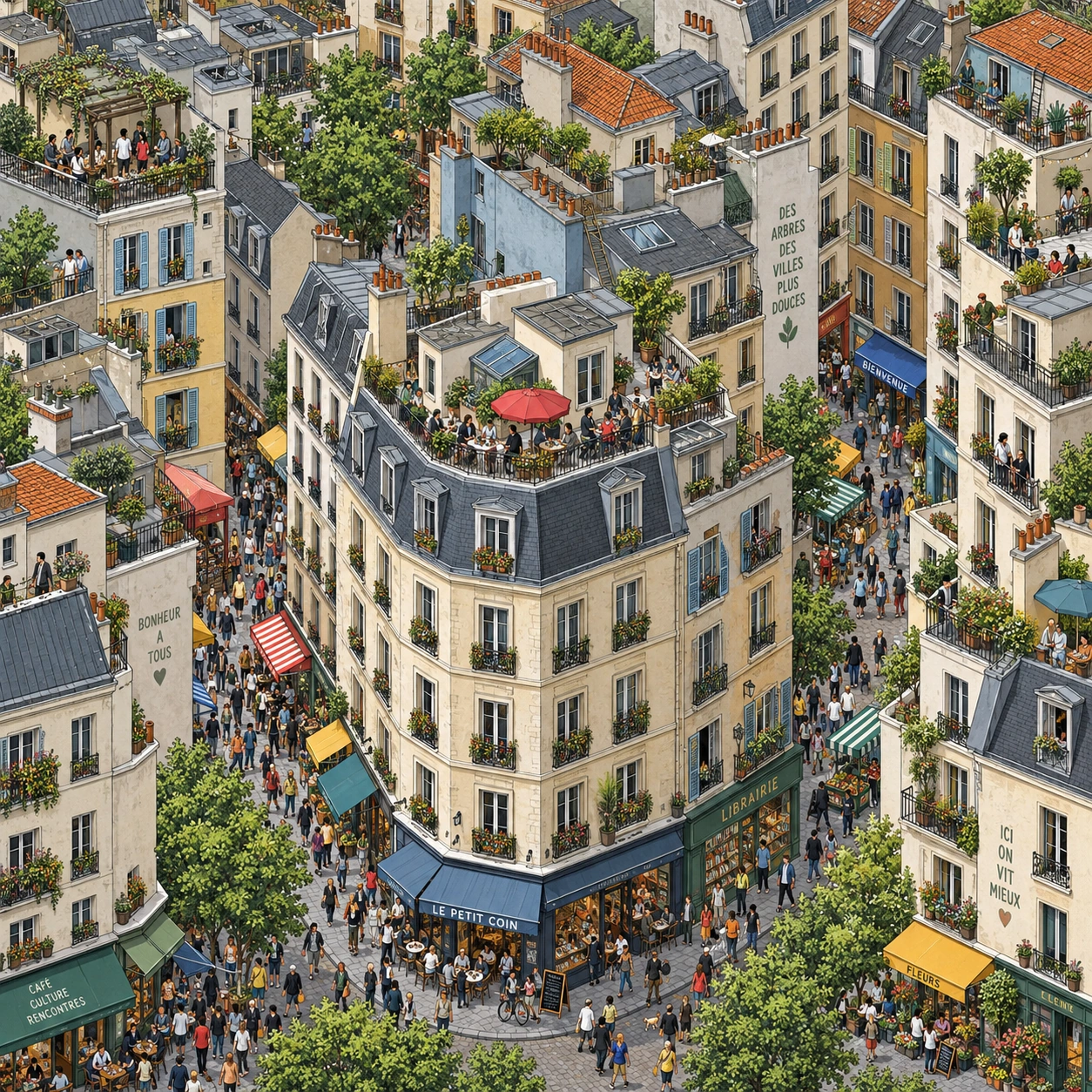 GPT Image 2.5
Reference details
- Reference ID
- 0062
- Category
- Flat illustration
Reference prompts
Style prompt
The isometric illustration uses precise outlines, repeated geometric units and many small variations within a tightly controlled structure. Muted stone, cream, grey-green and blue tones provide a steady base, with occasional brighter accents distributed across the surface. Fine details remain crisp at multiple scales, while repeated edges and angled planes make the dense image readable. Light is even and restrained; short shadows separate overlapping levels without obscuring their outlines. The overall visual language is intricate but orderly, balancing repetition with irregular clusters and carefully spaced colour notes.Full example prompt
The square image is a densely detailed isometric illustration of a miniature urban block, viewed from above at an oblique angle. Pale stone and painted façades rise in close rows around a narrow central street, their rooflines stepping upward toward the top edge. The buildings vary in height and shape: some have flat roofs with terraces, others carry dark pitched roofs, small dormers or box-like rooftop structures. Windows form repeated grids in cream, blue-grey, ochre and muted teal, with a few open shutters and tiny awnings adding colour. The largest pale building occupies the centre foreground, its angled corner facing the viewer and its roof terrace crowded with minute figures. More people line the balconies and upper walkways at left and right, while dense streams of pedestrians fill the street below. At this scale, individual clothing is not fully legible, but the small silhouettes vary in posture and colour, suggesting people standing, moving and gathering at railings. Near the centre, a round red parasol sits on a rooftop terrace, distinct from the many small yellow, blue and green awnings scattered across the façades. Compact green trees soften the lower corners and appear between the buildings. Narrow lanes and tiny ground-level stalls weave through the architecture, though their small signs are too indistinct to read. The scene uses fine, dark outlines to separate façades, roof edges, windows and ledges. Cool grey, cream and muted green dominate, while terracotta roofs and bright fabric accents provide scattered warmth. Light is even and daylight-like, with short shadows beneath roof overhangs and balconies that preserve the layered depth. Despite the crowding, the image remains carefully organized: repeated windows and parallel roof lines create order, while irregular building heights and pedestrian clusters keep the surface lively. The façades turn at sharp angles, exposing two sides of each corner block at once. Narrow sidewalks and tiny shopfronts run beneath the upper storeys, while small roof structures and rooftop furnishings occupy the ledges above. Tree crowns form soft green interruptions among the hard edges, most visibly near the lower corners and beside the central block. The fine scale invites close reading, but no single small sign or face is large enough to identify. Small colored awnings punctuate the pale walls and make the street grid easier to follow. The overall composition compresses a complex miniature city into a coherent square view, balancing dense architectural detail with small pockets of trees, colour and open street space.