
Styles
#0076
Edwin Henry Landseer style reference and prompts
Explore the “Edwin Henry Landseer” reference with tactile surfaces, pale neutral tones, and luminous accents. View the images, copy the style or example prompt, and discover related styles on Looksift.
Compare the Qwen Image 2.1 and GPT Image 2.5 examples, choose the visual qualities you want, and copy the style prompt for your own project.
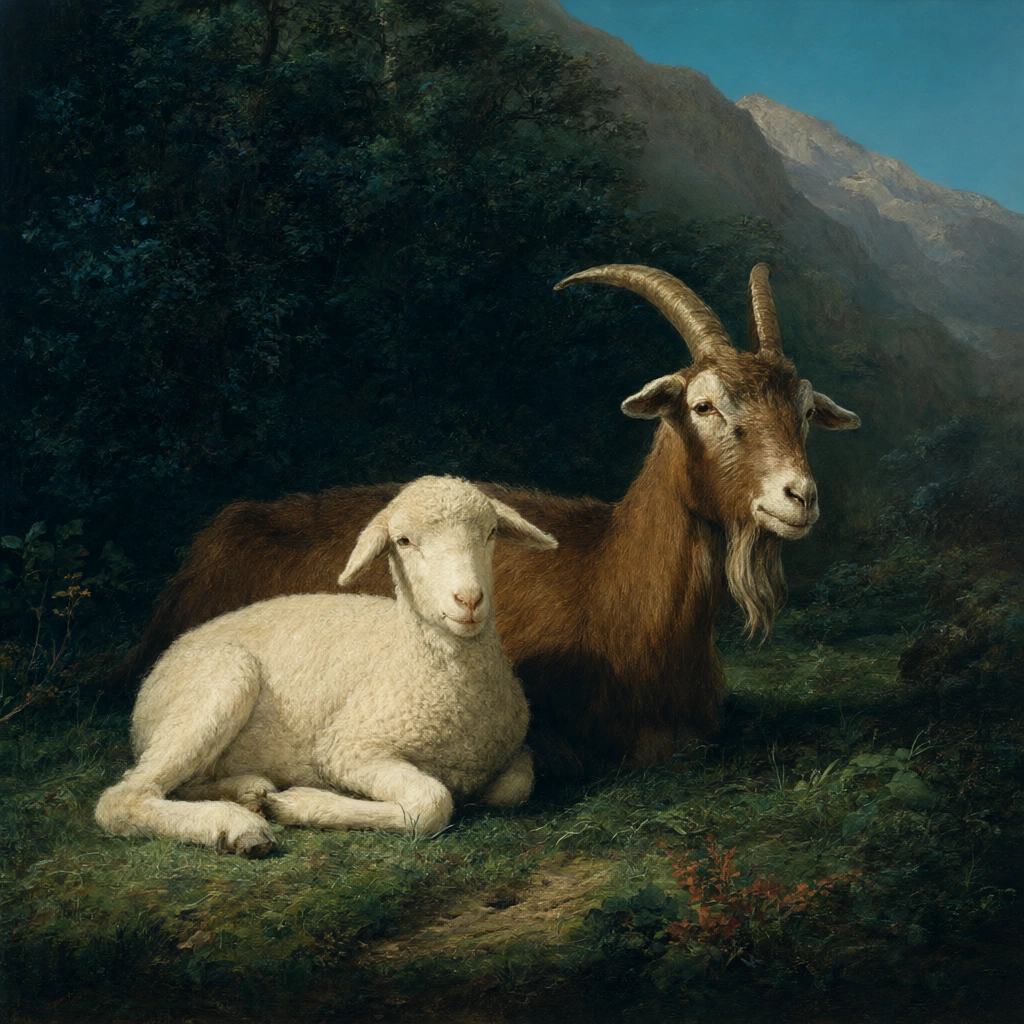 Qwen Image 2.1
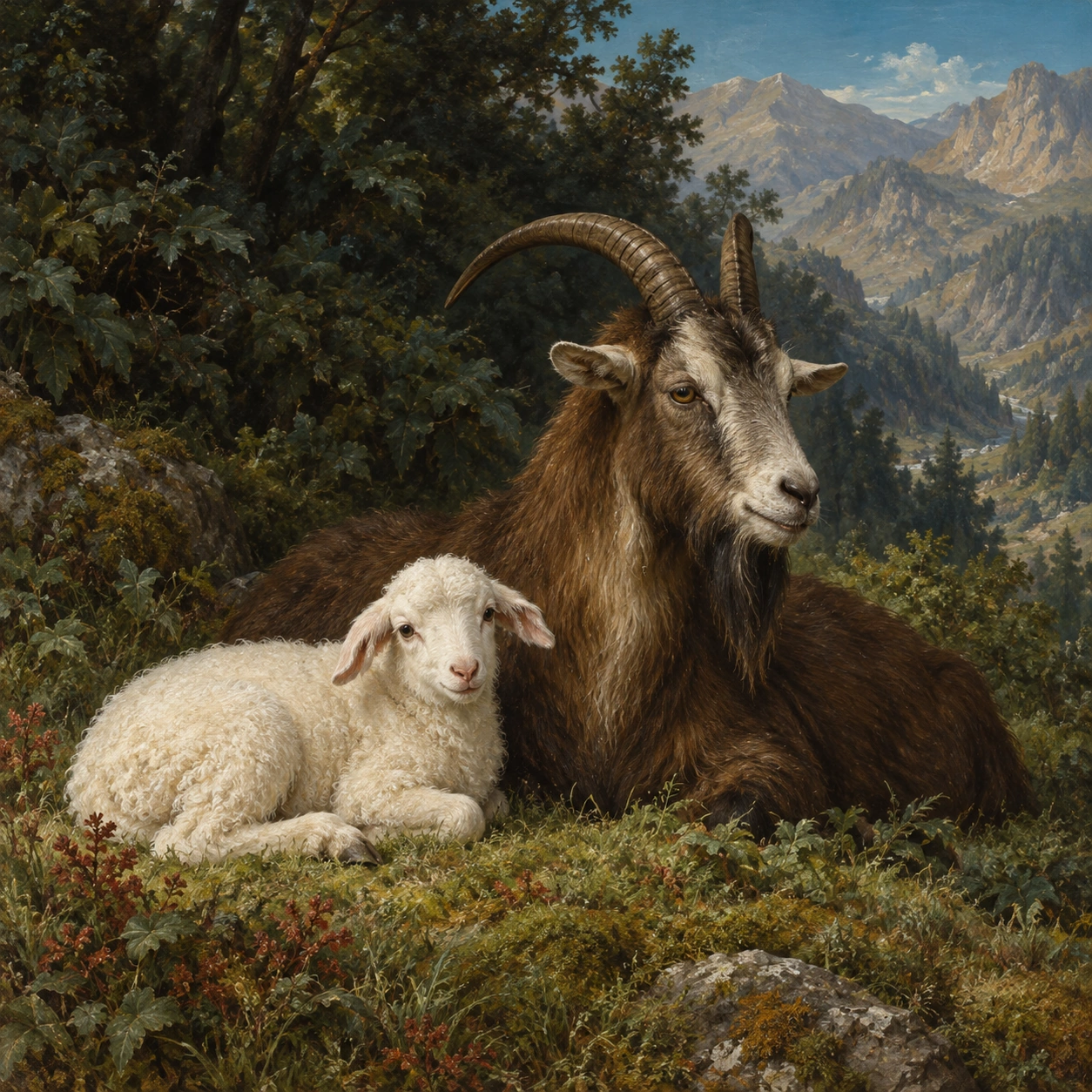 GPT Image 2.5
Reference details
- Reference ID
- 0076
- Category
- Painting
Reference prompts
Style prompt
The traditional naturalistic painting uses softly blended modelling, deep cool shadows and selective warm highlights. Blue-green and charcoal masses provide a dark setting for ivory, warm brown and muted ochre passages. Fine short marks distinguish tactile surface textures near the focal area, while distant transitions remain softer and less detailed. Contours alternate between clearly illuminated edges and passages that merge into shadow. Diffuse light preserves rounded volume without harsh outlines, and small rusty accents break the otherwise subdued colour field. The overall treatment is intimate and balanced, combining careful observation with broad atmospheric depth.Full example prompt
A traditional naturalistic animal painting shows a small white lamb resting beside a larger brown horned goat in a shaded mountain clearing. Dense blue-green foliage fills the left background, while a distant rocky valley opens behind the animals toward the upper right. A narrow area of deep turquoise sky appears above the mountain slopes rather than covering the entire background. The pale brown ridges rise through a soft haze, contrasting with the nearly black-green trees nearer the clearing. In the foreground, low grass and moss spread over uneven ground, interspersed with small rusty-red plants and muted ochre patches. The lamb lies across the lower-left area with its legs tucked beneath its rounded body. Its short fleece is ivory-white, with gentle cream shadows along the belly and flank. The head is held upright and turned slightly toward the viewer, showing a pale muzzle, soft drooping ears and dark eyes. Immediately behind and to its right, the larger goat has a broad brown body that remains low against the vegetation. Its legs are concealed, leaving the raised chest, neck and head as the clearest parts of the pose. A darker beard hangs below a pale grey-cream face, and the long muzzle angles slightly toward the right. Two ridged horns rise above the head with different visible curves: the horn on the left makes a broad outward arch, while the horn on the right appears narrower and more upright. Pale ears project beneath them. The brown fur shifts from warm highlights along the neck to dense shadow lower on the body. The animals form a compact group rather than isolated silhouettes, their light faces and the lamb’s pale back standing out against the surrounding dark foliage. Small strokes distinguish grass, low leaves and fur, while the distant mountain contours remain softer. Diffuse light touches the fleece, faces and upper horn ridges, with deeper cool shade enclosing the clearing. The overall composition balances the low white lamb at the left with the larger raised horned head at the right, holding both within a sheltered green foreground beneath a receding rocky landscape.