
Styles
#0084
Csaba Markus style reference and prompts
Explore the “Csaba Markus” reference with layered fragments, soft tonal transitions, and pale neutral tones. View the images, copy the style or example prompt, and discover related styles on Looksift.
Compare the Qwen Image 2.1 and GPT Image 2.5 examples, choose the visual qualities you want, and copy the style prompt for your own project.
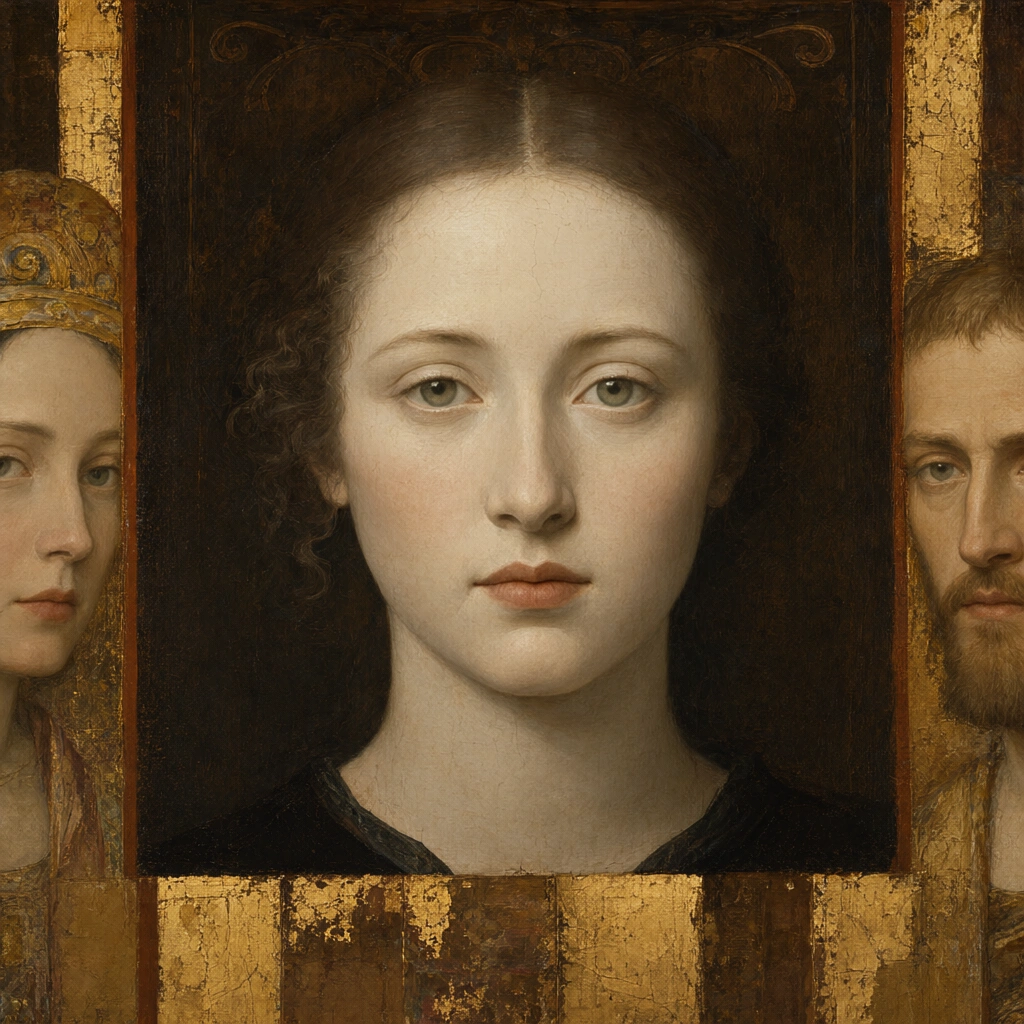 Qwen Image 2.1
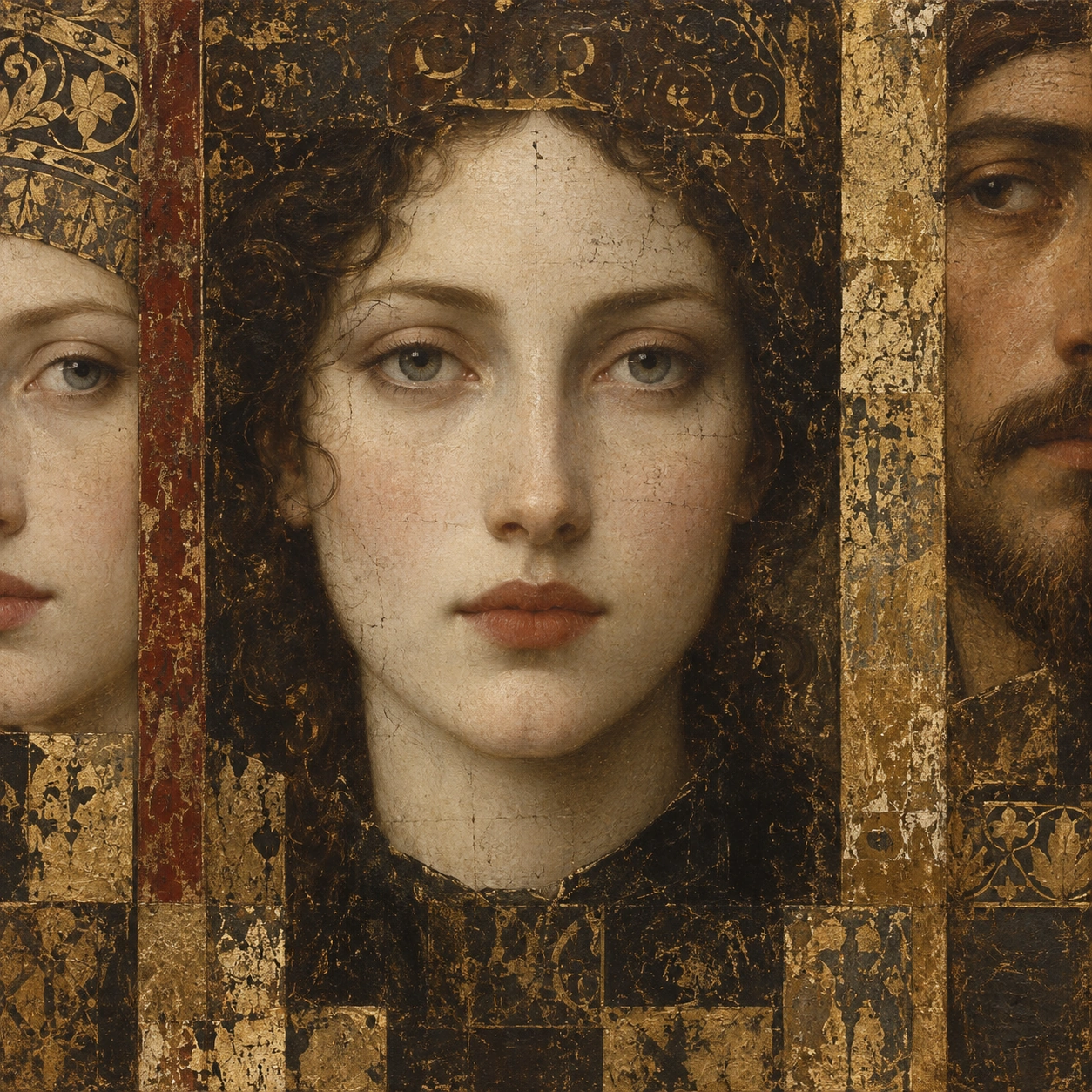 GPT Image 2.5
Reference details
- Reference ID
- 0084
- Category
- Painting
Reference prompts
Style prompt
The painting combines smooth, softly modelled tonal passages with dense antique-gold surface ornament. Ivory and muted terracotta accents emerge from dark umber, ochre and bronze, while narrow vertical divisions interrupt the image like layered fragments. Fine etched-looking lines, hairline cracks, abraded patches and semi-transparent stains remain visible across both light and dark areas. Depth is shallow: rounded modelling coexists with flat decorative pattern rather than opening into a large space. Soft frontal illumination creates quiet volume and subdued highlights. The overall design is frontal, intricate and contemplative, with aged metallic warmth and restrained organic curvature balanced against rigid ornamental bands.Full example prompt
The image is a square decorative portrait painting centred on a pale woman's face, surrounded by weathered gold ornament and cropped neighbouring faces. The background is a dense, shallow field of dark brown, antique ochre and faded bronze, divided into narrow vertical strips and small areas of patterned surface. Across the top, the darker central region contains faint curled lines and worn marks that resemble an aged decorative panel rather than a distant landscape. On the far left, a narrow slice of another woman's face enters from the border, showing one light-coloured eye, part of the nose and muted reddish lips. Above this partial face, a patterned golden headdress or ornamental band is cut by the upper edge. A thin vertical red-brown strip separates that fragment from the central portrait. In the middle, the main woman faces directly forward, her long pale oval face placed slightly above the centre of the composition. Her softly arched brows and grey-green eyes are carefully modelled, and the gaze meets the viewer without an exaggerated expression. Fine dark curls emerge beside the left temple and merge into the shadow around her head. The broad forehead and softly illuminated cheeks have smooth ivory tones, while tiny surface cracks and faded marks pass over parts of the skin. Her nose is slender and gently shaded, and the closed lips have a subdued terracotta-red colour. The edge of the jaw narrows towards a small chin, below which a dark collar or garment disappears into the lower central shadow. On the right, another face is cropped vertically, revealing one eye, part of the nose, a moustache and a short brown beard. This partial masculine face has warmer ochre skin and sits behind a mottled golden strip, making it less prominent than the woman in the centre. Along the bottom, small blocks of scraped gold, tan and dark brown continue the ornament across the image, partially obscuring the clothing. Thin engraved-looking lines, irregular patches and fine cracks create the impression of layered, aged paint. The lighting is soft and frontal, slightly stronger on the central forehead and left cheek, with gentle facial shading rather than a harsh theatrical spotlight. The figures appear embedded in a flat decorative surface even though their faces retain rounded volume. The overall composition uses a calm central gaze, cropped lateral faces and antique gilded textures to balance portrait realism with a dense, symmetrical yet weathered ornamental structure.