
Styles
#0121
Gabor Csupo style reference and prompts
Explore the “Gabor Csupo” reference with scratch-like marks, exaggerated proportions, and simplified forms. View the images, copy the style or example prompt, and discover related styles on Looksift.
Compare the Qwen Image 2.1 and GPT Image 2.5 examples, choose the visual qualities you want, and copy the style prompt for your own project.
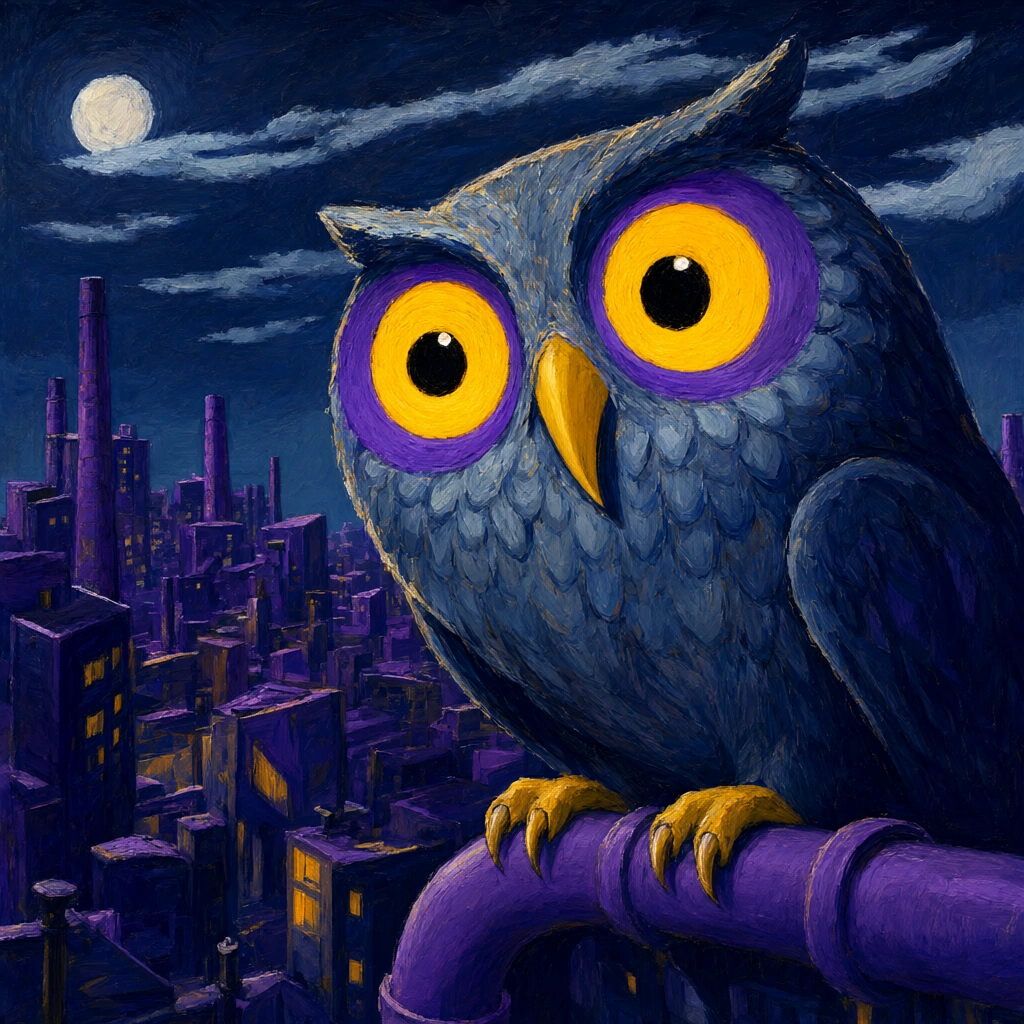 Qwen Image 2.1
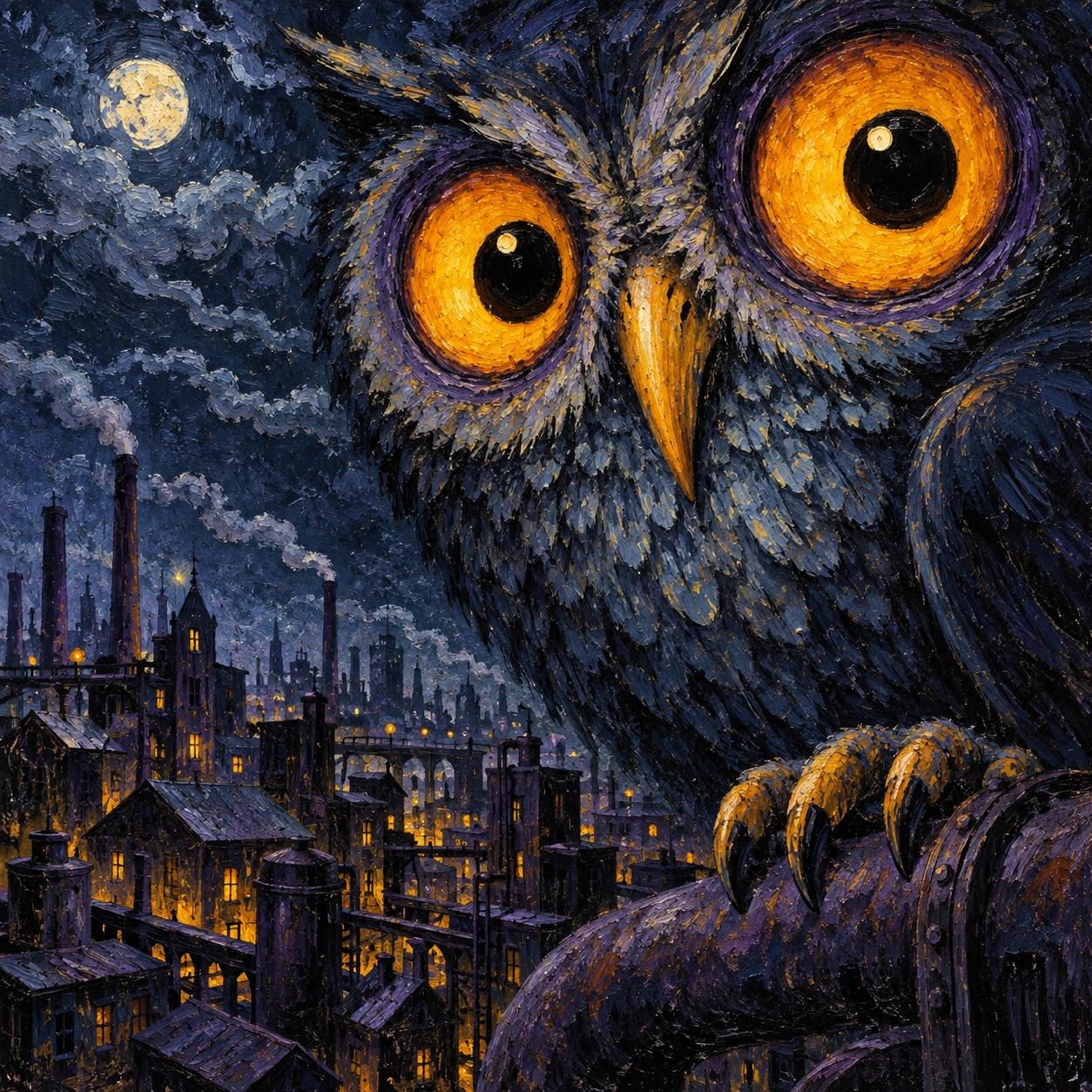 GPT Image 2.5
Reference details
- Reference ID
- 0121
- Category
- Flat illustration
Reference prompts
Style prompt
The visual language exaggerates proportions and combines rounded focal shapes with cramped, angular supporting forms. Deep violet, blue-black and slate blue carry the shadow field, while concentrated golden orange and hot yellow create forceful complementary accents. Thick, scratchy marks and directional ridges keep the surface visibly handmade, including areas that would normally be smooth. Curving rhythms distort the surrounding space, and abrupt differences in scale introduce comic unease. Cold ambient contours coexist with exaggerated warm focal luminosity. The overall effect is energetic and eccentric, with tactile paint texture and a clear hierarchy of enormous simple shapes over smaller restless detail.Full example prompt
The image is a square expressionistic illustration of an enormous owl looming above a nocturnal industrial city in deep blue, violet and golden yellow. The background is a dark, textured sky threaded with pale blue-grey clouds that curl in uneven horizontal ribbons across the upper portion of the frame. Near the upper-left corner, a small pale moon glows behind the turbulent marks, its rough circular surface remaining painterly rather than perfectly smooth. Below it, narrow chimneys and angular rooftops rise from the left side of the city, with muted purple highlights separating their silhouettes from the blue-black distance. The architecture gathers into a compressed band across the lower third, where roofs, pipes and vertical structures overlap in a deliberately cramped perspective. From the right edge, the owl's oversized head pushes forward until it dominates most of the upper and middle frame. Its two enormous eyes are bright golden orange, each encircled by a thick violet rim and centred on a glossy black pupil. Small pale reflections near the pupils sharpen the impression of an alert, startled stare. The eye on the left of the owl's face sits nearer the middle of the picture, while the other presses toward the upper-right corner, making the creature feel too large for the frame. Between them, a long, narrow yellow-orange beak points downward, separating the warm circles from the cool feathered body. Beneath the eyes, overlapping slate-blue feathers form short, rounded scales, each described by broken light marks against darker grooves. Along the right border, the body falls into navy shadow, while a curved shoulder or folded wing emerges through textured strokes. In the lower-right foreground, golden claws curl over a thick curved purple pipe, whose rounded surface crosses the foreground. Thin yellow and orange strokes recur among the violet structures below, connecting the creature's bright face to the city without competing with the eyes. The paint-like texture is coarse and directional, with visible ridges and scratches running through both feathers and sky. Cold moonlit ambient illumination separates the blue contours, while the eyes and beak carry exaggerated warm luminosity rather than the flat brightness of ordinary daylight. The overall composition uses a steep difference in scale, a compressed city and brilliant circular eyes to create a humorous yet uneasy nocturnal fantasy, held together by rough surfaces and the opposition of violet-blue shadow and yellow-orange light.