
Styles
#0135
Stage lighting style reference and prompts
Explore the “Stage lighting” reference with diagonal lines, tonal contrast, and atmospheric haze. View the images, copy the style or example prompt, and discover related styles on Looksift.
Compare the Qwen Image 2.1 and GPT Image 2.5 examples, choose the visual qualities you want, and copy the style prompt for your own project.
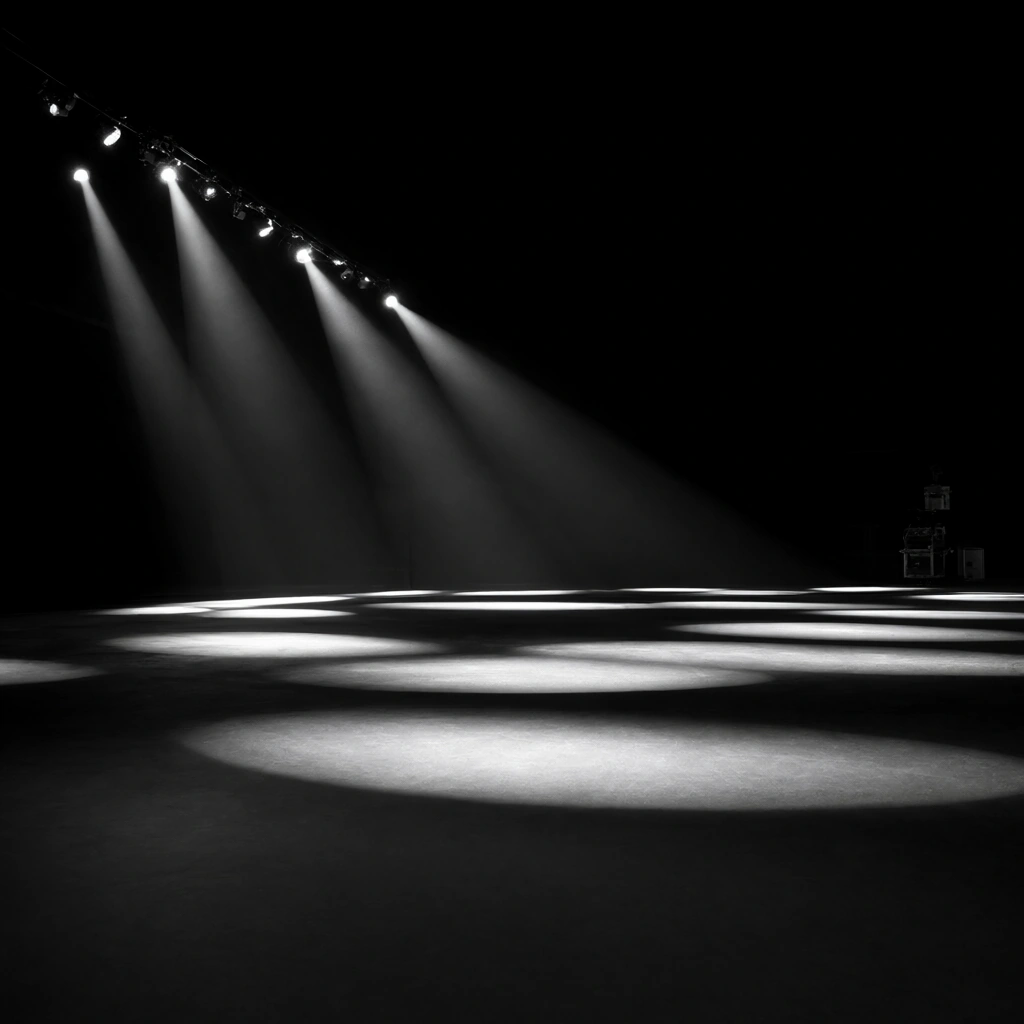 Qwen Image 2.1
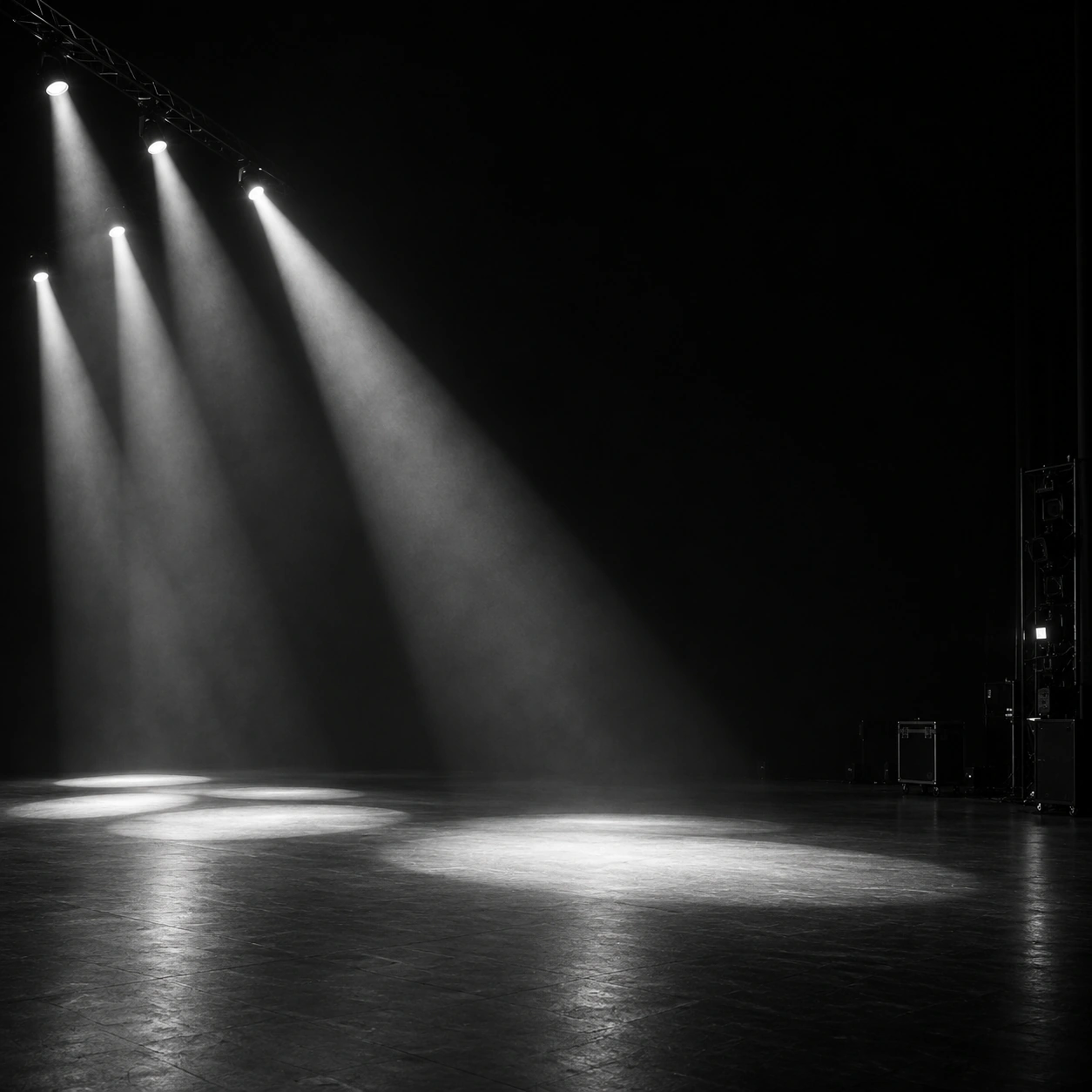 GPT Image 2.5
Reference details
- Reference ID
- 0135
- Category
- Photography
Reference prompts
Style prompt
The style is defined by high-contrast darkness and narrow, directional bands of light. Bright sources remain small and precise, while their beams widen and soften through a dark field before meeting a surface. Cool white and faint gray dominate, with little color variation. Light pools repeat the direction of the rays and create rhythm across open space; large unlit areas give each illuminated shape room to read. Edges are softened by subtle haze, while the deepest shadows stay even and uncluttered. The composition favors diagonal lines above flatter horizontal planes, producing depth with very few visible elements. Its effect is restrained, spatial and anticipatory.Full example prompt
The image is a monochrome photographic theater lighting scene, with several white spotlights cutting through a nearly black stage and forming patterned pools on the floor. The background is an uninterrupted dark void except for faint equipment and rigging near the right edge. At the upper-left, a line of small lamps follows a diagonal support, each source creating a distinct pale cone. The beams descend at different angles, with the longest reaching toward the lower middle and the shorter ones landing nearer the left side. Their edges remain visible in the darkness, softened slightly by haze. Across the lower half, oval pools of light stretch along a matte stage surface, overlapping in patterned patches. A few bright patches sit close together on the left, while a broader pool opens near the centre. Between them, wide strips of floor remain nearly black. At the far right, a low technical tower and a few dim rectangular forms break the otherwise empty horizon line. The stage floor itself is smooth and slightly reflective, catching faint gradients around each lit area. The arrangement has no visible performers, furniture or scenery; the beams and their illuminated patches provide the only strong forms. The lighting is cool white and directional, brightest at the fixtures and softer where it spreads across the floor. Subtle gray edges define the cones without turning them into solid bars, and the surrounding black retains a deep, even tone. The contrast is strongest between the small brilliant sources and the broad unlit space. The composition is wide and sparse, with diagonal rays counterbalanced by horizontal pools and the low floor plane. The isolated equipment at right gives the darkness a slight sense of depth, while the repeated beams lead the eye toward the open centre. Its mood is quiet and expectant, as if the stage is prepared but still empty.