
Styles
#0197
Dramatic lighting style reference and prompts
Explore the “Dramatic lighting” reference with low-key lighting and atmospheric haze. View the images, copy the style or example prompt, and discover related styles on Looksift.
Compare the Qwen Image 2.1 and GPT Image 2.5 examples, choose the visual qualities you want, and copy the style prompt for your own project.
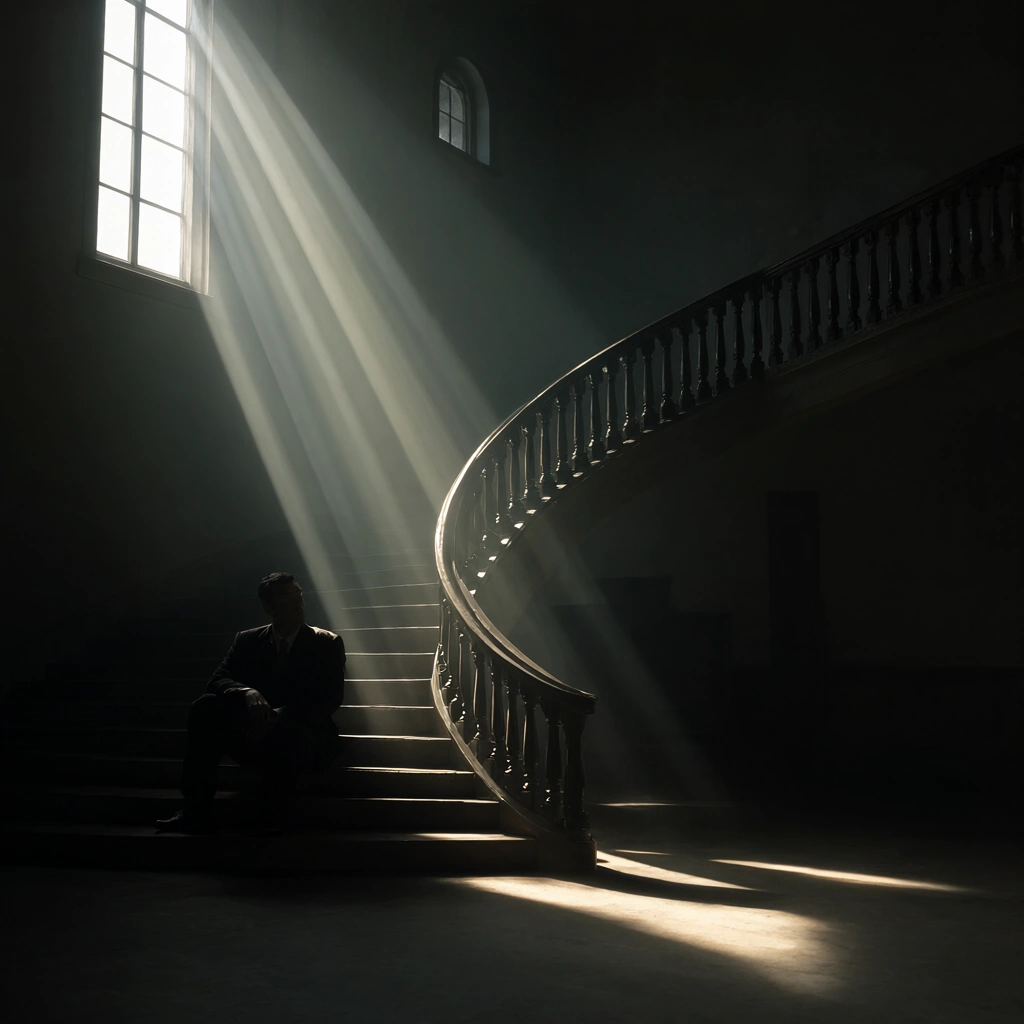 Qwen Image 2.1
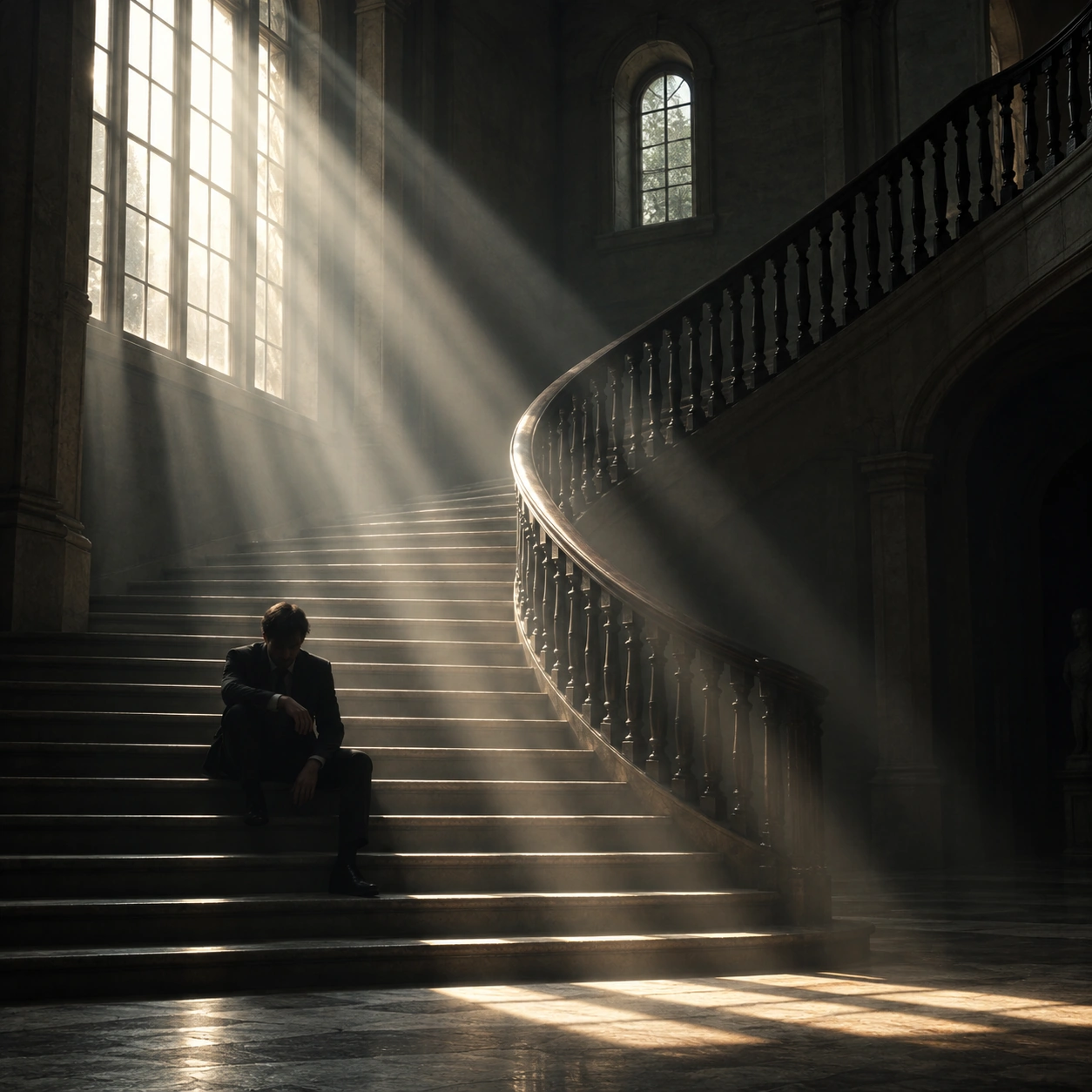 GPT Image 2.5
Reference details
- Reference ID
- 0197
- Category
- Photography
Reference prompts
Style prompt
Cinematic low-key rendering divides a large dark space with a few high-intensity directional beams. Cool charcoal and green-gray shadow occupy the majority, while pale window light forms diagonal shafts, small floor pools, and bars across stepped surfaces. Haze makes the rays volumetric without erasing crisp architectural edges near the source. A curved boundary and repeated vertical lines guide the eye through the depth, and a small dark focal mass gains scale from the surrounding void. Light is selective, leaving interior detail unreadable outside its path. The composition feels solemn through large value ratios, measured geometry, and luminous air.Full example prompt
A square cinematic interior image shows a lone figure seated low on a broad staircase while strong daylight enters from tall windows at the upper left. The room is large and mostly dark, its walls receding into charcoal green-gray shadow. A curved stair railing rises from the center and sweeps toward the upper right, where a row of closely spaced dark balusters makes a repeating vertical pattern. A small arched window is visible high on the back wall. The seated person appears near the lower left of center, wearing a dark suit-like outfit. The body faces roughly forward, one arm resting across a bent knee, but the face stays mostly in shadow and cannot be read in detail. Several broad pale shafts descend diagonally from the upper-left window through visible haze. Their crisp bright cores cross the railing and reach the floor in warm-edged patches near the bottom. Narrower light bars create alternating brightness on the steps, while the space behind the person remains almost black. The huge window panes glow white, contrasted with the small human silhouette and the dark enclosing architecture. The image has a photographic or highly rendered cinematic finish, with smooth shadow transitions and distinct volumetric rays rather than painted brush marks. The light organizes the space more strongly than furniture or ornament, turning the stair curve into a sweeping boundary between brightness and darkness. Large shadow areas, repeated railings, and falling beams give the still pose solemn theatrical weight.