
Styles
#0228
Aerial view style reference and prompts
Explore the “Aerial view” reference with an overhead view. View the images, copy the style or example prompt, and discover related styles on Looksift.
Compare the Qwen Image 2.1 and GPT Image 2.5 examples, choose the visual qualities you want, and copy the style prompt for your own project.
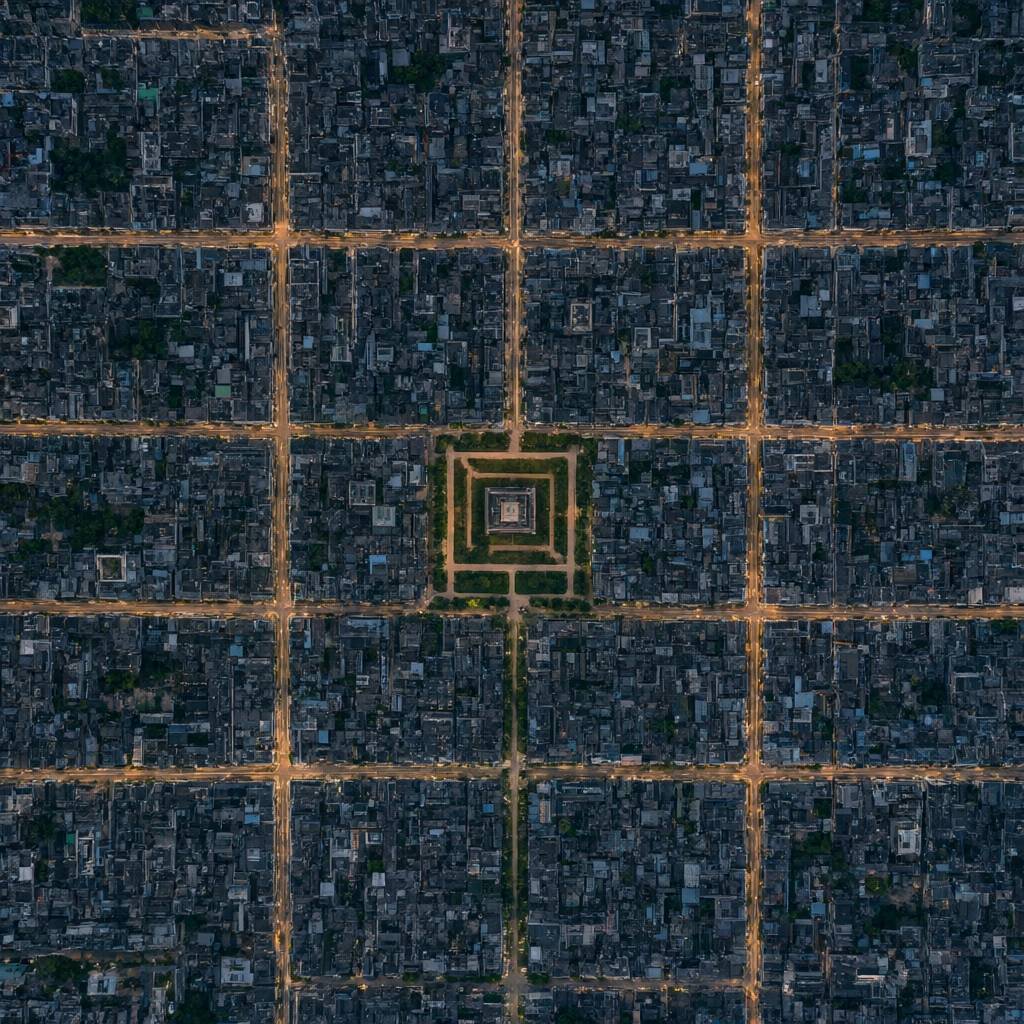 Qwen Image 2.1
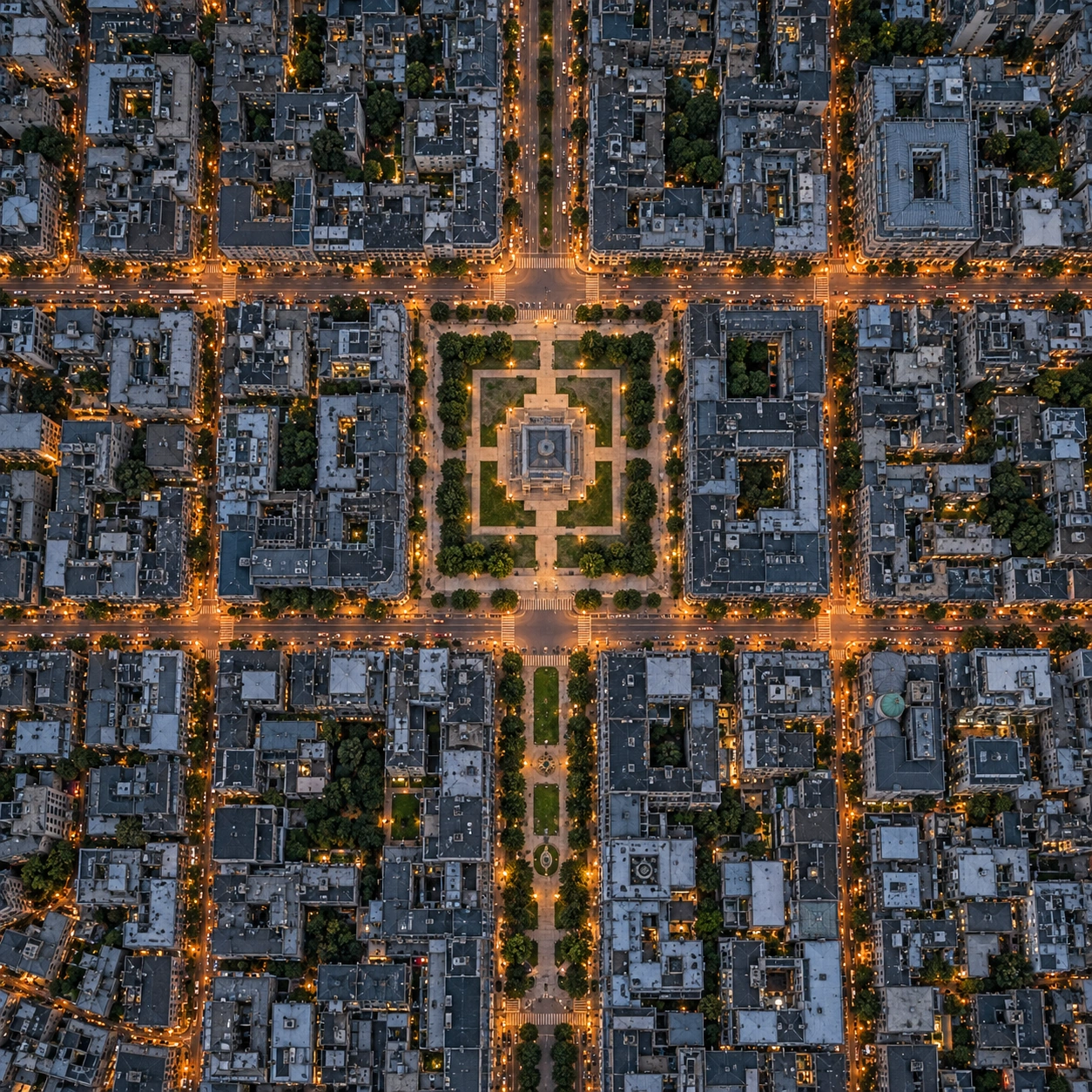 GPT Image 2.5
Reference details
- Reference ID
- 0228
- Category
- Photography
Reference prompts
Style prompt
A straight-down aerial photographic treatment compresses depth into a precise planar mosaic. The frame is filled edge to edge with many small rectangular units, varied in size and tone but held together by an orthogonal network of narrow lines. Cool slate gray and muted teal cover most of the surface; deep green clusters interrupt the mineral color, while thin copper-amber seams and small glowing junctions provide a measured warm counterpoint. One more regular nested rectangular zone near the center establishes a clear visual pause within the busier surrounding texture. The elevated scale makes individual details small and dense, so repeated shapes become pattern without losing their photographic irregularity. Edges are generally sharp in the near-planar surface, although low evening light softens contrast within darker areas. Illumination is broadly even, with the warm lines carrying the brightest values rather than a single spotlight. The overall rhythm moves between crowded granular margins, straight connecting axes, and a calm structured center, creating a detailed yet readable overhead image.Full example prompt
A square straight-down aerial photograph looks over a dense city district at dusk, turning streets, roofs, and small planted courts into a tightly fitted geometric pattern. There is no visible horizon and no tilted façade; every surface is seen from directly above, so distance is organized by the planar street grid rather than conventional foreground and background. Dark gray blocks of closely packed buildings occupy both sides. Their flat roofs vary in size and height, with scattered pale blue-gray rectangles, narrow terraces, and small inner courtyards breaking the darker mass. A wider north-south avenue runs through the middle, intersected by warm amber east-west roads at the upper third and lower middle. Tiny points of orange light mark the intersections and trace fine luminous seams between the blocks. Near the center, a formal square interrupts the density: tan paths outline nested rectangles around a compact central building or monument, while grass and tree patches make deep green shapes inside the grid. Farther down, a slim green axis continues between buildings, adding a calmer vertical rhythm to the roof texture. The edges remain crowded and irregular, and the central square gives the eye a clear, measured pause. Teal and cool slate tones settle across the roofs, mixed with very dark green foliage and the warm copper lines of lit streets. Fine architectural detail is visible but compressed by the height of the viewpoint, reading as intricate surface texture rather than individual scenes. Dusk light is even and subdued, with no dominant directional shadow; the street lamps provide the strongest highlights. The image feels both documentary and patterned, using an absolute overhead angle and bright road lines to reveal an ordered center within a complex urban fabric.