
Styles
#0267
Ron Tandberg style reference and prompts
Explore the “Ron Tandberg” reference with hatching and a monochrome palette. View the images, copy the style or example prompt, and discover related styles on Looksift.
Compare the Qwen Image 2.1 and GPT Image 2.5 examples, choose the visual qualities you want, and copy the style prompt for your own project.
 Qwen Image 2.1
 GPT Image 2.5
Reference details
- Reference ID
- 0267
- Category
- Anime & cartoons
Reference prompts
Style prompt
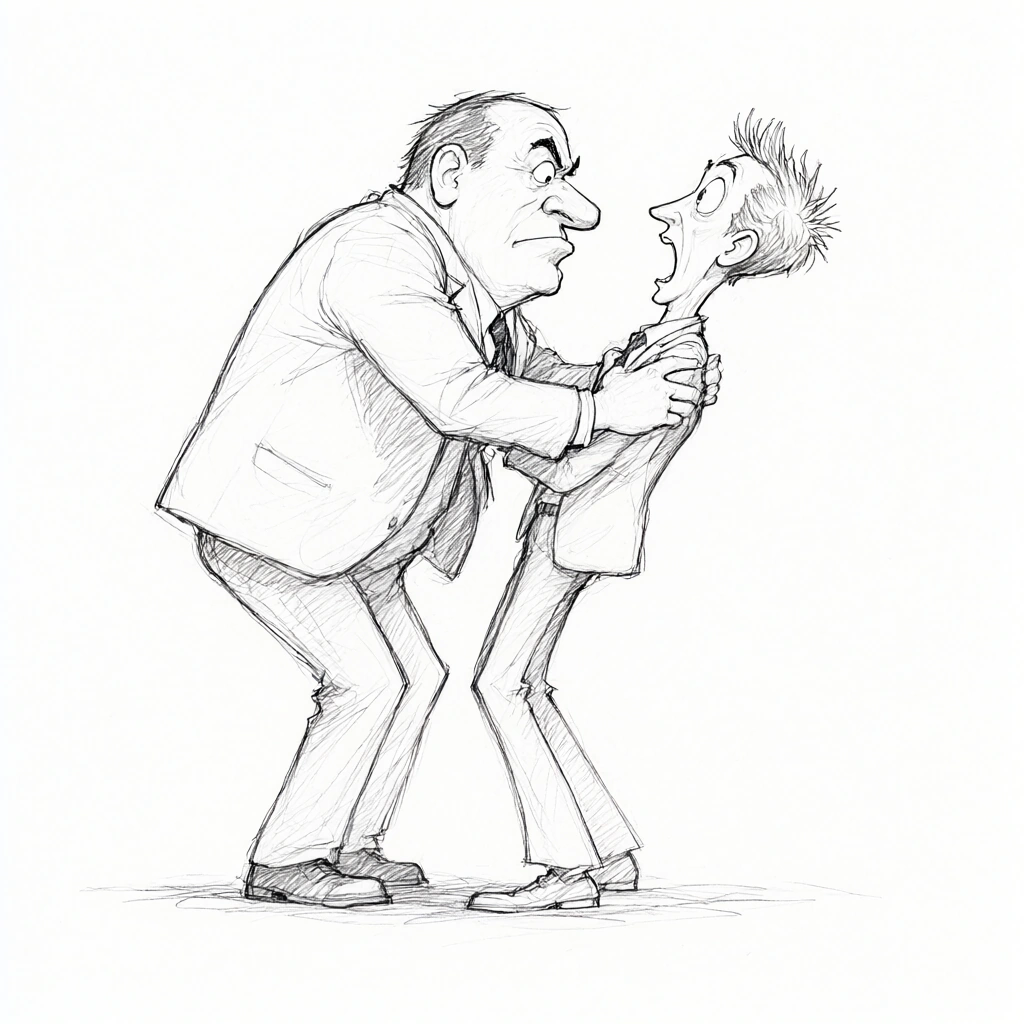
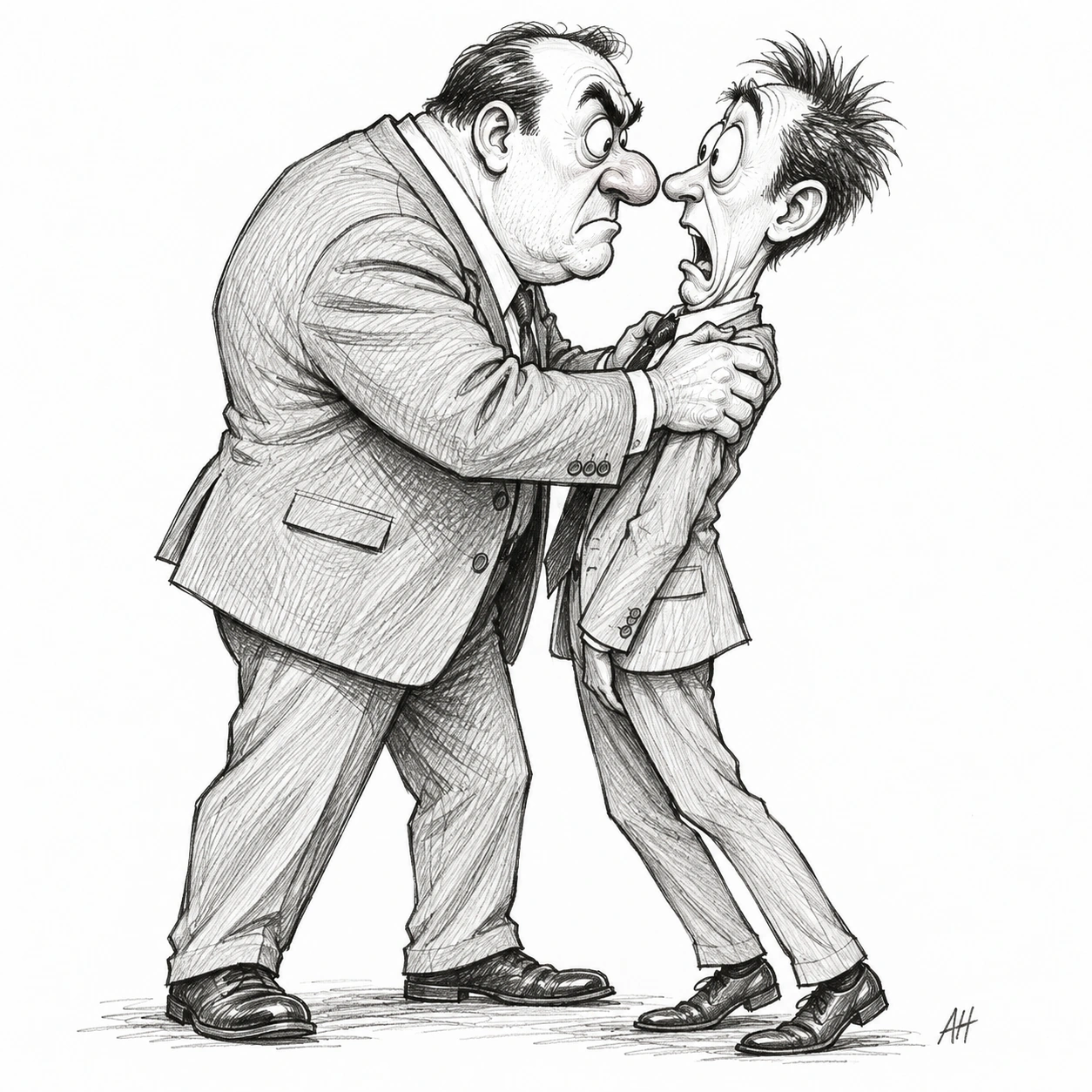
The monochrome cartoon drawing uses crisp outer contours, light exploratory inner lines, and quick diagonal pencil hatching on clean white paper. A compact central knot of overlapping forms holds nearly all the detail; the surrounding field remains generously empty. Proportions are elastic, with enlarged expressive upper shapes tapering into simpler narrow lower shapes. Line weight shifts constantly, from firm curves at the silhouette to scratchier short strokes in shadowed recesses. Sparse ground marks establish balance without constructing a setting. The surface retains the immediacy of a hand sketch, including visible revisions and unfilled paper between marks. Tonal range is deliberately narrow: dark accents cluster at small points of contact, while most volume is suggested rather than shaded fully. The whole frame feels spontaneous, readable, and comic through lively gesture and economical line.Full example prompt
A monochrome pen-and-pencil caricature shows two suited men in an animated face-to-face confrontation on an otherwise blank page. The larger figure at left leans in with squared shoulders, a bulky jacket, prominent brow, and jutting nose. Both of his hands grip the slimmer man's shoulders, drawing the bodies into a compact knot at the center. The man on the right rocks backward, mouth opened wide in surprise, his thin neck and spiky hair amplifying the comic reaction. Their eyes are exaggerated and closely spaced across the narrow gap between their faces. Below the expressive heads, the bodies simplify into long trouser legs and lightly sketched shoes, with a few short ground strokes anchoring them to the white paper. Fine contour lines describe jacket seams, hands, facial folds, and hair, while angled pencil hatching sits under elbows and between the overlapping legs to suggest volume. The line weight changes from confident outer contours to lighter searching marks within the forms. No scenery or props compete with the exchange; generous white space surrounds the figures and concentrates attention on posture, expression, and the pressure of the hands. A small sketch-like mark near the bottom reinforces the impression of an informal cartoon drawing. The whole frame turns a brief human interaction into lively visual comedy through elastic anatomy and economical black marks.