
Styles
#0379
Matteo Massagrande style reference and prompts
Explore the “Matteo Massagrande” reference with broken brushwork, tactile surfaces, and muted colors. View the images, copy the style or example prompt, and discover related styles on Looksift.
Compare the Qwen Image 2.1 and GPT Image 2.5 examples, choose the visual qualities you want, and copy the style prompt for your own project.
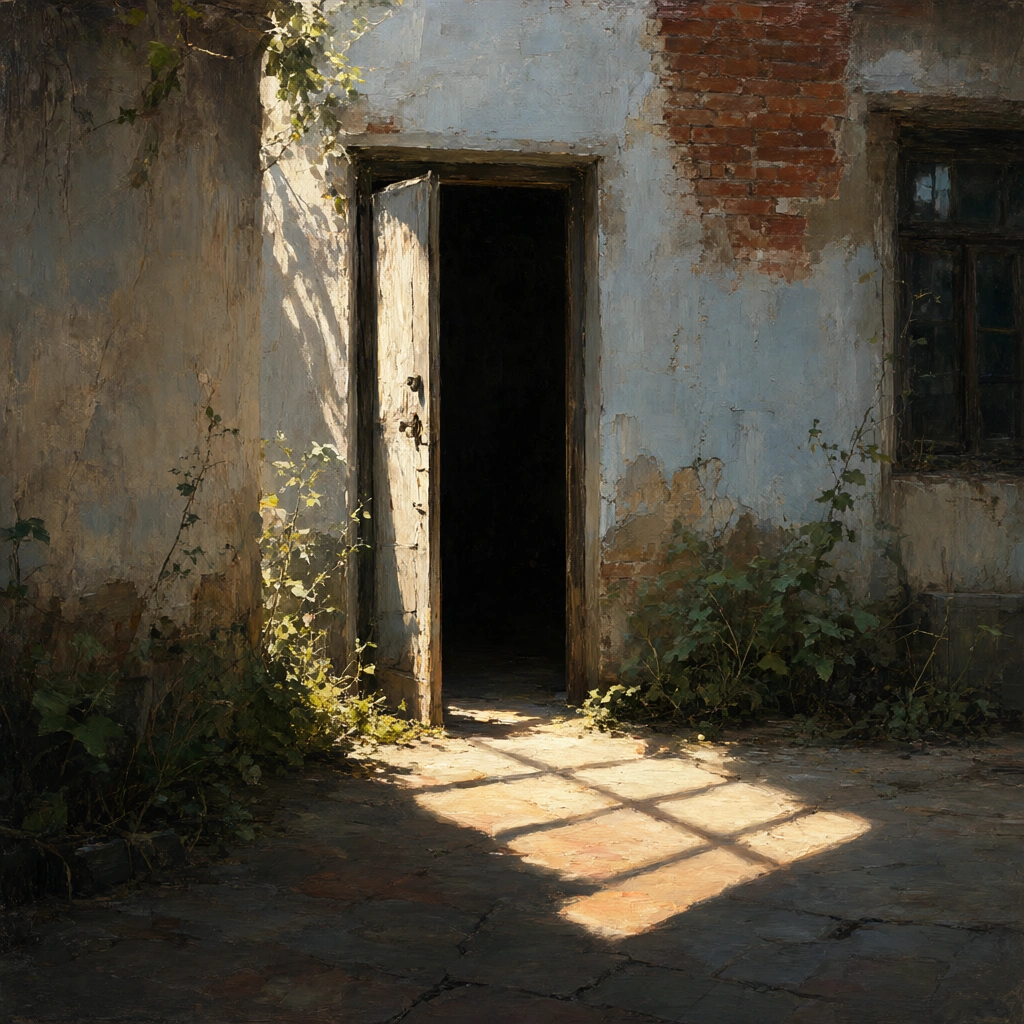 Qwen Image 2.1
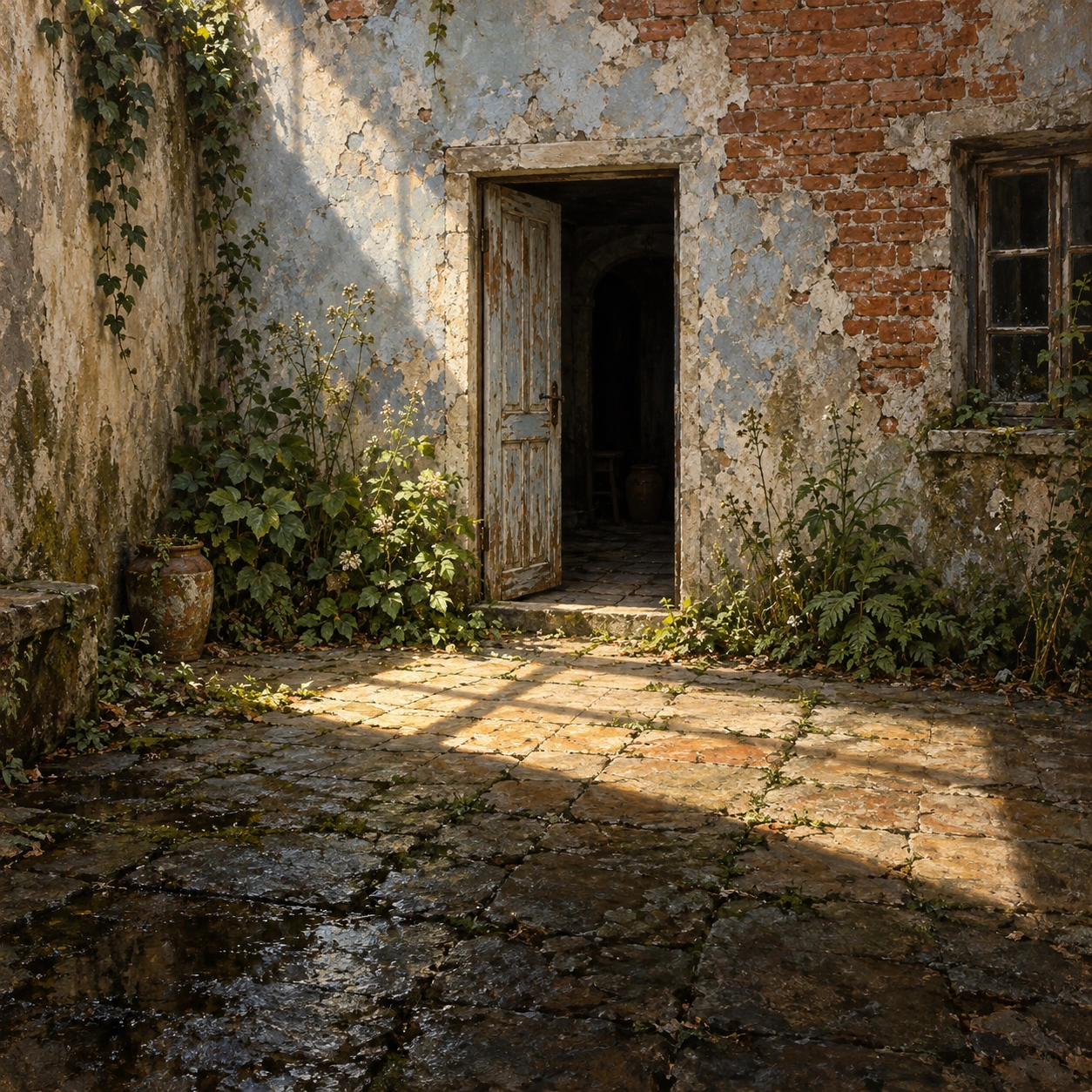 GPT Image 2.5
Reference details
- Reference ID
- 0379
- Category
- Painting
Reference prompts
Style prompt
A realist oil-painting treatment emphasizes worn layered surfaces under a sharply directional light. Faded brick red, blue-gray, warm beige, olive green, and charcoal occupy irregular adjoining planes; rough scuffs, fine cracks, peeling edges, and clustered green marks distinguish their material responses. One deep rectangular recess draws the eye inward, while a wide warm rectangular light patch lies across a darker lower field. Hard-edged light and shadow meet on the near plane, but internal texture is painted with small broken strokes and softer tonal transitions. Fine vertical and diagonal accents interrupt the broad surfaces without crowding the center. The palette remains earthy and somewhat desaturated, letting the concentrated sunlit area feel brighter through value rather than vivid hue. Nearby detail is tactile and precise, while shadowed depth loses definition. The composition feels still and weathered, balancing a dark opening, a light-catching plane, and slow organic encroachment within a compact space.Full example prompt
A square realist oil painting looks into a weathered abandoned courtyard where angled afternoon sunlight reaches through an unseen opening. Rough walls enclose the scene on three sides. The back wall is pale blue-gray plaster, heavily chipped and stained, with a partly open wooden door at its center leading into a deep dark passage. To its right, exposed red brick spreads across the upper wall; a small window in a dark frame appears on the far right. The left side is a more muted, crumbling plaster plane touched by trailing ivy near the top. Weeds, leafy shrubs, and thin stems have taken root along the wall bases, especially beside the doorway and under the right window. The uneven floor is made of cracked stone or tile, damp and dark in the foreground. A broad rectangular patch of sunlight falls across the middle ground, picking out warm ochre tiles, pale dust, and the green edge of leaves. The open door catches light on its peeling face but leaves the room beyond nearly black, creating a strong threshold between illuminated exterior and hidden interior. Brushwork is observational and layered: small broken strokes depict flaking paint, brick mortar, and foliage, while broader blended passages carry the deep shadows. The palette is restrained to faded red, gray-blue, warm beige, olive green, and rich charcoal. The light is clearly directional, entering from high left and casting a windowlike grid of hard-edged bright and shadowed shapes on the floor. The scene has no human presence, yet traces of use and gradual overgrowth make it feel inhabited by time. The composition is quiet and slightly melancholy, using one open dark doorway and one sunlit patch to organize the complex worn textures.