
Styles
#0381
Harry Anderson style reference and prompts
Explore the “Harry Anderson” reference with broad brushstrokes, lustrous surfaces, and visual framing. View the images, copy the style or example prompt, and discover related styles on Looksift.
Compare the Qwen Image 2.1 and GPT Image 2.5 examples, choose the visual qualities you want, and copy the style prompt for your own project.
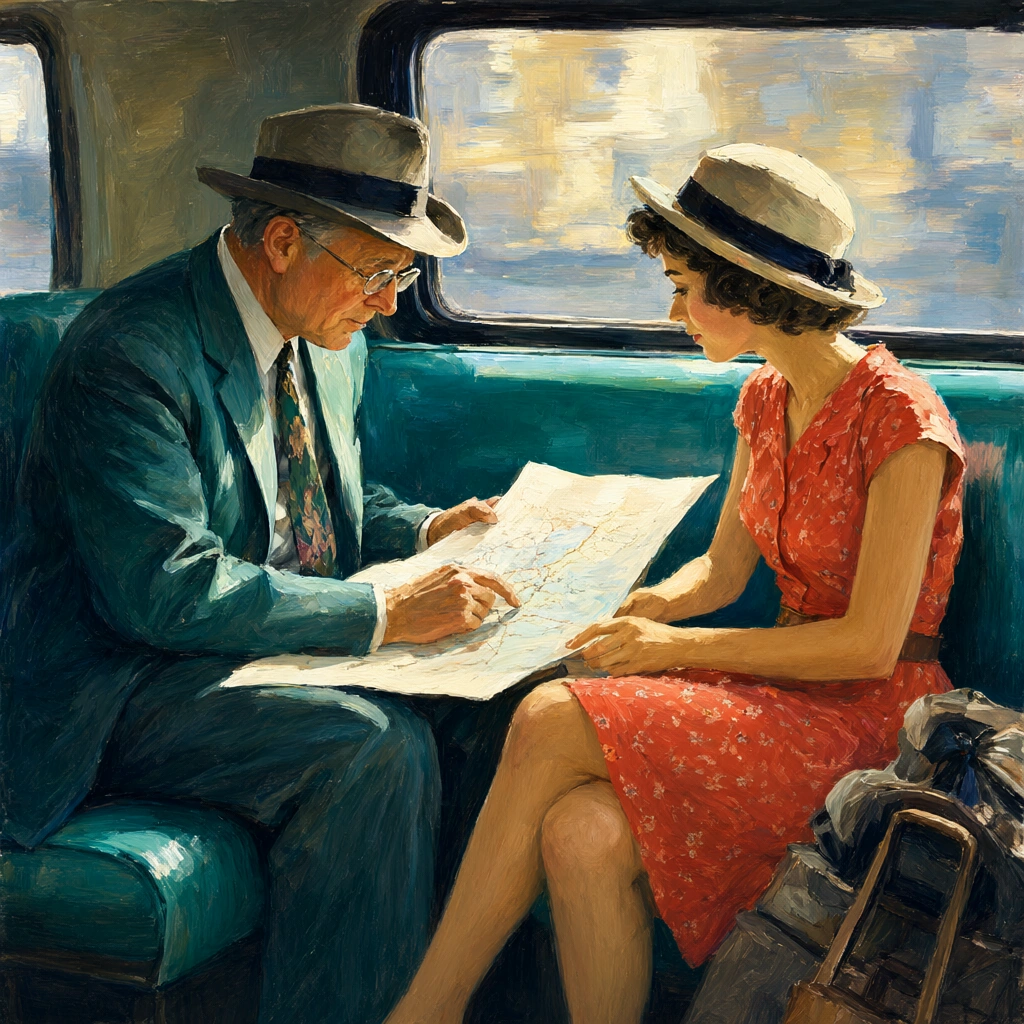 Qwen Image 2.1
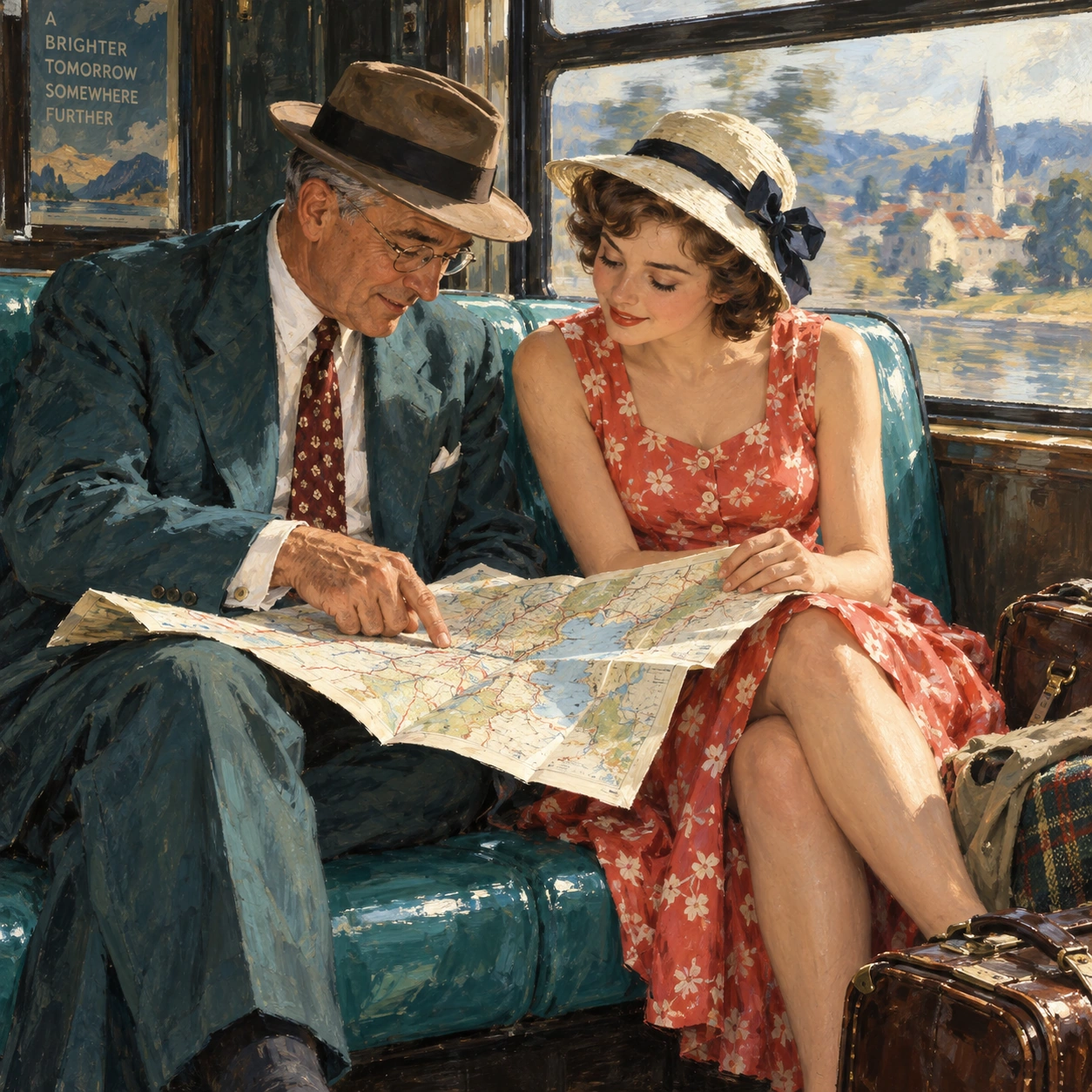 GPT Image 2.5
Reference details
- Reference ID
- 0381
- Category
- Flat illustration
Reference prompts
Style prompt
The painterly illustration uses visible broad strokes, softened edges, and a mid-century palette of turquoise, coral red, cream, brown, and muted ochre. A cool saturated horizontal field supports warmer compact accents, while a pale folded plane near the center acts as the brightest focal area. Dark framing lines establish an interior rhythm; beyond them, distant color dissolves into soft blur. Faces, hands, and other small narrative details receive finer marks than upholstery or background. Window-like side light creates warm highlights and cool green reflections on glossy surfaces. Brushwork alternates between opaque blocks and lighter scraped passages, preserving a handmade print-era feel. The composition gathers attention around a shared diagonal gesture and leaves peripheral edges loose. The whole frame feels companionable, optimistic, and lightly nostalgic through warm-cool contrast and economical storytelling marks.Full example prompt
A painterly mid-century illustration shows an older man and a young woman studying a paper map together on a train. They sit close on a glossy turquoise bench beneath a wide dark-framed window. The man at left wears a brimmed hat, wire-rim glasses, a teal suit, white shirt, and patterned tie; he leans forward and points to a place on the open map across his knees. The woman at right wears a coral-red sleeveless dress with a small pale floral print and a light hat with dark ribbon. She turns toward the map with crossed legs and hands resting near its edge. A bag and bundled belongings occupy the lower right, suggesting travel without needing a view of the train exterior. Beyond the window, indistinct muted shapes pass in softened blue, cream, and ochre. Broad strokes model the shiny seat, jacket, and dark carriage shadows, while finer touches describe faces, fingers, and the folds of the map. Sunlight from the window lights her arms and the paper, then breaks into cool green reflections across the upholstery. The two figures form a compact, easy diagonal around the bright map, which is the compositional center. Edges are loose and visibly painted, but gestures remain precise enough to carry the story. The whole frame feels optimistic and companionable, full of the ordinary excitement of deciding where to go next.