
Styles
#0401
Nicholas Alan Cope style reference and prompts
Explore the “Nicholas Alan Cope” reference with tactile surfaces and a monochrome palette. View the images, copy the style or example prompt, and discover related styles on Looksift.
Compare the Qwen Image 2.1 and GPT Image 2.5 examples, choose the visual qualities you want, and copy the style prompt for your own project.
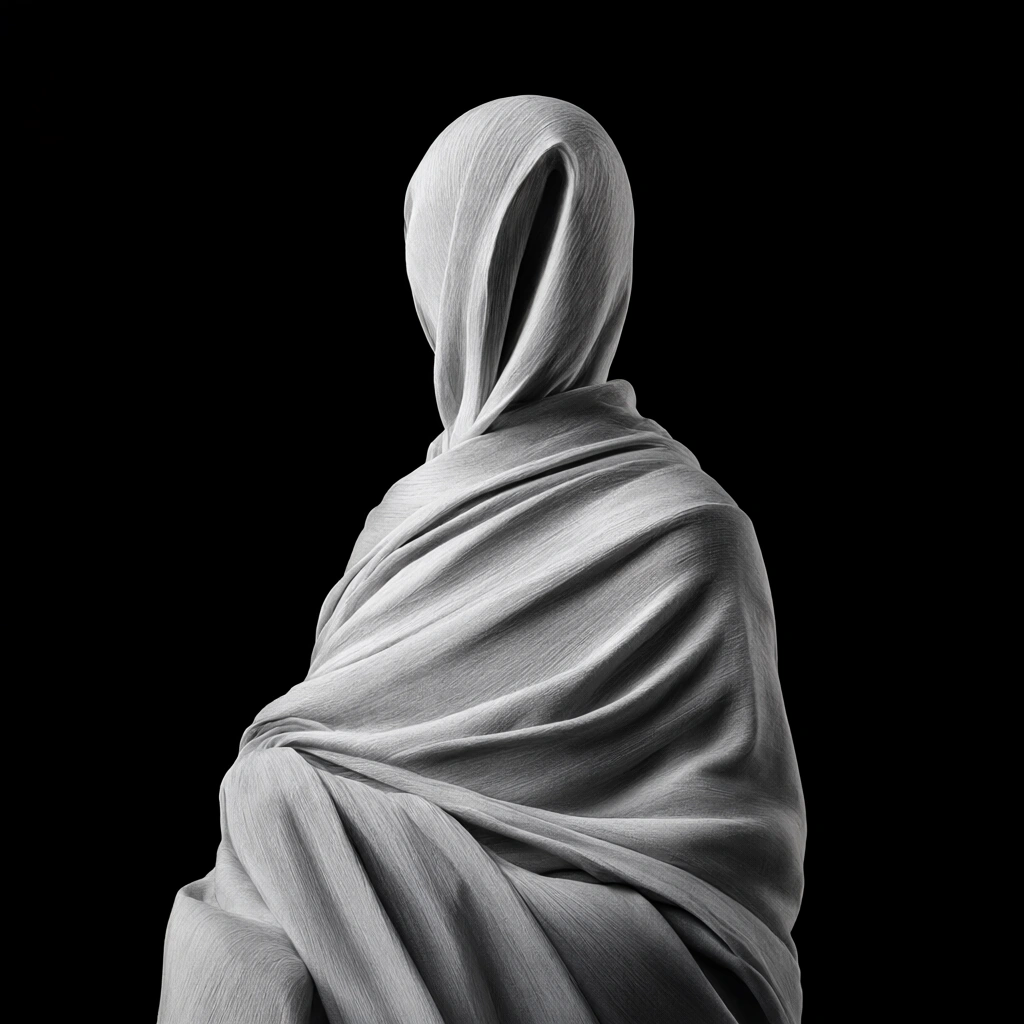 Qwen Image 2.1
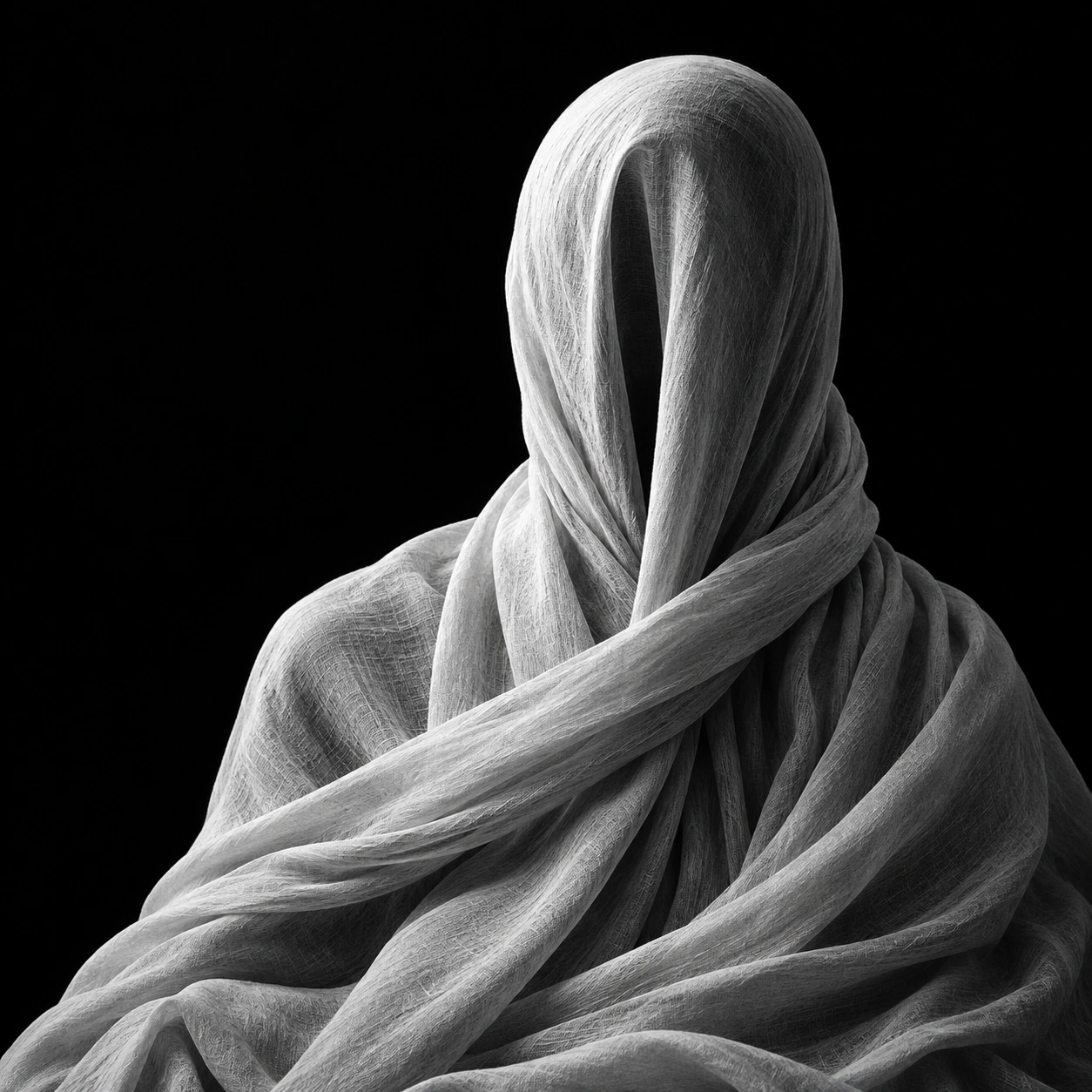 GPT Image 2.5
Reference details
- Reference ID
- 0401
- Category
- Photography
Reference prompts
Style prompt
Minimal monochrome studio photography isolates a pale sculptural form within a continuous matte-black field. Broad overlapping sheets create sweeping diagonal and curved folds, with slender recessed channels of charcoal dividing bright silver ridges. The grayscale is tightly controlled but rich: brilliant white along grazing-light edges, soft middle gray over rounded planes, and deep black in openings and surrounding space. Directional light from high to one side reveals fine linear textile texture without losing the large simple silhouette. Edges remain clean and sharply separated from the background, while internal tonal transitions flow softly across stretched and gathered surfaces. Slight off-center placement and generous empty margins make the form feel still, concentrated, and monumental. The composition gains its tension from a severe dark-light divide, the rhythm of draped curves, and the contrast between smooth broad planes and minute tactile striation.Full example prompt
A minimalist black-and-white studio photograph presents a single anonymous figure from the chest upward against an absolute black background. Fine white fabric wraps the head and shoulders, covering the face completely. The head forms a tall rounded arch near the upper center, with one long narrow vertical fold creating a recessed dark slit where facial features might otherwise appear. Another band of cloth crosses diagonally from the lower left shoulder toward the right side of the neck, then curves around the figure in generous overlapping loops. The garment pools in the lower frame as broad, sculptural folds, each ridge defined by a clean silver highlight and each recess by deep charcoal shadow. No hair, skin, eyes, or hands are visible; the image relies on drapery and posture alone. The figure is placed slightly right of center, leaving an ample black margin that makes the pale silhouette feel isolated and still. The photographic treatment is extremely controlled: sharp, legible threadlike striations run along the fabric, while tonal gradients across larger folds remain silky and continuous. One soft directional light from the upper left grazes the material, revealing its thin weave and the changing tension where cloth stretches over a hidden form. The background absorbs the shadows without any wall, horizon, or props. White, silver gray, charcoal, and black are the only tones, arranged in a clear hierarchy from illuminated outer contour to the darkest central recess. The result is quiet and enigmatic, balancing a severe graphic silhouette with the almost tactile detail of layered textile.