
Styles
#0455
Aerial Geoglyph Photography
Pale geometric geoglyphs cross a desert plateau, framed by dark ridges and low grazing light. View the images, copy the style or example prompt, and explore related references on Looksift.
Compare the Qwen Image 2.1 and GPT Image 2.5 examples, choose the visual qualities you want, and copy the style prompt for your own project.
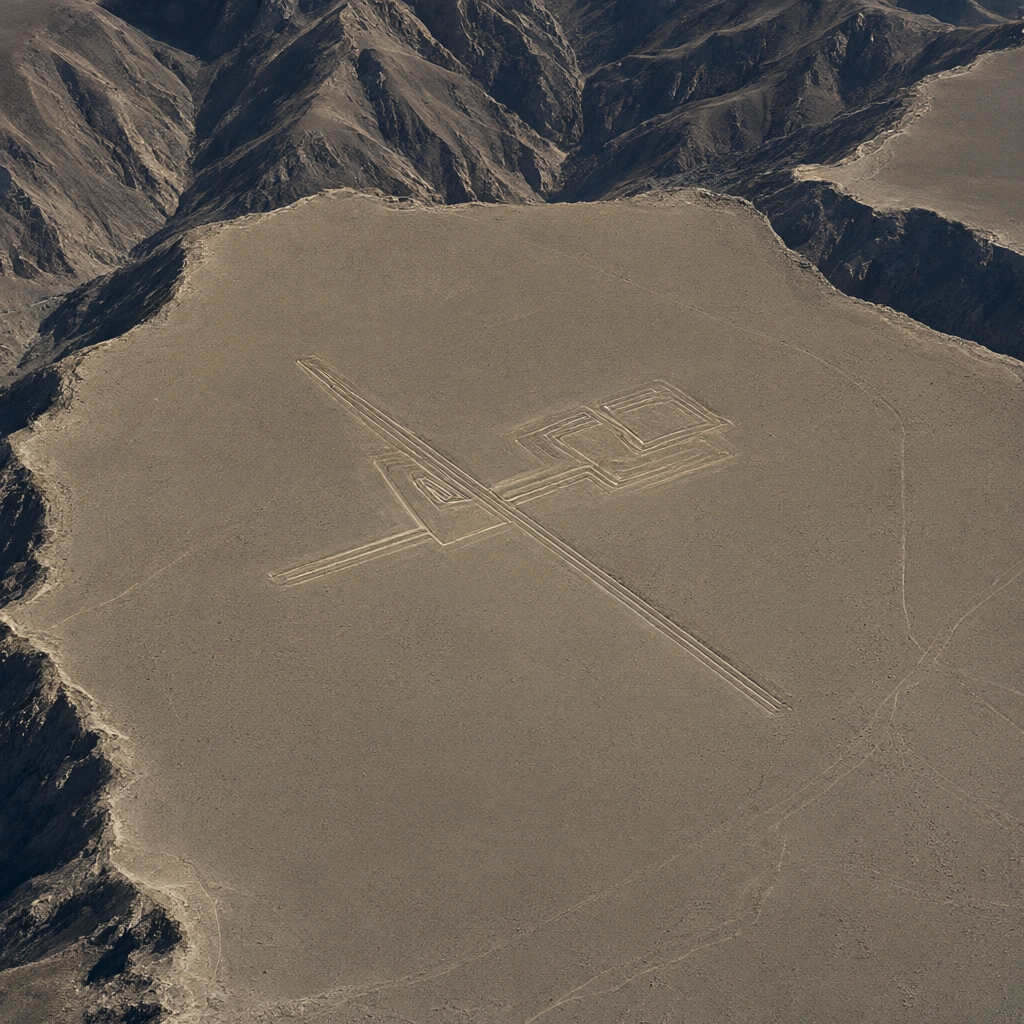 Qwen Image 2.1
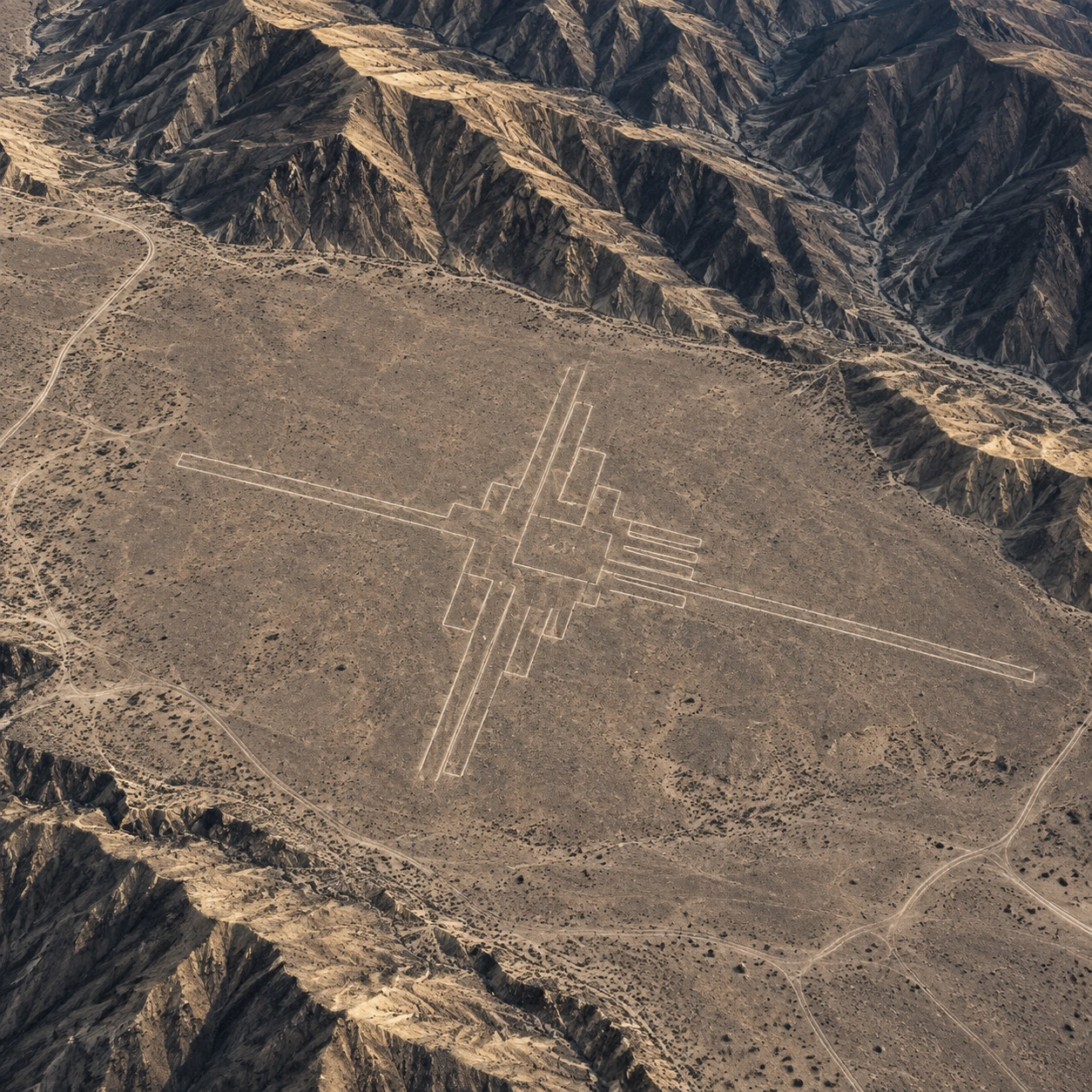 GPT Image 2.5
Reference details
- Reference ID
- 0455
- Category
- Photography
Reference prompts
Style prompt
High aerial landscape photography turns a textured earth surface into an almost abstract graphic field. Narrow pale lines and compact angular intersections sit within a large muted taupe plane, while dark folded ridges form a broken perimeter. The palette is restrained to sand, ash brown, olive-gray, and near-black shadow, with subtle mineral variations rather than saturated color. Low side light grazes sloping relief, creating long tonal bands and crisp dark gullies; the flatter central area remains evenly readable. Fine stony grain is visible throughout, softened slightly by viewing distance. Orderly linear marks oppose the irregular diagonal rhythm of natural terrain, and broad empty ground prevents the central pattern from feeling crowded. The viewpoint compresses depth but preserves scale through surrounding landforms and small tracks, giving the composition a quiet, survey-like clarity.Full example prompt
A high aerial landscape photograph looks almost straight down onto a broad desert plateau bordered by rugged dark ridges. In the center of the pale brown flat ground, a large geoglyph is formed from narrow cleared lines that reveal a lighter mineral tone beneath the surface. Long straight strokes cross a compact arrangement of angular, stepped shapes, giving the mark a precise, enigmatic structure. The drawing occupies only part of the open plateau, leaving generous rough earth around it. At the top of the frame, steep gullies and folded hills enter as dark diagonal masses, their ridges catching thin bands of beige light. A few faint tracks meander near the edges of the plateau but remain secondary to the deliberate pale design. The land is dry and sparsely vegetated, with a granular, stony skin rather than any polished or painted surface. The photograph's earth palette stays narrow: sand, taupe, ash brown, olive-gray, and blue-black shadows. Low raking sunlight from one side emphasizes the relief of the hills while keeping the drawing legible by tonal contrast rather than dramatic spotlight. Aerial distance flattens the geoglyph into a graphic symbol, yet the gullies and shadows restore its vast physical scale. The composition places an ordered human-made pattern within irregular geology, using the plateau as a calm open field and the surrounding mountains as a broken dark frame. Fine surface grain, slight atmospheric softness, and the absence of nearby figures give the image the quiet, investigative quality of a remote landscape survey.