
Styles
#0466
Collagraph Print Style with Overlapping Fish
Overlapping fish, rectangular color plates and uneven ink create a tactile collagraph-like surface. View the images, copy the style or example prompt, and explore related references on Looksift.
Compare the Qwen Image 2.1 and GPT Image 2.5 examples, choose the visual qualities you want, and copy the style prompt for your own project.
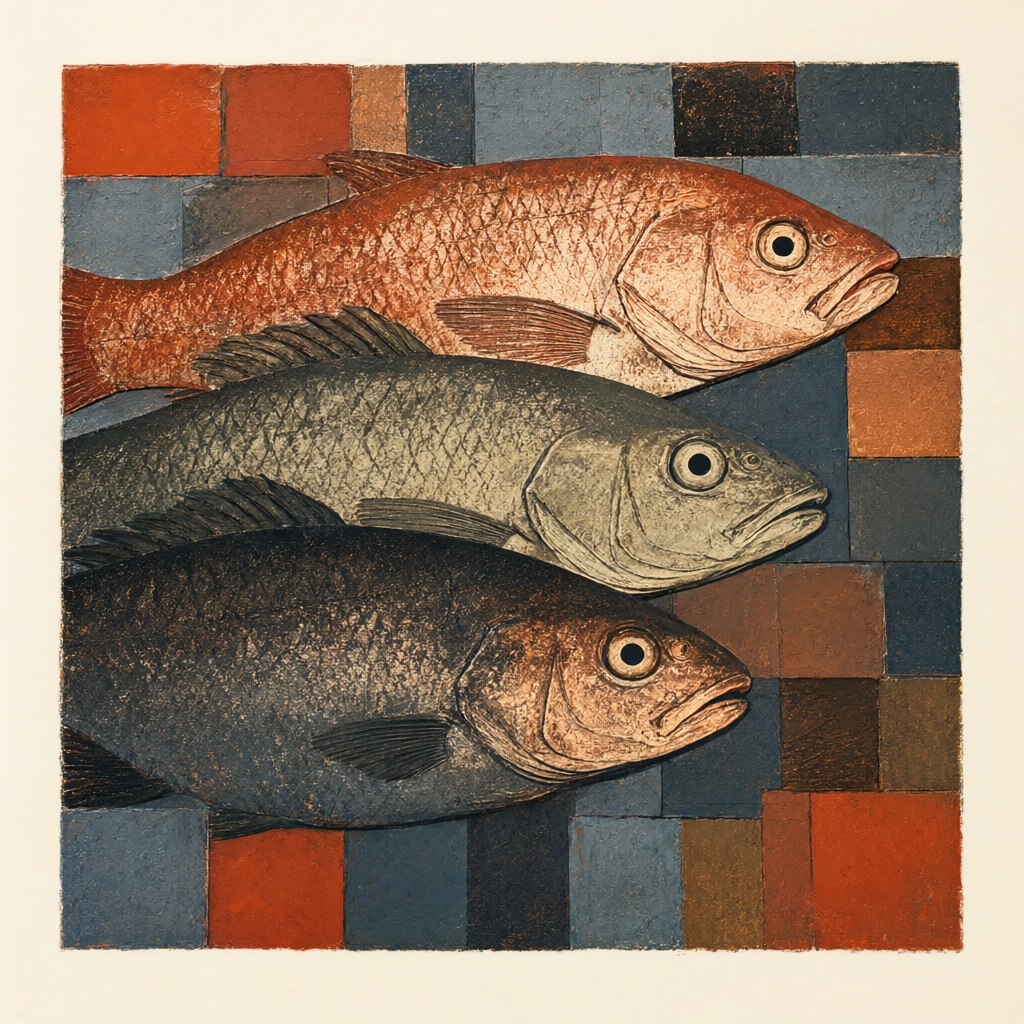 Qwen Image 2.1
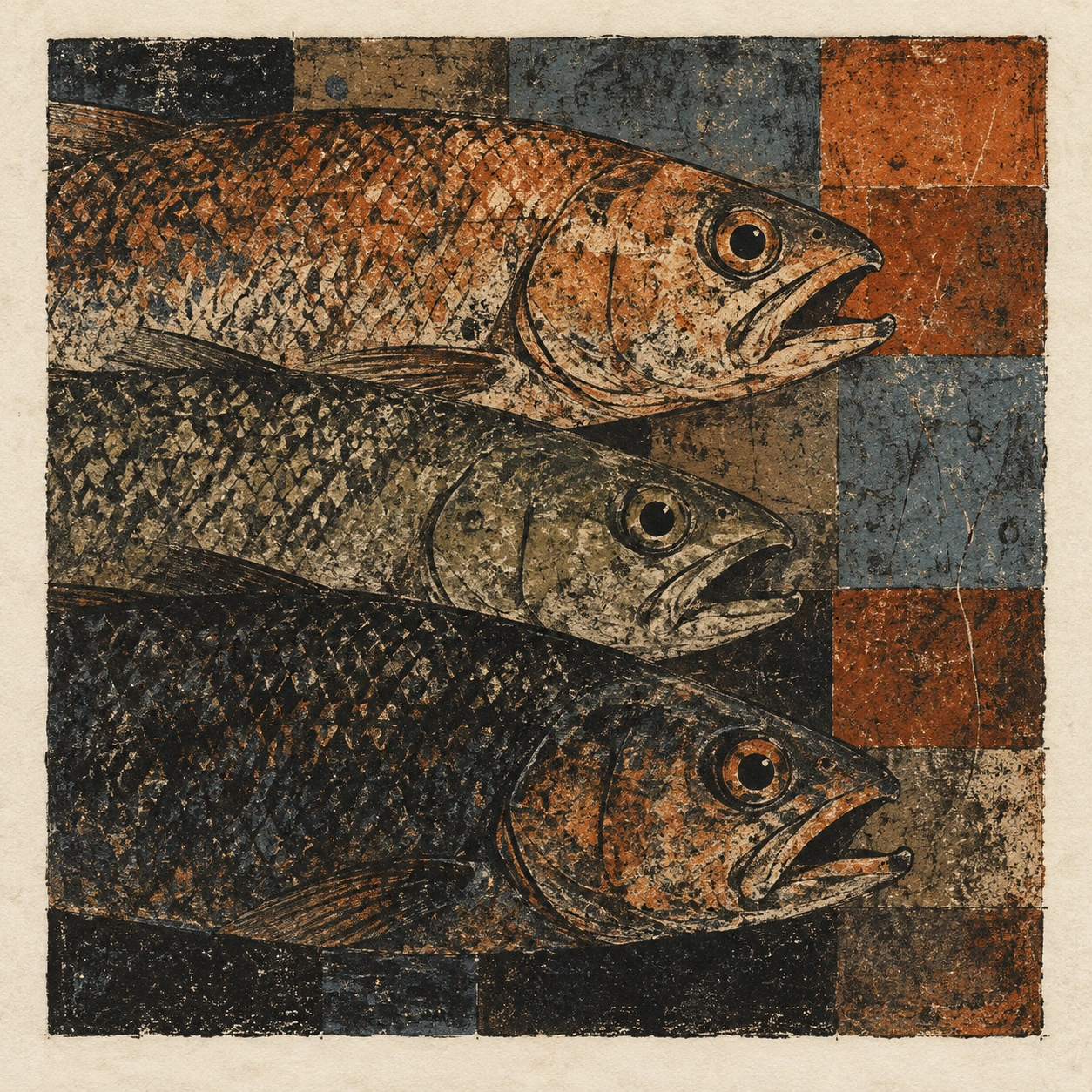 GPT Image 2.5
Reference details
- Reference ID
- 0466
- Category
- Collage & mixed media
Reference prompts
Style prompt
Collagraph printmaking layers raised and recessed textures into a compact field of rectangular color plates. Rust orange, copper, charcoal brown, and slate blue-gray form an earthy restricted palette on visible warm paper. Ink deposits unevenly, leaving pitted grain, rubbed patches, crosshatched mesh, scratches, and dark seams where plates overlap. Recognizable curved contours emerge from the geometry but retain slightly broken, pressure-printed edges. Repeated round marks and parallel incisions give small details a deliberate rhythm amid large distressed blocks. Light is conveyed by pale paper showing through and by warmer ink areas, rather than by smooth volumetric shading. A shallow frontal arrangement stacks several horizontal masses inside a square frame, with alternating light-dark strips preserving separation. The surrounding blank margin and imperfect registration make the surface feel physically handled, tactile, and quietly archival.Full example prompt
A square collagraph print on warm off-white paper depicts three large fish overlapping in a compact horizontal arrangement. All three heads point to the right, with one near the top, one partly hidden in the middle, and a darker fish along the bottom. Their bodies extend beyond the left edge of the colored image area, making their circular eyes, open mouths, gill lines, and patterned scales the most legible details. Behind them, a patchwork of rectangular plates in rust orange, copper, slate blue, charcoal, and brown forms a shallow geometric ground. The top fish catches the most copper light; the middle one is more muted olive-gray; the lower one nearly merges with the dark base except for warm highlights across its snout. Their outlines are firm but slightly ragged, as if pressed from inked raised surfaces rather than drawn with a smooth pen. Crosshatched scale marks, rubbed ink, pitted speckles, and scratches cover the fish and background alike. Some plate borders remain visibly misaligned, and layered ink produces darker seams at overlaps. The image is enclosed by a modest blank paper margin with a faintly irregular edge. The composition is dense and frontal, but the alternating light and dark strips allow each head to emerge in turn. Light is implied through the copper and cream ink patches rather than through a realistic scene or a cast shadow. The palette is earthy and restricted, with cool blue-gray areas tempering the strong reddish-orange. The print feels handmade and tactile, balancing recognizable animal forms against an abstract grid of distressed color blocks.