
Styles
#0505
Knox Martin style reference and prompts
Explore the “Knox Martin” reference with scratch-like marks, simplified forms, and pale neutral tones. View the images, copy the style or example prompt, and discover related styles on Looksift.
Compare the Qwen Image 2.1 and GPT Image 2.5 examples, choose the visual qualities you want, and copy the style prompt for your own project.
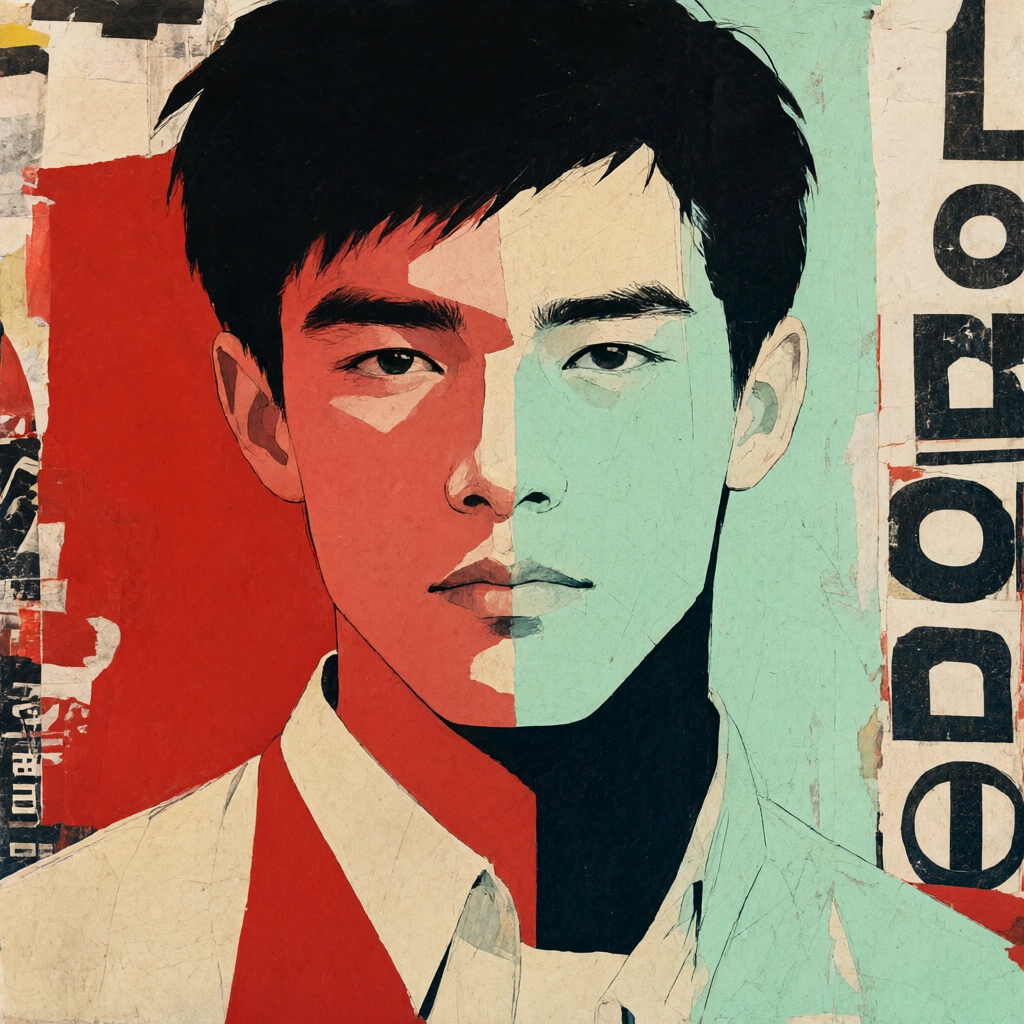 Qwen Image 2.1
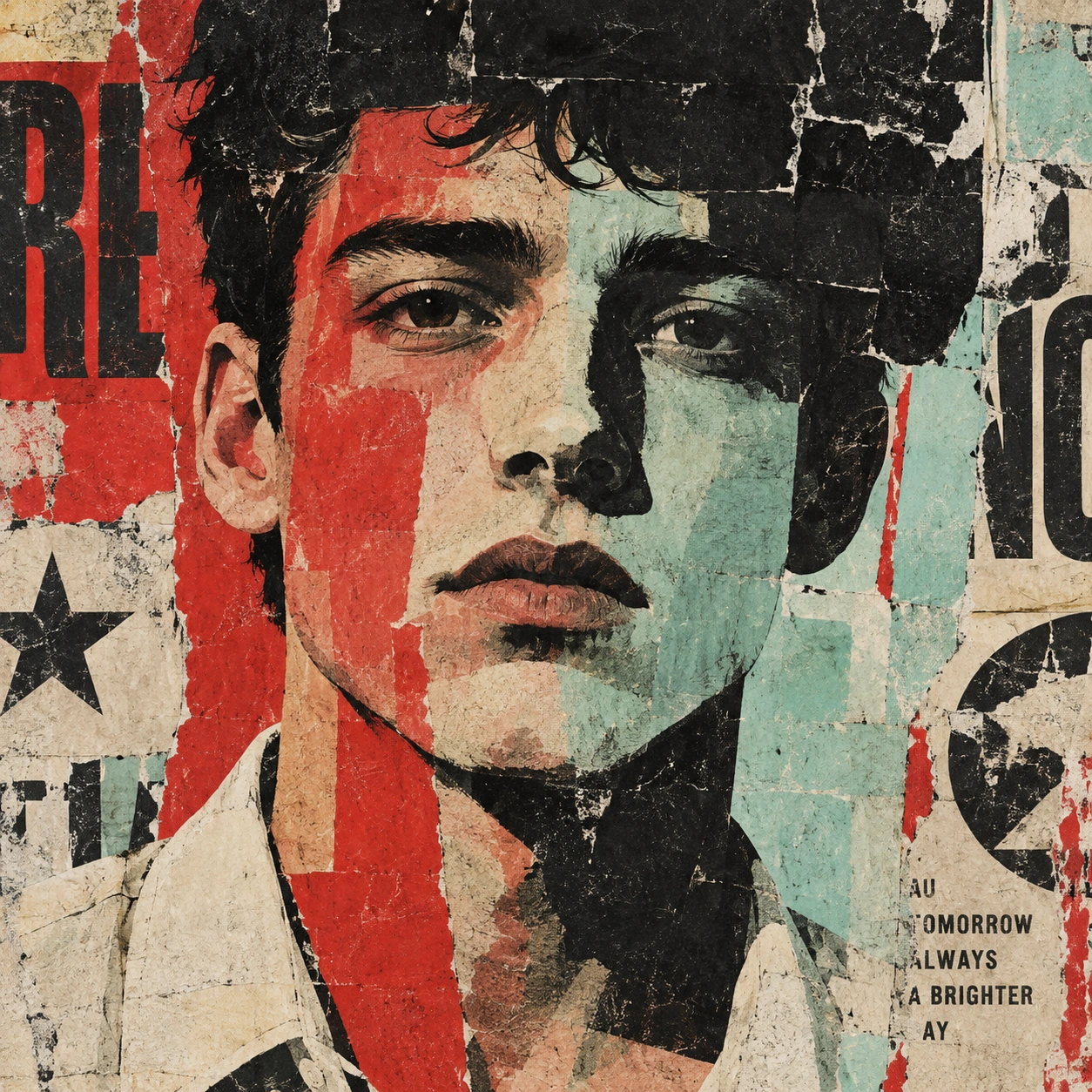 GPT Image 2.5
Reference details
- Reference ID
- 0505
- Category
- Flat illustration
Reference prompts
Style prompt
The mixed-media treatment stacks opaque color planes, rough poster grain and clipped print fragments into a bold, flattened image. Scarlet and coral press against cool turquoise and aged cream, while substantial black masses determine the strongest edges and value contrast. Thin graphic lines preserve a few precise details inside larger simplified shapes. Torn-looking joins, scratches and rubbed patches create surface history without dissolving the major silhouette. Illumination is constructed from adjacent light and dark planes rather than natural shadow; space remains shallow and densely layered. The eye moves between a stable central structure and restless peripheral marks, giving the finish a direct, urban collage energy.Full example prompt
A square mixed-media portrait presents a frontal young man's face through overlapping blocks of scarlet, pale turquoise, black and worn cream paper. The background is a patchwork of torn poster surfaces, vertical strips and partial printed marks rather than a continuous room. A heavy black shape hangs across the upper edge like cropped hair, cutting into the face below. The man's dark brows and eyes sit near the middle of the frame, looking outward with a calm, guarded expression. One side of the face is warm red and coral; the other becomes cool pale green under a deep black wedge. The nose is reduced to sharply contrasting planes, and the lips are drawn with a few dark and muted flesh-toned strokes. His neck and the collar of a light shirt extend into the lower left, crossed by a bold red vertical form. At the far left and along the right edge, fragments of large poster lettering and graphic symbols are visible, but the cropped print does not form a reliable readable message. Scuffs, paper grain and scratched marks interrupt the flat color layers. Thin dark lines define the most important facial features, while broad opaque shapes flatten and reorganize the surrounding anatomy. Light is implied by the pale turquoise and cream planes rather than by a realistic source or cast shadow; black areas provide the deepest visual weight. The overall composition holds a recognizable, still face within a restless surface of printed fragments and opposing warm and cool fields.