
Styles
#0606
Albert Namatjira style reference and prompts
Explore the “Albert Namatjira” reference with silhouette shapes and cool blue-gray tones. View the images, copy the style or example prompt, and discover related styles on Looksift.
Compare the Qwen Image 2.1 and GPT Image 2.5 examples, choose the visual qualities you want, and copy the style prompt for your own project.
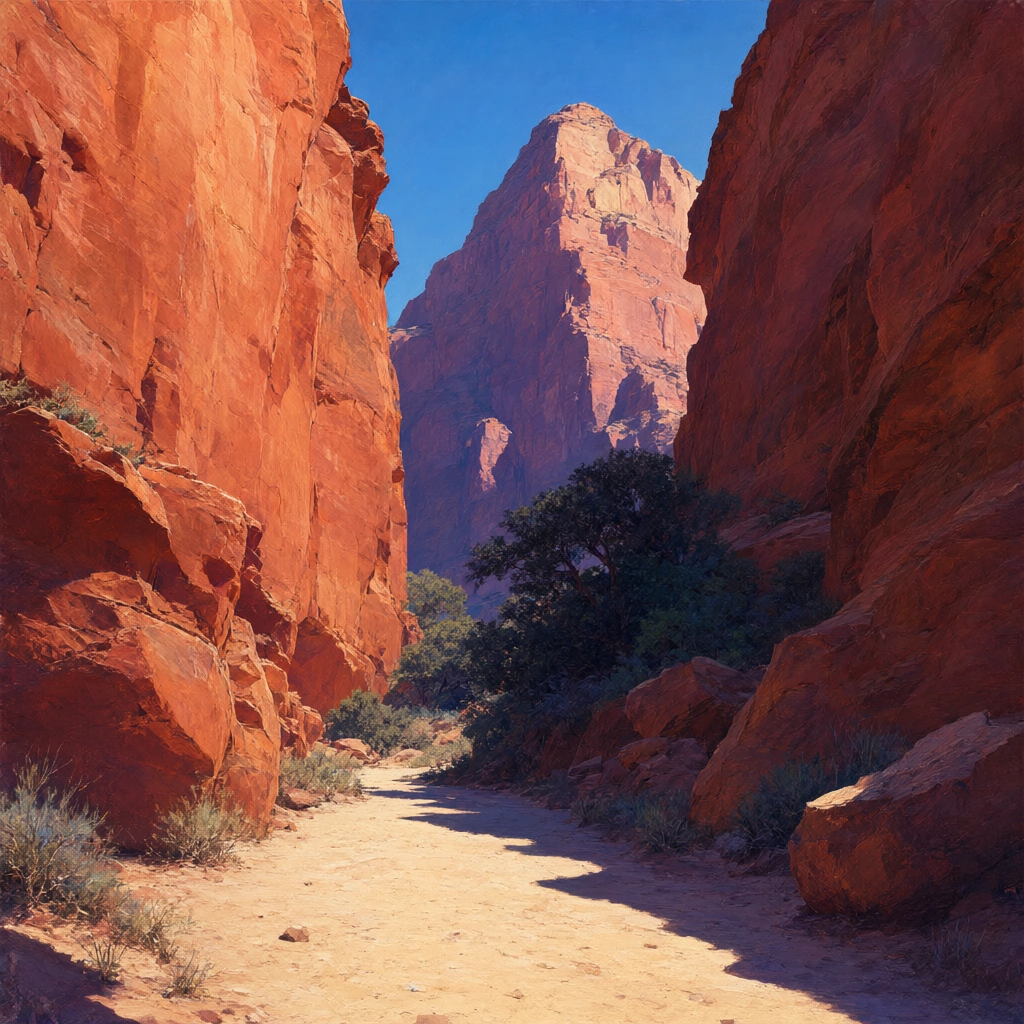 Qwen Image 2.1
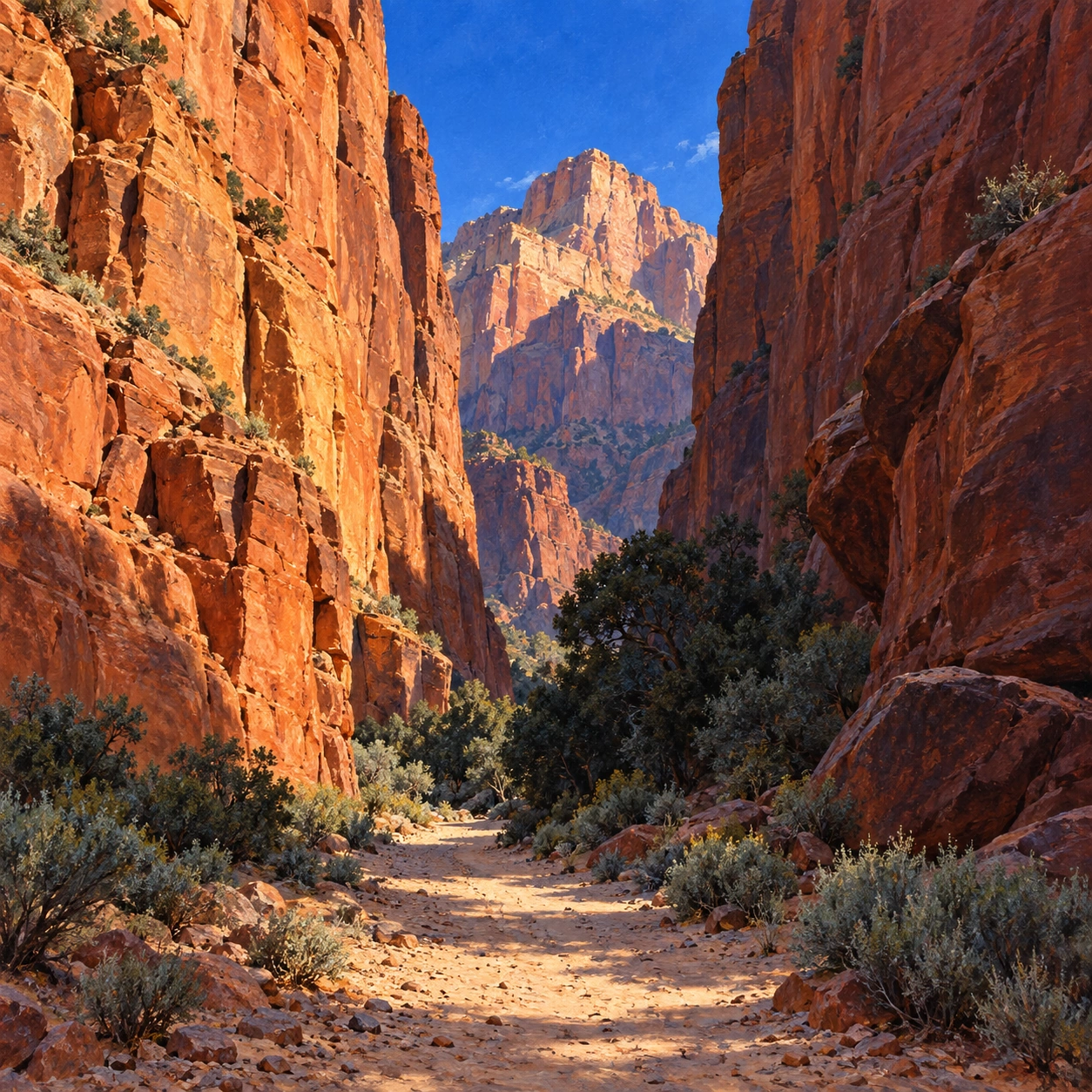 GPT Image 2.5
Reference details
- Reference ID
- 0606
- Category
- Painting
Reference prompts
Style prompt
The landscape painting organizes space through large, solid planes of saturated warm color divided by cool recessed shadows. Orange-red, rust, ocher, and pale terracotta dominate the illuminated areas; violet, plum, and blue-gray turn the shaded planes away from the light. Clear silhouettes and angular internal breaks give heavy forms a sculptural presence, while small granular marks keep their surfaces rough rather than smooth. Dark blue-green masses serve as compact accents against the expansive warm fields, creating both scale and a strong path for the eye. A narrow cool opening and a lighter receding center make depth legible between closer, darker sides. Sunlight is direct and high enough to reveal broad faces, but local shadow remains dense and colorful. The surface combines controlled shape with finely varied texture; edges sharpen at major light-dark boundaries and soften where distant forms meet atmospheric color. The overall effect is luminous, monumental, and spatially clear, with warm stone-like color and cool shadow doing the main expressive work.Full example prompt
A square landscape painting shows a pale sandy path winding between immense red sandstone cliffs under a narrow opening of deep blue sky. The left cliff rises out of the lower corner and continues beyond the top edge, its sunlit face glowing in orange, vermilion, and warm ocher. Broken ledges, vertical fissures, and angular pockets of shadow give the rock a rugged surface without losing its broad mass. Across the right side, another close rock wall climbs steeply through the frame. Its rust-red face is darker, with plum and brown shadows gathering in crevices and around a projecting boulder near the lower right. The two walls make a tall corridor that directs the eye toward the center. Through that opening, a more distant peak rises in rose and pale terracotta, its upper planes illuminated while violet shadows divide the lower facets. A small wedge of blue sky surrounds the peak and sharpens the warm-cool contrast. Along the ground, the sandy track begins wide and bright at the bottom center, narrows beyond the middle, and disappears behind scrub and rock. Low shrubs and dark rounded trees gather where the cliffs meet the path, particularly on the center-right. Their dense blue-green and almost black foliage interrupts the fiery stone and supplies a sense of scale. A few scattered plants cling to ledges and the drier ground at the edges. The paint looks deliberate and finely textured, with crisp changes between illuminated rock planes and recessed shadow, and smaller stippled marks in the vegetation. Light enters from the upper left, striking the left wall and the distant summit while the right wall and the path beneath it remain in cooler, deeper shade. The bright path carries this light into the foreground, where short shadows cut across its rough surface. The overall composition is a strong vertical passage, balancing radiant red rock against blue sky and dark foliage to create a spacious yet sheltered desert atmosphere.