
Styles
#0609
A. Y. Jackson style reference and prompts
Explore the “A. Y. Jackson” reference with fine hatching, tactile surfaces, and angular planes. View the images, copy the style or example prompt, and discover related styles on Looksift.
Compare the Qwen Image 2.1 and GPT Image 2.5 examples, choose the visual qualities you want, and copy the style prompt for your own project.
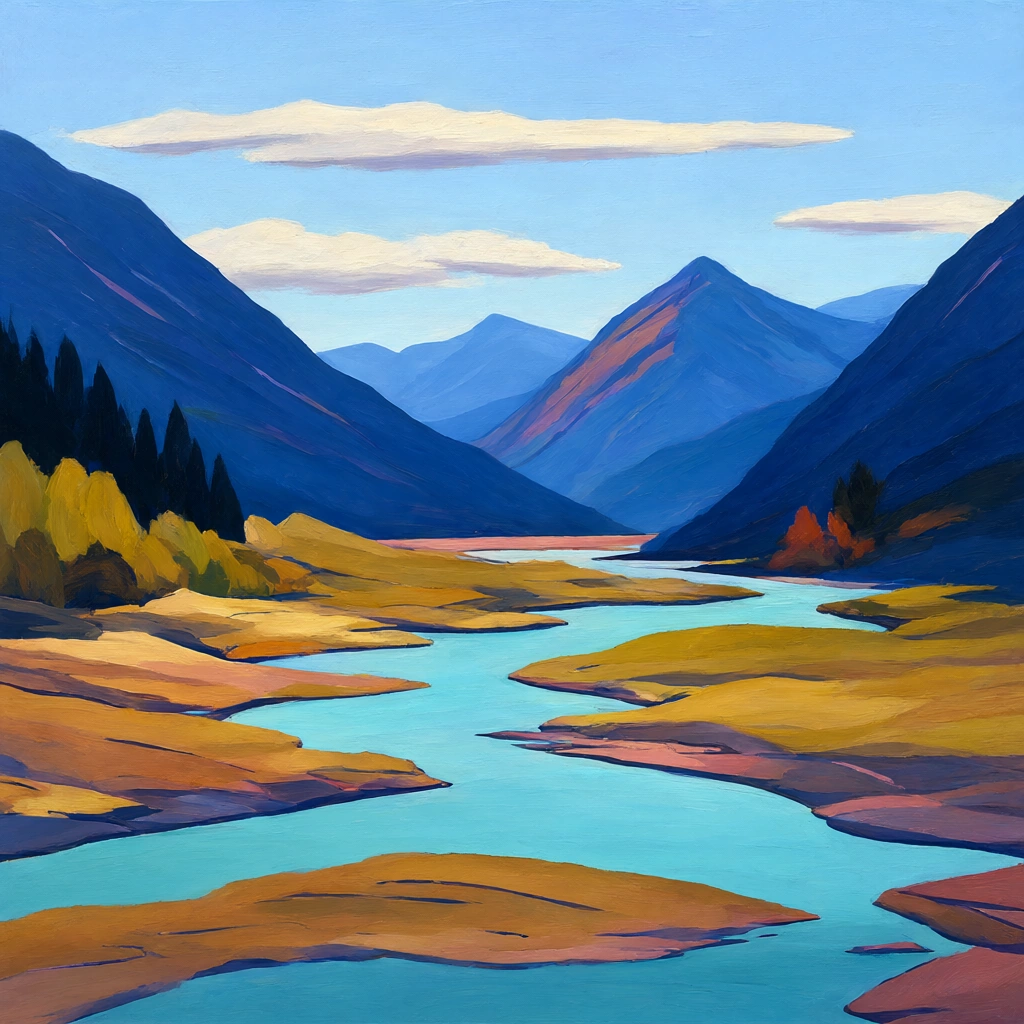 Qwen Image 2.1
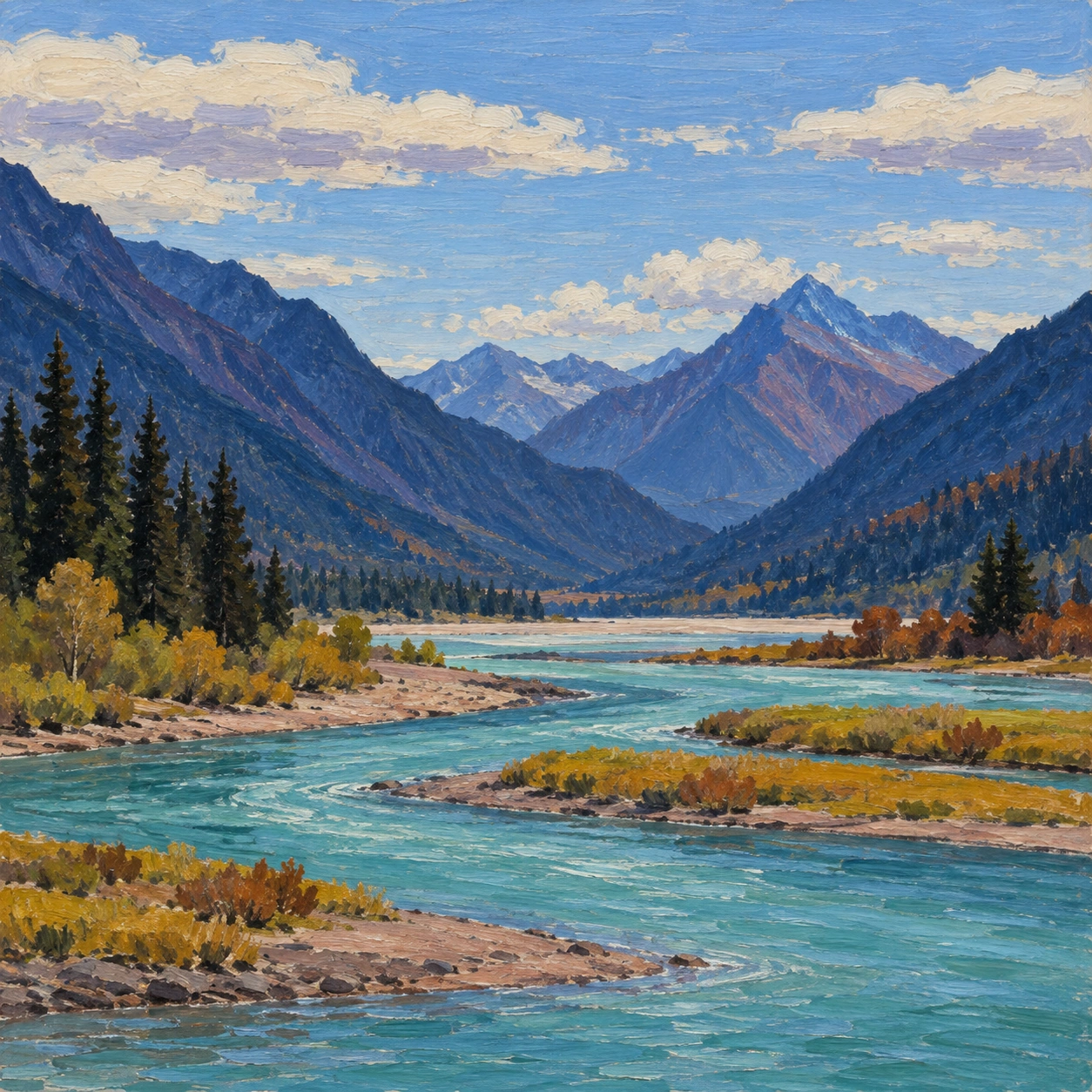 GPT Image 2.5
Reference details
- Reference ID
- 0609
- Category
- Painting
Reference prompts
Style prompt
The oil painting reduces natural forms to broad interlocking planes, long diagonals, and carefully placed dark contours. Deep Prussian blue, blue-gray, teal, and turquoise carry most of the image, while mustard, ocher, rust, and muted violet provide narrow warm interruptions. Brushed texture remains visible within each field: fine parallel marks follow a form's direction, and occasional thicker strokes mark a boundary or a change of plane. Edges are firm enough to preserve the graphic arrangement, but hand-worked paint keeps the shapes from becoming mechanically flat. Layered dark masses frame lighter receding bands, establishing depth through color and overlap rather than fine perspective detail. Pale horizontal highlights offer a quiet counter-rhythm to steep diagonal structures. Illumination is open and even, with strong color separation doing more work than cast shadows or glare. The overall effect is calm and monumental, combining a simplified geometric order with tactile, subtly varied paint.Full example prompt
A square oil landscape depicts a turquoise river winding through a mountain valley beneath a broad pale blue sky. The sky fills the upper third, with long flattened cream clouds edged in muted lavender. Smaller soft clouds hover over the central peaks, and the blue ground of the sky shows faint horizontal brush texture. A succession of mountains closes the middle distance. The nearest slopes on both sides are broad dark blue shapes, their surfaces articulated by long diagonal strokes and narrow violet lines that follow the contours. A higher triangular peak rises slightly right of center, blue along its crown and striped with muted reddish-purple on its descending face. Smaller, lighter blue ridges recede behind it, making the valley feel deep without atmospheric blur. At the left edge, a tight cluster of nearly black pointed evergreens stands before the mountain slope. Ochre and yellow-green rounded foliage sits at their base and leads toward a low sandy point. Across the right bank, a dark tree and patches of rust-orange growth interrupt the blue hillside. Between the banks, a quiet band of pale water or distant shore stretches across the valley. The turquoise foreground channel bends from the middle toward the bottom, broken by flat islands and bars of mustard yellow, warm brown, and pinkish earth. Dark contour lines and short directional strokes separate these layers and give the water a steady lateral movement. The paint is matte and visibly brushed, with simplified angular landforms rather than delicate naturalistic detail. Light is broad and even, brightening the sky and warm banks while leaving the mountain masses in saturated cool shade; the river remains a clear, luminous counterweight. The overall composition uses nested blue slopes and a winding bright channel to create a calm, structured rhythm of cool expanses and small warm accents.