
Styles
#0713
Amanda Sage style reference and prompts
Explore the “Amanda Sage” reference with etched linework, warm color accents, and frontal lighting. View the images, copy the style or example prompt, and discover related styles on Looksift.
Compare the Qwen Image 2.1 and GPT Image 2.5 examples, choose the visual qualities you want, and copy the style prompt for your own project.
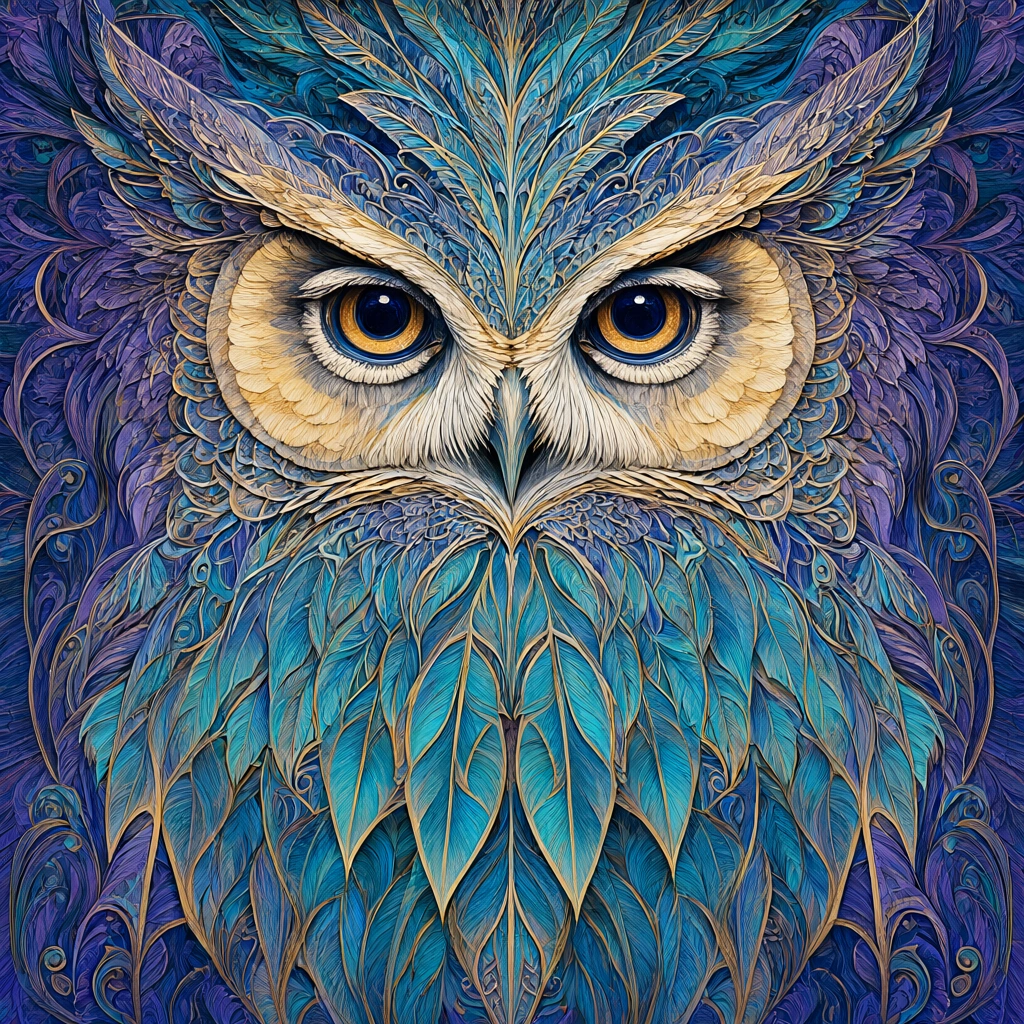 Qwen Image 2.1
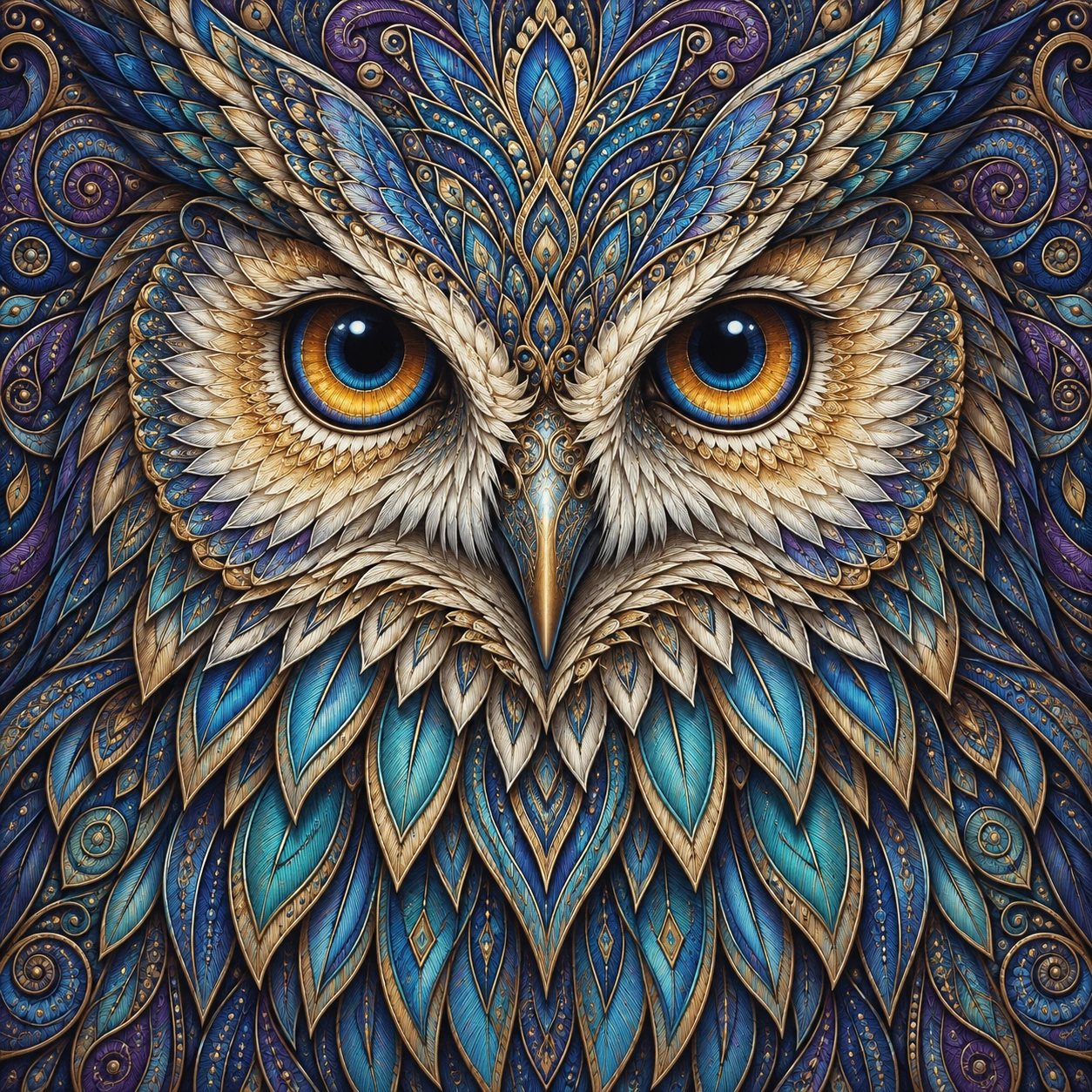 GPT Image 2.5
Reference details
- Reference ID
- 0713
- Category
- Flat illustration
Reference prompts
Style prompt
Ornamental illustration builds almost symmetrical structure from tightly nested curves, pointed arcs, fine engraved lines, and repeated scale like marks. Deep turquoise, indigo, violet, bronze, cream, and small amber accents form a jewel toned range whose warm highlights sit on cooler layered masses. Dense pattern fills nearly the entire frame, but larger pale rings and dark round accents create a readable hierarchy within the detail. Each shape is bordered by narrow contrasting strokes, then shaded with subtle internal gradation to give a carved, relief like depth. Repetition follows broad outward and downward flows rather than a uniform grid, so the eye travels through the intricate field. Frontal light keeps both sides similarly legible; shadows reside in narrow seams between layers and bright lines skim raised contours. The texture suggests meticulous handworked pigment and line rather than smooth flat vector color. The overall effect is hypnotic and ceremonial, with controlled symmetry holding abundant detail together.Full example prompt
A square ornamental illustration fills the frame with the forward facing face and chest of an owl built from intricate blue, turquoise, bronze, and violet feather patterns. The two large round eyes sit across the upper middle, each with a dark pupil ringed by deep blue and warm amber. Pale cream and gold feathers radiate outward in tightly layered curves around the eyes, giving the face a sculpted, almost carved depth. A slender pointed beak drops between them along the central axis. Above the eyes, wing like arcs rise into a tall branching crown of fine lines, loops, and scale shaped details, reaching the top edge. The outer sides of the head merge with dense violet and blue ornamental fields rather than a natural landscape. Across the lower half, long pointed feather forms overlap downward in mirrored rows, their turquoise centers outlined with ocher and darker teal. Small geometric curls and dotted tracery fill gaps between the larger shapes, leaving little blank area anywhere in the square. Although the design is nearly symmetrical, individual strokes and color flecks vary subtly from side to side, preserving a worked surface rather than a mechanical copy. The deepest shadows gather behind the pale eye rings and between layered feathers; narrow gold highlights run along raised edges. Light appears frontal and even, with depth created mainly by local value changes and interlocking contours rather than cast shadows. The overall composition is intense and ceremonial, using centered gaze, elaborate repeating lines, and rich cool warm color contrast to make the owl feel both lifelike and emblematic.