
Styles
#0880
Jessica Durrant style reference and prompts
Explore the “Jessica Durrant” reference with negative space and a monochrome palette. View the images, copy the style or example prompt, and discover related styles on Looksift.
Compare the Qwen Image 2.1 and GPT Image 2.5 examples, choose the visual qualities you want, and copy the style prompt for your own project.
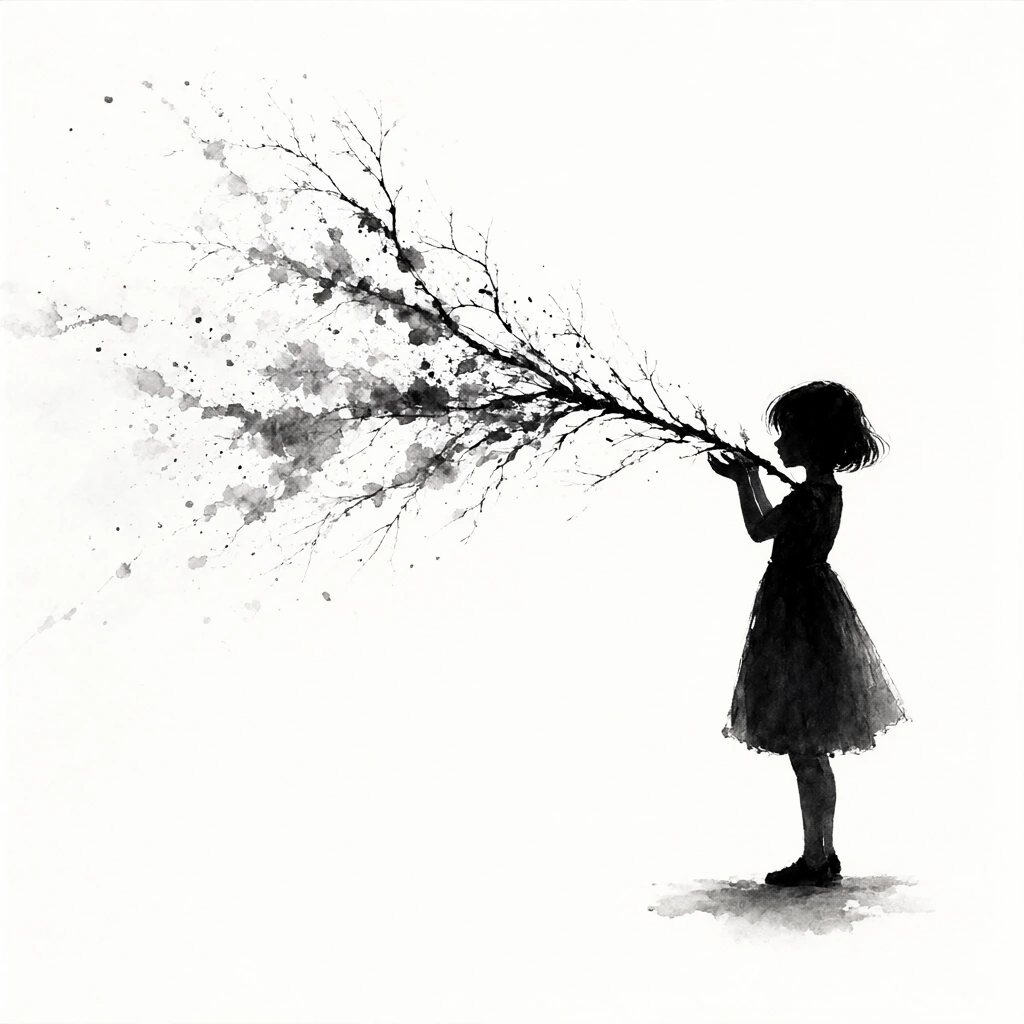 Qwen Image 2.1
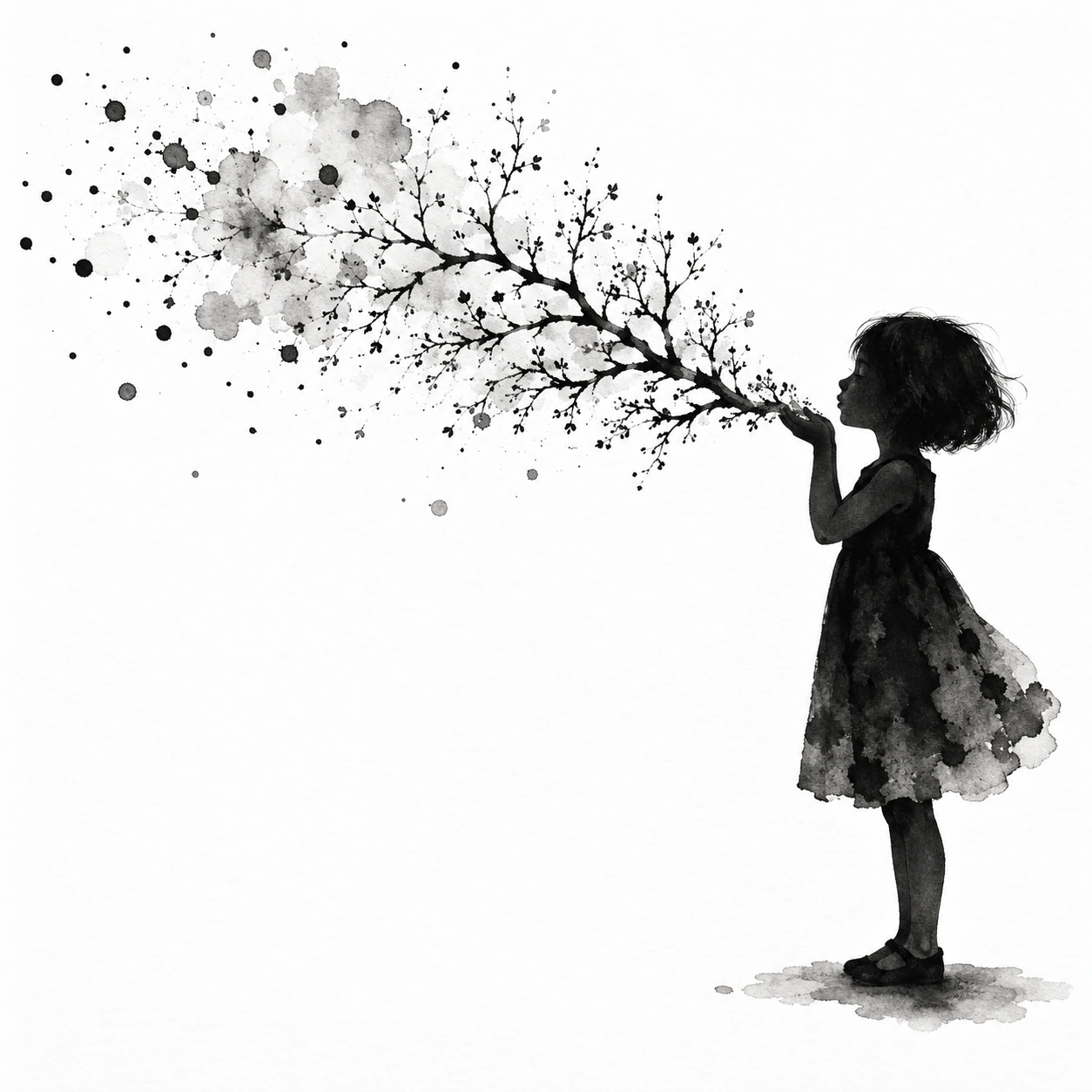 GPT Image 2.5
Reference details
- Reference ID
- 0880
- Category
- Painting
Reference prompts
Style prompt
Minimal monochrome ink and watercolor rely on white paper as the largest and brightest plane. A compact near-black vertical mass is balanced by a branching horizontal network that thins into gray wash and scattered splatter. Fine precise lines alternate with bleeding pigment, dry-looking specks, and translucent stains. The darkest marks cluster near the origin of movement, then fragment and fade through generous negative space. Shape is described mainly by silhouette, with only sparse internal tonal variation. A tiny ground smear can anchor an otherwise floating arrangement. There is no elaborate modeled lighting; the paper's whiteness supplies open luminosity and strong value contrast. The composition is asymmetric, delicate, and spacious, with clear rhythmic transition from solid block to threadlike marks to nearly vanished mist. The finish feels handmade, poetic, and intentionally incomplete.Full example prompt
A spare monochrome ink-and-watercolor illustration places a small girl in a black dress near the right side of an otherwise open white page. She stands in profile, hands cupped near her face. From those hands a dark branch-like tree grows horizontally toward the left, its fine twigs splitting into ever smaller marks. At the outer end, the twigs dissolve into gray washes, ink spatters, and drifting black droplets, as if the tree were becoming weather or breath. The girl's short hair, dress, arms, and legs form a crisp dark silhouette, but soft watery patches within the skirt keep it from appearing digitally flat. A small irregular gray shadow anchors her feet. No background landscape is drawn; the white paper is essential to the scene, giving both the fragile branching form and the figure room to breathe. The composition is asymmetrical yet balanced, with the upright figure at right and the airy burst of ink stretching left across the upper half. Strong black marks gather near the hands, then progressively lighten and fragment outward. Edges alternate between precise twig lines, soft bleeding pigment, and accidental-looking splashes. Lighting is implied by the paper's own whiteness rather than a modeled light source. The image feels poetic and fleeting, turning a simple gesture into a visual passage from solid body to branching line and floating stain.