
Styles
#0933
Yener Torun style reference and prompts
Explore the “Yener Torun” reference with geometric bands. View the images, copy the style or example prompt, and discover related styles on Looksift.
Compare the Qwen Image 2.1 and GPT Image 2.5 examples, choose the visual qualities you want, and copy the style prompt for your own project.
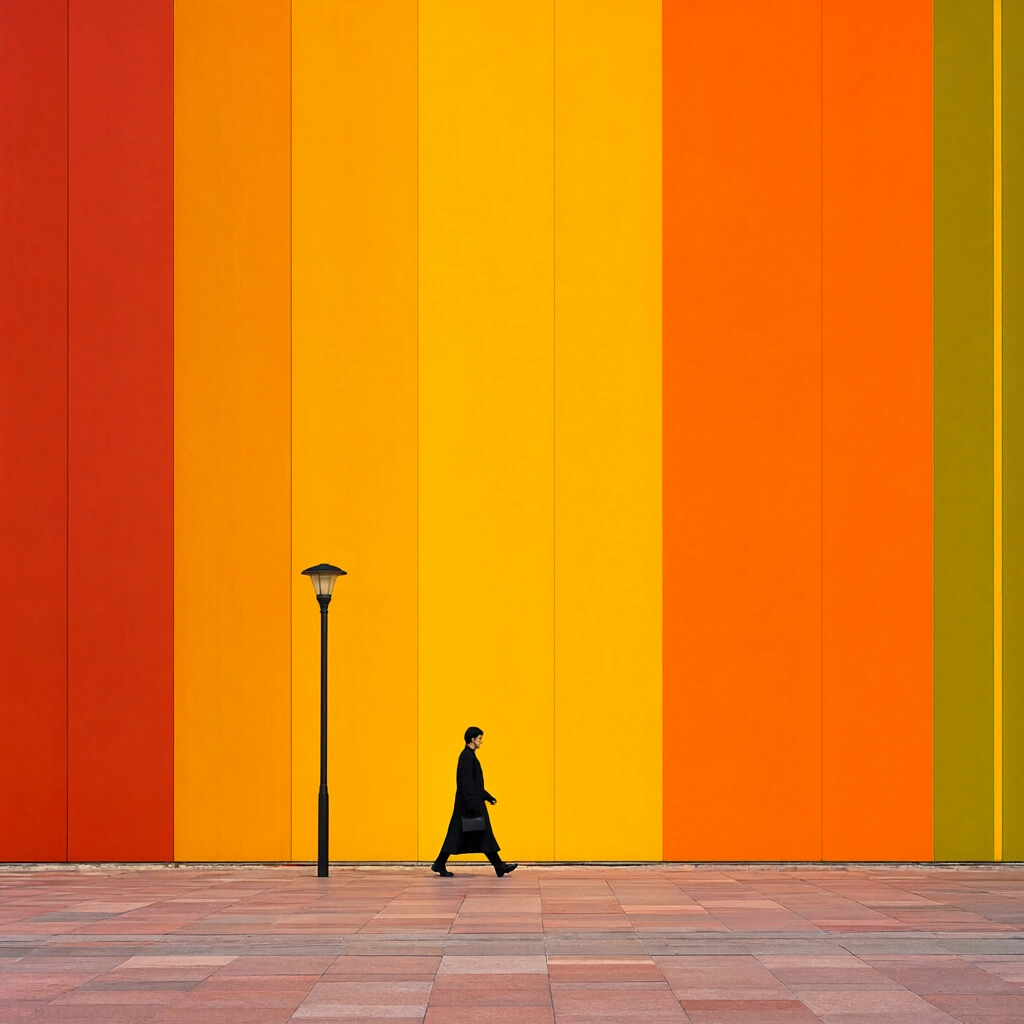 Qwen Image 2.1
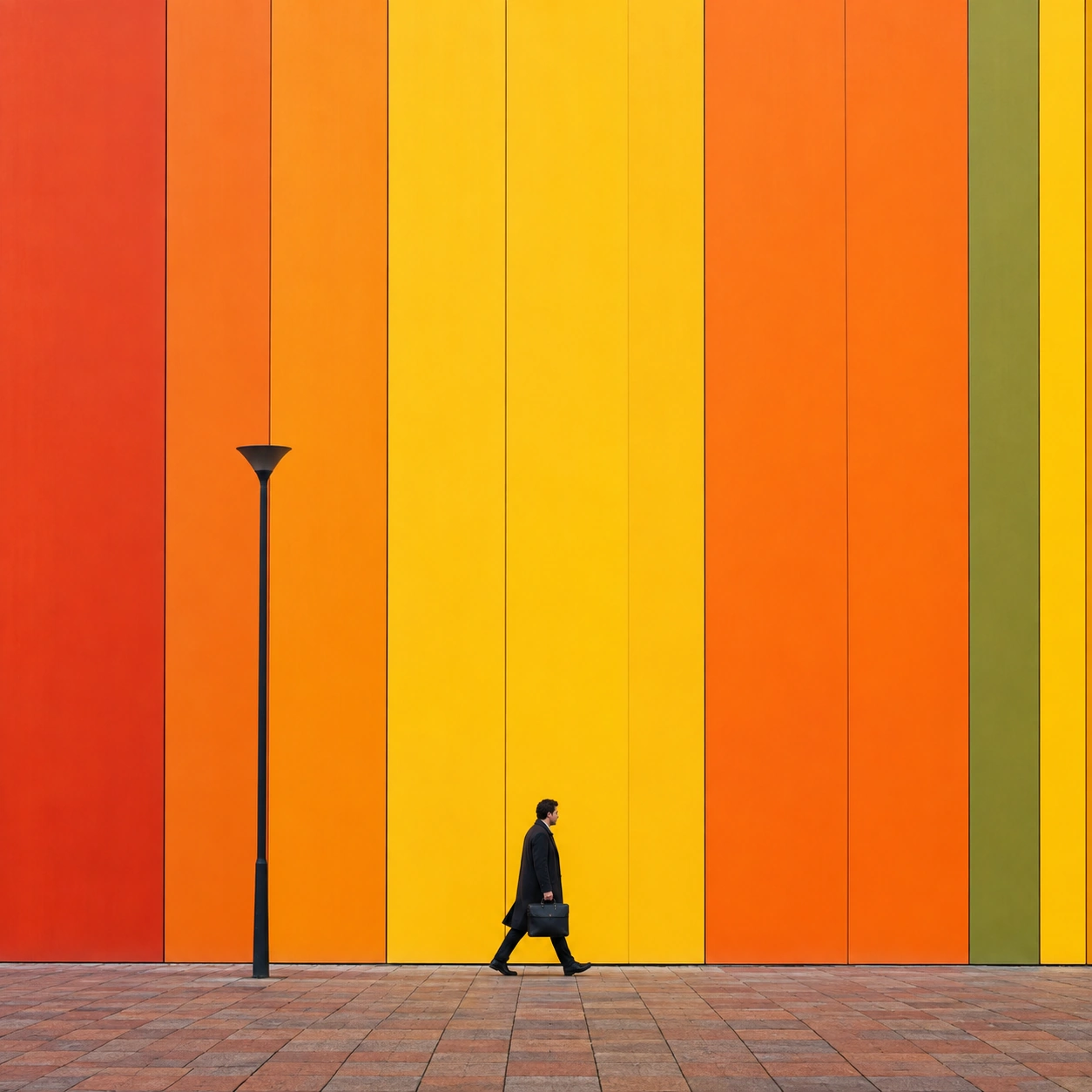 GPT Image 2.5
Reference details
- Reference ID
- 0933
- Category
- Photography
Reference prompts
Style prompt
Architectural color photography turns real surfaces into expansive, almost flat geometric fields. Saturated warm hues sit in adjacent vertical bands, with occasional narrow cooler accents sharpening the sequence. Precise seams and clean boundaries preserve the built scale without loading the frame with detail. A thin darker base grounds the larger color masses, while a tiny dark accent supplies scale and a focal point. Bright even daylight keeps shadows restrained and lets the hue relationships carry most of the drama. Repetition of tall strips creates a measured rhythm, but widths vary enough to prevent mechanical regularity. Generous uninterrupted color makes the image read quickly from a distance; closer inspection reveals slight surface variation and texture. The composition favors a low horizontal anchor beneath a towering plane, with plenty of open area around the small contrasting accent. The overall effect is crisp, playful, and monumental, driven by proportion and color rather than ornate detail.Full example prompt
A square architectural photograph shows a lone dark-clothed pedestrian crossing a paved foreground before an immense wall of vertical orange and yellow bands. The wall rises beyond the upper edge and fills almost the entire frame, so its scale is established by the small person near the lower middle. On the left, a broad vermilion strip leads into narrower orange and golden-yellow panels. Fine vertical seams divide these color fields, giving the flat surface a quiet architectural rhythm. A radiant yellow section occupies the center behind the walker, while another hot orange band fills much of the right side. Close to the far right edge, a slim olive-green stripe and a thin yellow line break the warm sequence. The pedestrian moves toward the right in a long dark coat and trousers, carrying a small dark rectangular bag. Their profile is visible but too small for detailed facial features. A narrow black streetlamp stands to the left of the figure; its small flared head is well below the top of the wall. Across the bottom, reddish and gray rectangular paving stones form a shallow horizontal strip, with darker joints and a thin line where ground meets wall. The person's feet and lamp base touch this pavement, giving the graphic color fields a credible ground plane. Bright daylight illuminates the wall evenly, with only slight shifts in tone across the panels; the human silhouette and lamp provide the darkest contrast. There is no visible signage or readable lettering. The photograph is sharply composed yet nearly abstract, its real-world surfaces reduced to large clean rectangles, repeated vertical lines, and a single walking gesture. The overall composition is spare and asymmetric, making saturated warm color and architectural scale feel playful and monumental at once.