
Styles
#0960
Axel Vervoordt style reference and prompts
Explore the “Axel Vervoordt” reference with tactile surfaces, layered depth, and side lighting. View the images, copy the style or example prompt, and discover related styles on Looksift.
Compare the Qwen Image 2.1 and GPT Image 2.5 examples, choose the visual qualities you want, and copy the style prompt for your own project.
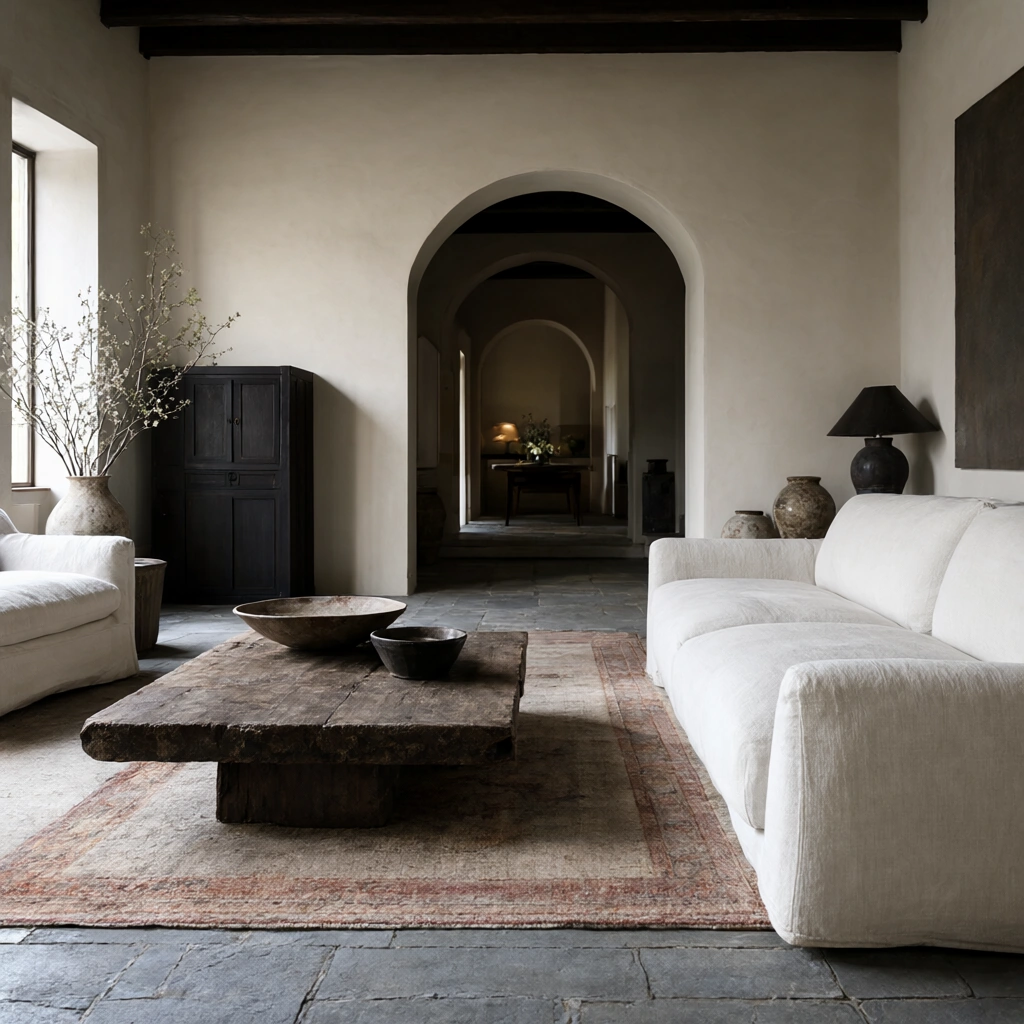 Qwen Image 2.1
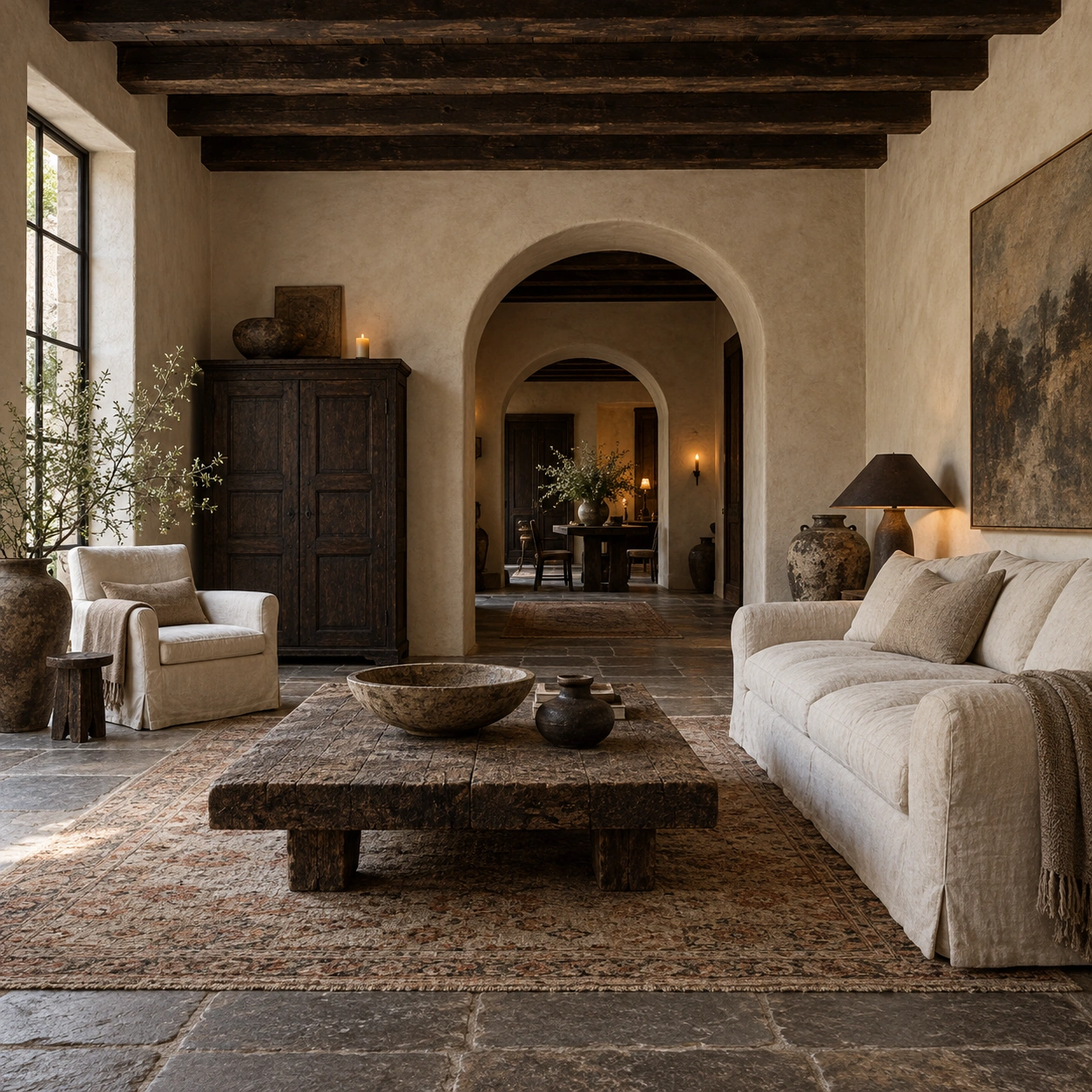 GPT Image 2.5
Reference details
- Reference ID
- 0960
- Category
- Photography
Reference prompts
Style prompt
Photographic imagery favors natural, timeworn materials and a restrained range of warm off-white, stone gray, soot black, and muted rust. Soft side light travels across matte surfaces, exposing plaster irregularities, coarse fibers, weathered grain, and quiet ceramic texture. Deeper recesses are allowed to stay dark, creating layered depth through tonal openings rather than vivid color. Broad low shapes counterbalance taller shadowed frames; repetition of rounded openings guides the eye gradually into the distance. Edges are clear where light touches them and gently lost where dark materials meet dark background. The palette remains low in saturation, with small amber glows warming an otherwise cool shadow structure. Empty areas around a few substantial forms give the frame calm and weight. The overall effect is contemplative and tactile, achieving richness through proportion, patina, and patient light rather than decorative density.Full example prompt
A square interior photograph shows an earthy living room with pale linen seating, a rough low table, stone flooring, and deep arched doorways. Dark exposed beams stripe the ceiling, while warm off-white plaster walls carry faint irregular texture. At the left, a tall narrow window admits soft daylight beside a pale armchair and a large vase of airy branches. A dark paneled cabinet stands against the rear left wall, its rectangular doors grounding the brighter seating. Near the center, a heavy low wood table holds a broad shallow bowl and a smaller dark vessel. It rests on a faded patterned rug whose muted rust and cream border separates the gathering area from the gray stone tiles. On the right, a generous ivory sofa with rounded arms extends toward the camera. Behind it, a dark conical lampshade sits near two weathered ceramic jars, and a large subdued painting hangs high on the plaster wall. Straight ahead, one broad arch frames a second arch and a more distant table with flowers, drawing the eye through successive rooms. Each opening becomes darker at its sides and brighter at its center, creating quiet depth without visual clutter. Daylight from the left lifts the plaster and upholstery; small warm lights deeper inside add a soft amber glow. Shadows gather beneath the beams, around the cabinet, and in the arched recesses. The material palette is restrained: worn timber, matte ceramic, tactile plaster, natural cloth, aged rug, and cool stone. No people or readable text appear. The overall composition is spacious and contemplative, with the heavy low furniture, repeated arches, and gentle light making the room feel settled and timeworn.