
Styles
#1145
Mead Schaeffer style reference and prompts
Explore the “Mead Schaeffer” reference with silhouette shapes, warm color accents, and side lighting. View the images, copy the style or example prompt, and discover related styles on Looksift.
Compare the Qwen Image 2.1 and GPT Image 2.5 examples, choose the visual qualities you want, and copy the style prompt for your own project.
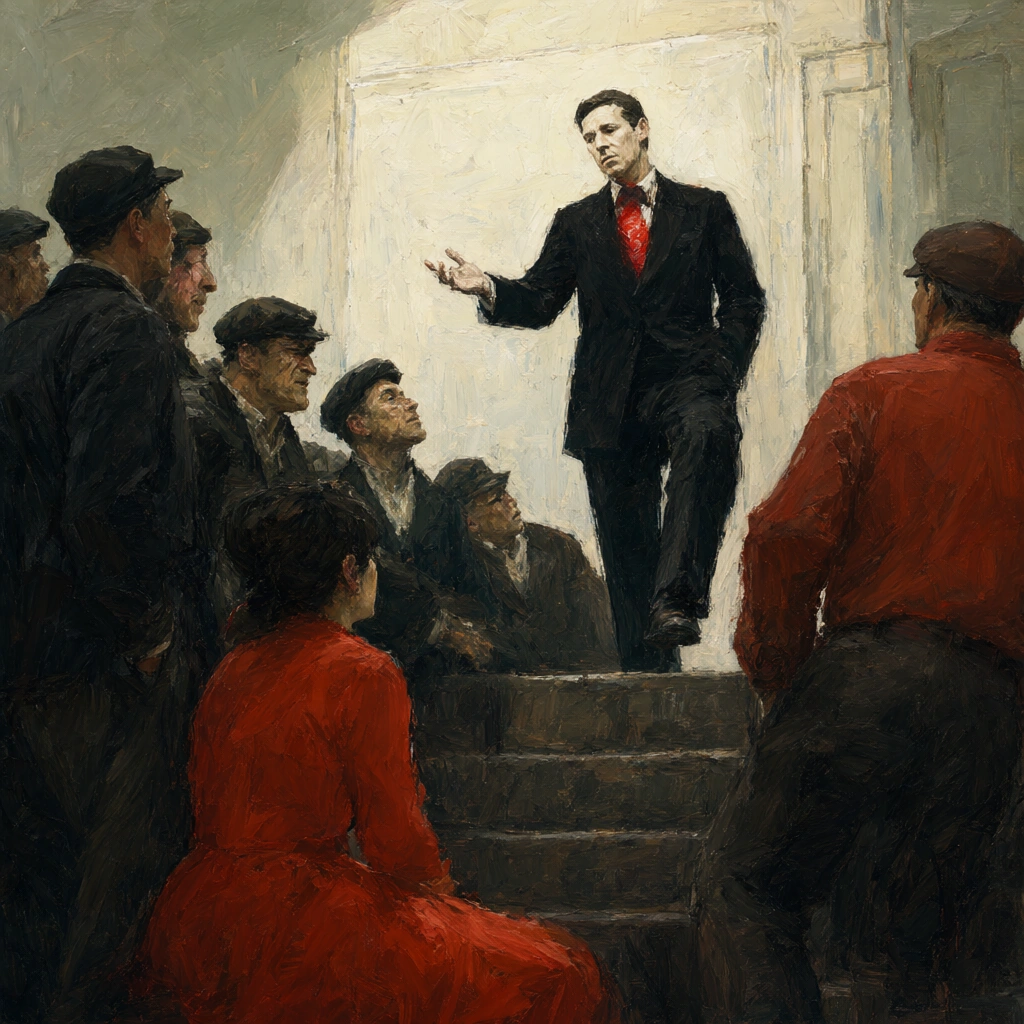 Qwen Image 2.1
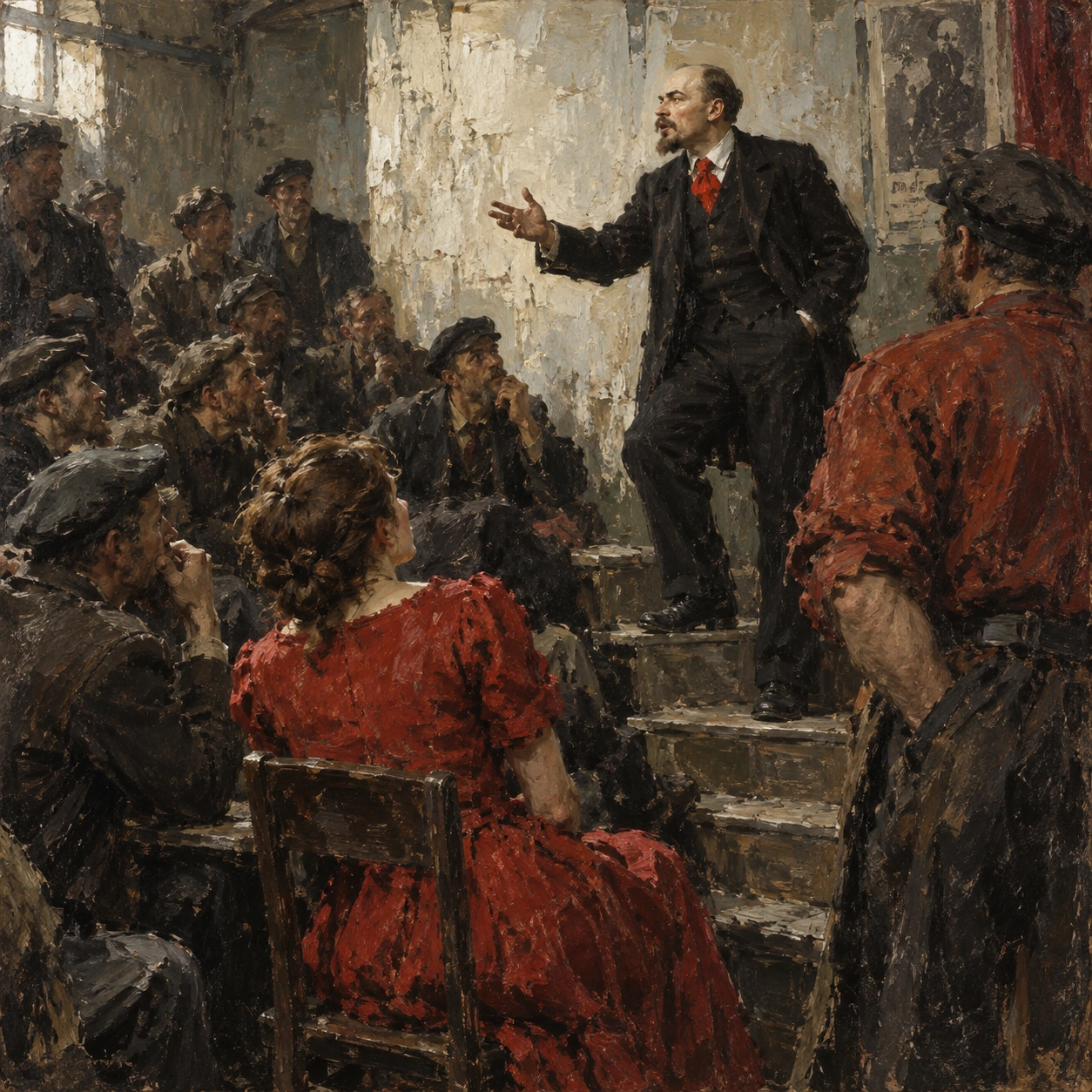 GPT Image 2.5
Reference details
- Reference ID
- 1145
- Category
- Painting
Reference prompts
Style prompt
A narrative oil-illustration surface places loose scraped color blocks beside quick fine accents. Muted sage, charcoal, cream, umber, and rust red build a crowded shallow space with one pale central area holding a dark silhouette clearly. Upper-side light selects a few planes and leaves overlapping outer forms in deep shadow. Figures and structural marks press together, yet value contrast preserves the focal action. Edges are often broken and brush-driven rather than carefully sealed; small sharper marks give expression at key points. Warm red accents repeat across the lower and middle field. The overall rhythm is charged, painterly, and compressed, with human movement suggested through energetic handling rather than photographic finish.Full example prompt
A square narrative oil illustration shows a pale-faced man in a dark suit standing on a few rough steps before a crowded room. He leans with one foot raised, one hand gesturing outward, and a red neck accent catches light at his chest. Men in caps and dark jackets cluster along the left, some seated and some looking up toward him. In the lower foreground, a woman in a vivid red dress sits with her back toward the viewer, making the audience's attention visible through her turned head. Another large figure in a rust-red shirt and cap stands at the right edge, partly blocking the steps. The room is suggested by pale, worn wall panels and sketchy structural lines rather than precise architecture. The composition is busy and compressed, but the speaker's dark silhouette against the light central wall remains easy to read. Brushwork alternates between broad scraped blocks and quick fine accents on faces and hands. Muted sage, charcoal, cream, umber, and rust red dominate; the reds mark the foreground and the speaker's chest. Light from the upper left brightens the central wall and selected faces while deep shadows gather in the crowd. No readable lettering appears. The overall scene feels charged and historical, with loose paint preserving the energy of many bodies in a small space.