
Styles
#1236
Glenn Ligon style reference and prompts
Explore the “Glenn Ligon” reference with halftone texture, a monochrome palette, and even lighting. View the images, copy the style or example prompt, and discover related styles on Looksift.
Compare the Qwen Image 2.1 and GPT Image 2.5 examples, choose the visual qualities you want, and copy the style prompt for your own project.
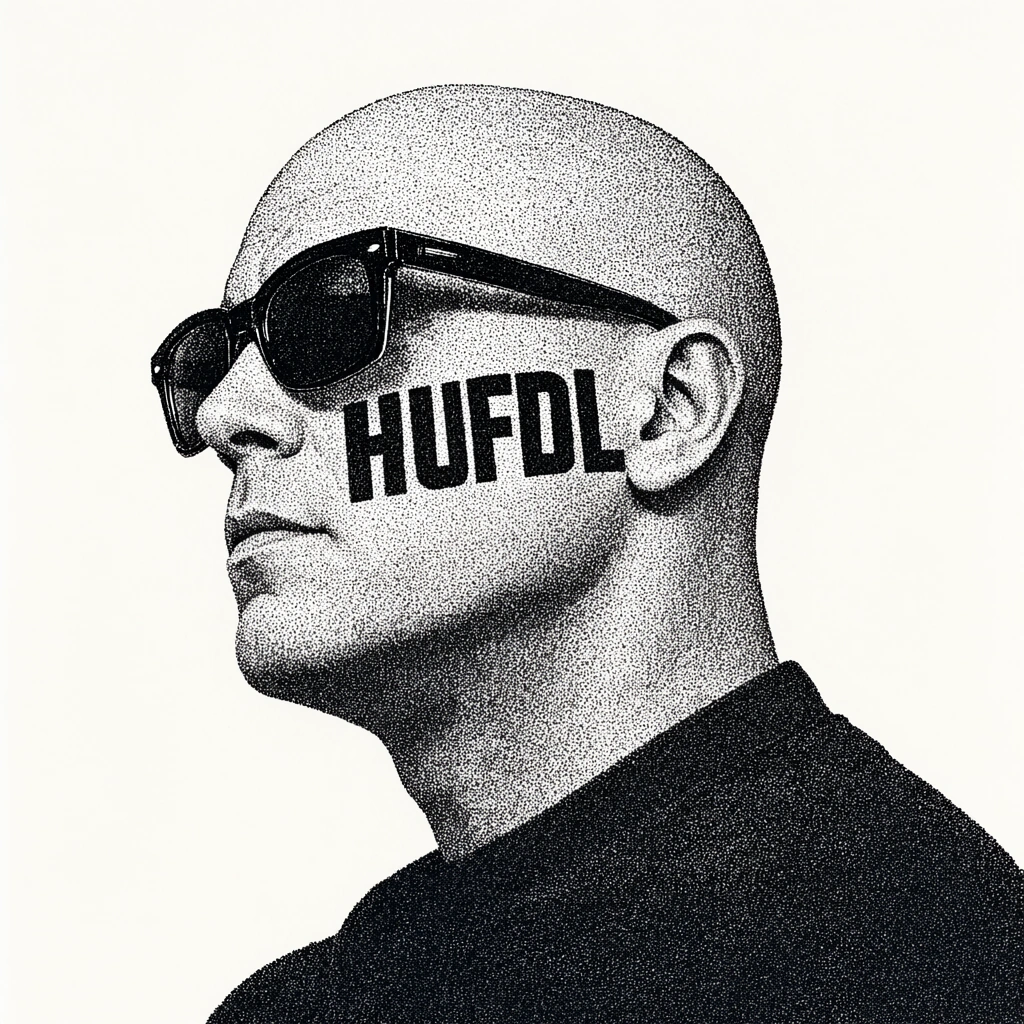 Qwen Image 2.1
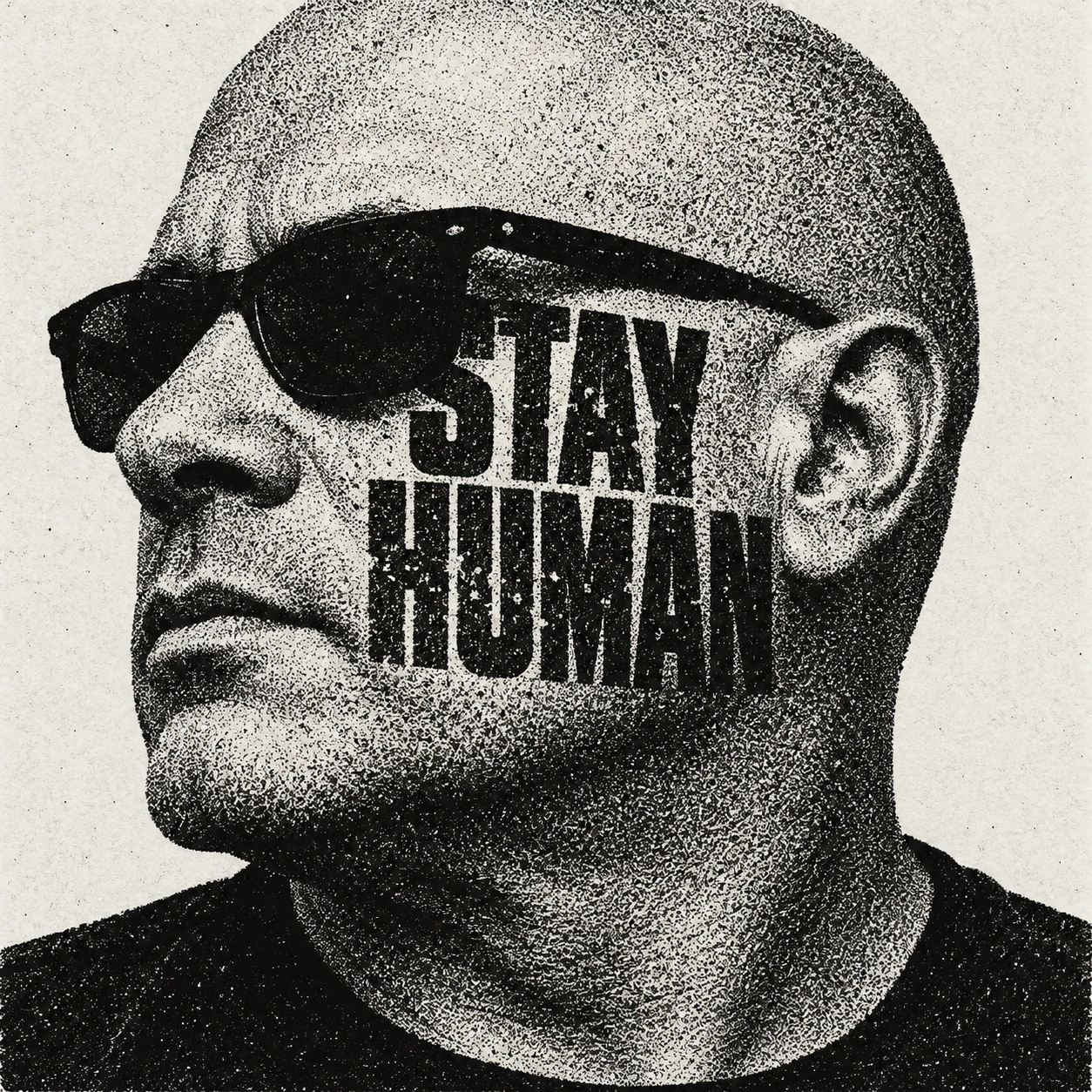 GPT Image 2.5
Reference details
- Reference ID
- 1236
- Category
- Photography
Reference prompts
Style prompt
Use high-contrast monochrome printmaking with coarse halftone dots, photocopy grain, and uneven ink density. Overlay large, hard-edged typographic forms directly across the main image plane, allowing letters to mask and reveal underlying contours. Keep the background pale and spare, while dark glasses-like curves or similarly bold graphic accents punctuate the granular field. Favor flat even illumination, a tight square crop, and a collision of legible form with assertive printed language.Full example prompt
The image depicts a bald man from the shoulders up, his head turned toward the left in a strong three-quarter profile. Dark glasses sit across his eyes, with the nearest lens and temple rendered in bold black curves. His mouth is closed and his expression appears firm and contemplative. The head occupies almost the entire square, leaving only a plain pale ground around the silhouette. At the center of the face, heavy block letters are printed over the cheek and eye area. Their exact message is secondary to their physical presence: vertical bars, sharp corners, and thick counters interrupt the organic facial planes. The rest of the portrait is constructed from dense black-and-white stippling, like a coarse halftone print or photocopied newspaper image. Tiny dots and rough flecks describe the scalp, ear, jaw, neck, and dark shirt, becoming more concentrated in the shadows. The glasses and typography provide cleaner, heavier shapes against this granular field. Illumination is even and flat, with no naturalistic background or atmospheric perspective; contrast comes from ink density and the transition between pale paper and deep black marks. The leftward turn creates a diagonal movement through an otherwise frontal graphic square. Despite the overlay, the likeness remains immediately readable. The frame feels like a collision between a photographic record and a printed declaration, with language and image sharing the same surface instead of sitting in separate caption and picture zones.