
Styles
#1277
Liam Brazier style reference and prompts
Explore the “Liam Brazier” reference with angular planes, negative space, and pale neutral tones. View the images, copy the style or example prompt, and discover related styles on Looksift.
Compare the Qwen Image 2.1 and GPT Image 2.5 examples, choose the visual qualities you want, and copy the style prompt for your own project.
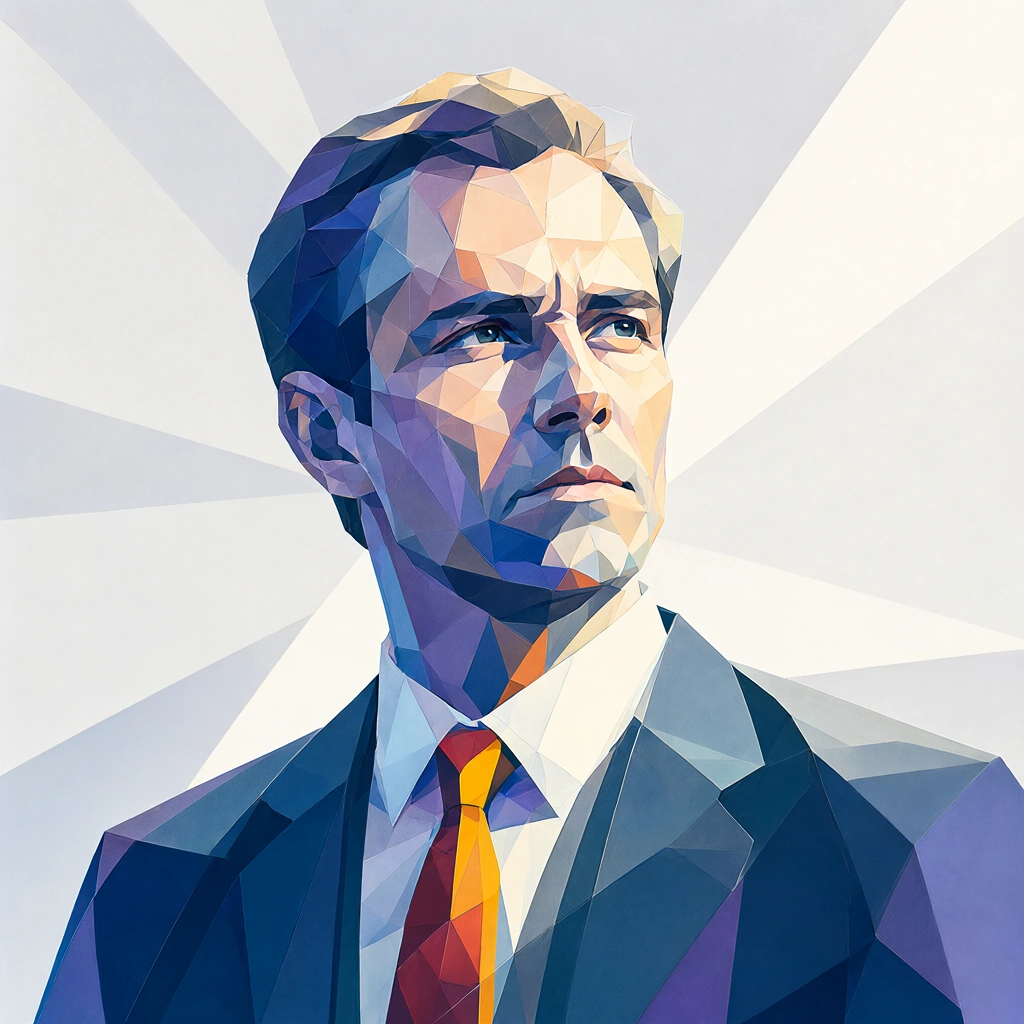 Qwen Image 2.1
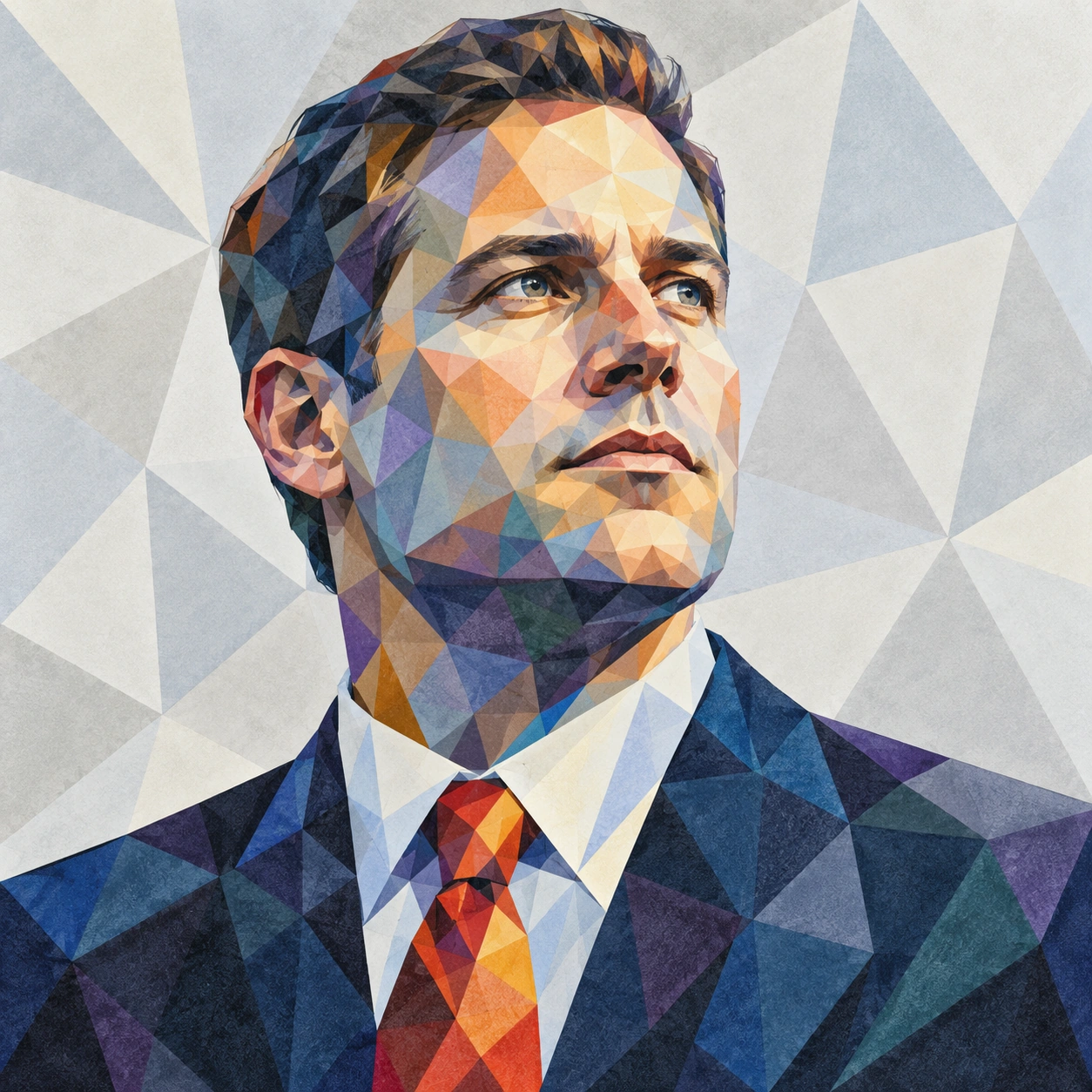 GPT Image 2.5
Reference details
- Reference ID
- 1277
- Category
- Flat illustration
Reference prompts
Style prompt
The style is low-poly geometric portrait illustration with crisp angular tessellation, variable facet scale and controlled color-plane lighting. Translucent and opaque polygons in cream, peach, pale blue, teal, indigo and violet build dimensionality, punctuated by small warm accents. Fine facets concentrate around high-information areas; broad facets organize larger masses and pale negative space. Edges stay sharp, with a trace of print grain to soften digital perfection. The square frame balances recognizable form with abstract chromatic rhythm.Full example prompt
A square geometric portrait shows a man in a suit and tie from the chest upward, looking slightly toward the right and above the viewer. His face, neck and clothing are assembled from hundreds of angular translucent and opaque facets rather than smooth brush modeling. Cream, pale blue and warm peach planes describe the lit cheek and forehead; indigo, violet and deep teal facets define the neck, jacket and shaded jaw. Small orange, red and yellow triangles sharpen the tie, collar and selected facial planes. The background is mostly very pale gray with large low-contrast polygons radiating away from the figure, giving the silhouette room to remain legible. The man's expression is firm and contemplative, carried by the arrangement of brow, nose and mouth fragments despite the abstracted surface. Facets vary in size: very small ones resolve the eye and lips, while larger blocks structure shoulders and empty space. Their edges meet crisply but a slight printed grain prevents an overly sterile vector effect. Light is implied by color placement rather than a conventional shadow gradient. The result combines portrait presence with a stained-glass-like tessellation, allowing the viewer to shift between recognition of a person and appreciation of the chromatic geometry that builds him.