
Styles
#1298
John Olsen style reference and prompts
Explore the “John Olsen” reference with fine linear detail, scratch-like marks, and a low horizon. View the images, copy the style or example prompt, and discover related styles on Looksift.
Compare the Qwen Image 2.1 and GPT Image 2.5 examples, choose the visual qualities you want, and copy the style prompt for your own project.
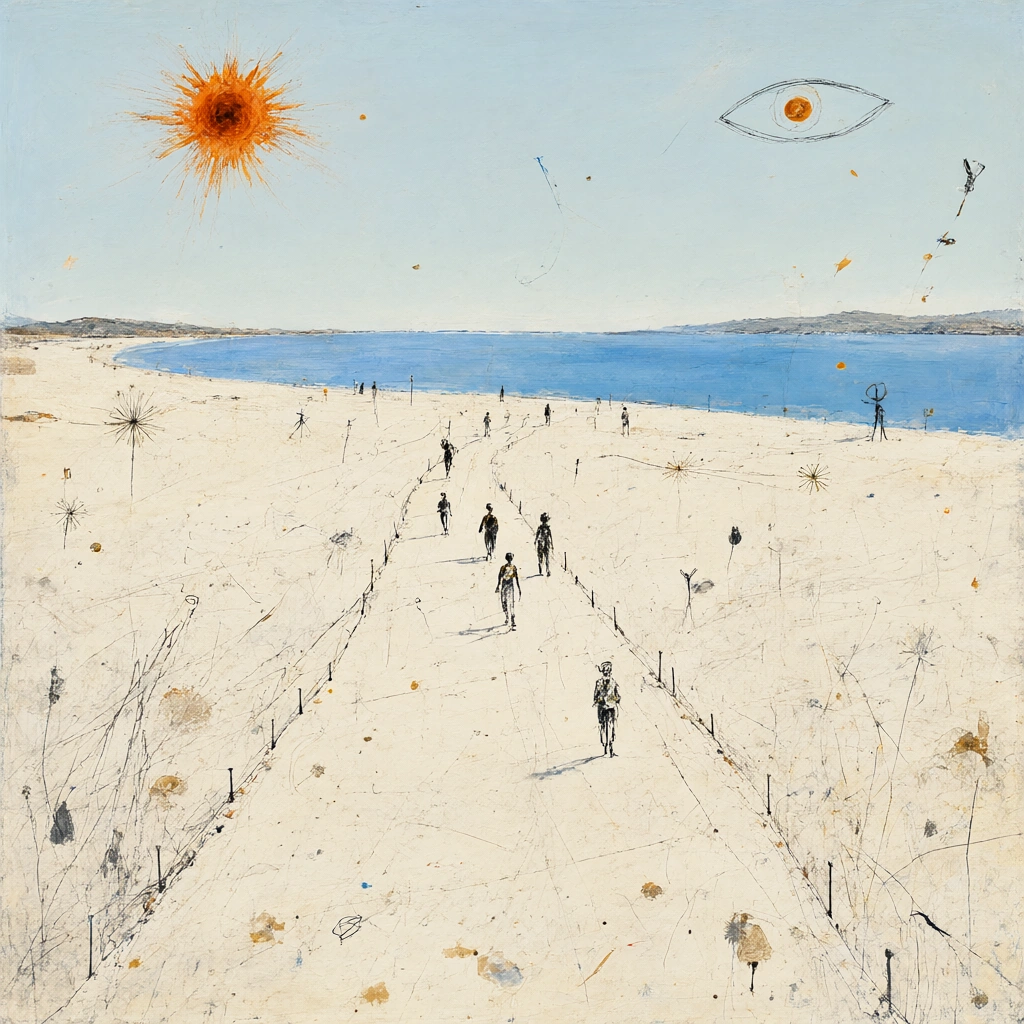 Qwen Image 2.1
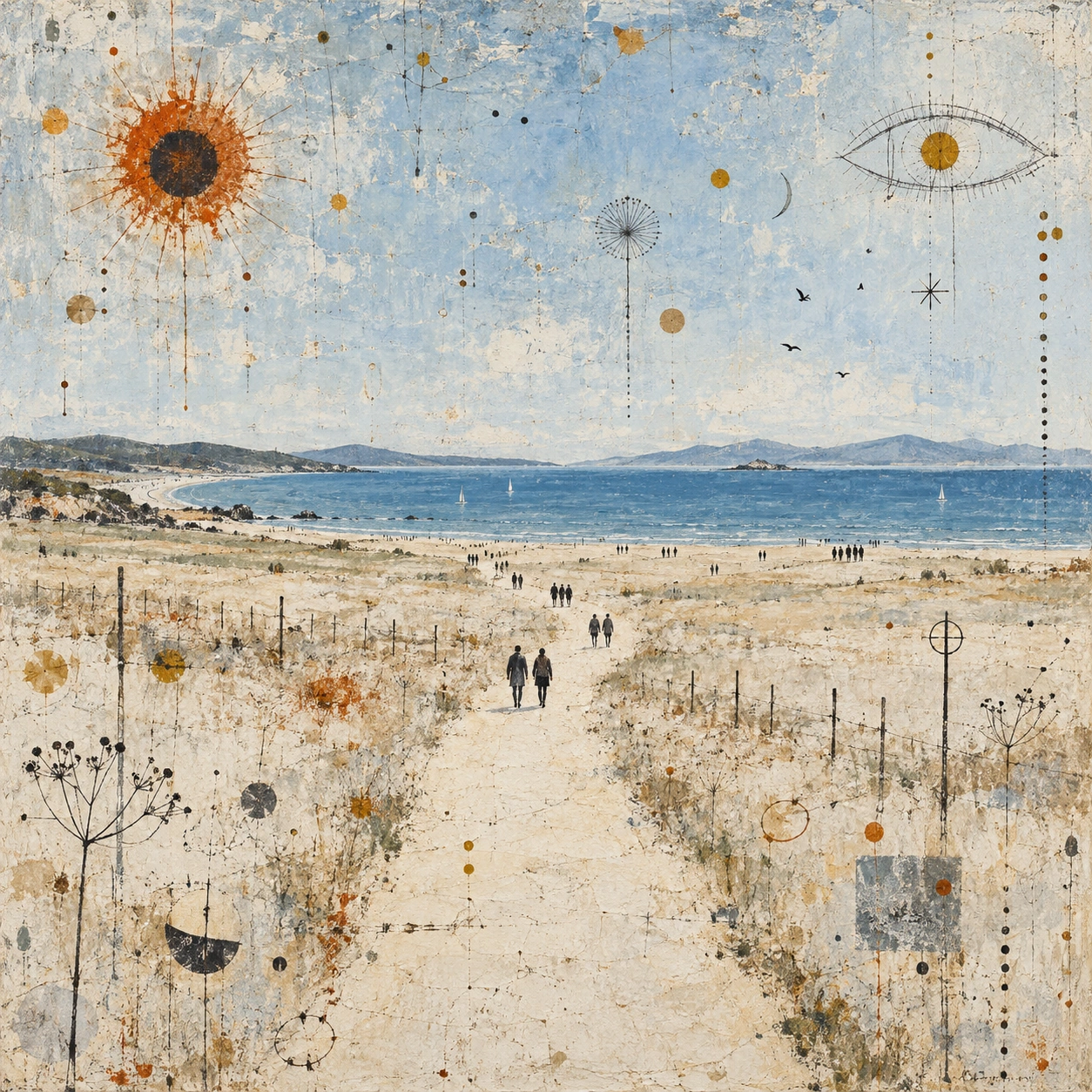 GPT Image 2.5
Reference details
- Reference ID
- 1298
- Category
- Painting
Reference prompts
Style prompt
Use lyrical mixed-media painting with broad thin washes, scratched fine lines, tiny dispersed marks, and occasional rust-orange circular accents. Leave large pale fields of cream and powder blue, then organize them with a low horizon and one faint receding route. Let some marks be observational and others diagrammatic, without resolving them into readable symbols. Preserve spatters, drips, rubbed patches, and transparent earlier layers. Keep scale playful: very small dark anchors should make the open field feel immense. The result is airy, curious, and poetic, with visual rhythm arising from scattered microdetails rather than a dominant central object.Full example prompt
A square lyrical mixed-media painting looks over an open pale coastal plain toward a horizontal band of blue water and low far hills. A broad cream path begins near the bottom center and recedes into the distance, where tiny dark walking figures appear in scattered groups. The ground is marked by hair-thin lines, pinlike posts, scratch marks, small circular stains, and fine drips. The sky takes up the upper half as a faded powder blue wash, not a smooth solid fill. Near the upper left hangs a rough orange sunburst with a dark center; at upper right a lightly drawn eye-like form contains a small ocher circle. Other tiny amber dots, spoked seed-head shapes, and floating symbols drift across sky and land, never forming readable writing. The central waterline is almost level, while a slight bend of shore at the left gives the landscape depth. The main visual event is the contrast between huge open pale space and many dispersed marks, some real-world figures and others imaginary diagrams. Paint is scraped, spattered, and washed thin; small details seem drawn over earlier layers. Colors are restrained to cream, powder blue, gray, ocher, rust, and dark ink. The composition has no single oversized focal form. Instead, the path, walkers, strange orange sun, and eye shape establish a wandering rhythm across the frame. The mood is light, curious, and poetic, as if ordinary seaside observation and a private visual map occupy the same page.