
Styles
#1311
Bruce Onobrakpeya style reference and prompts
Explore the “Bruce Onobrakpeya” reference with tactile surfaces, flat color shapes, and pale neutral tones. View the images, copy the style or example prompt, and discover related styles on Looksift.
Compare the Qwen Image 2.1 and GPT Image 2.5 examples, choose the visual qualities you want, and copy the style prompt for your own project.
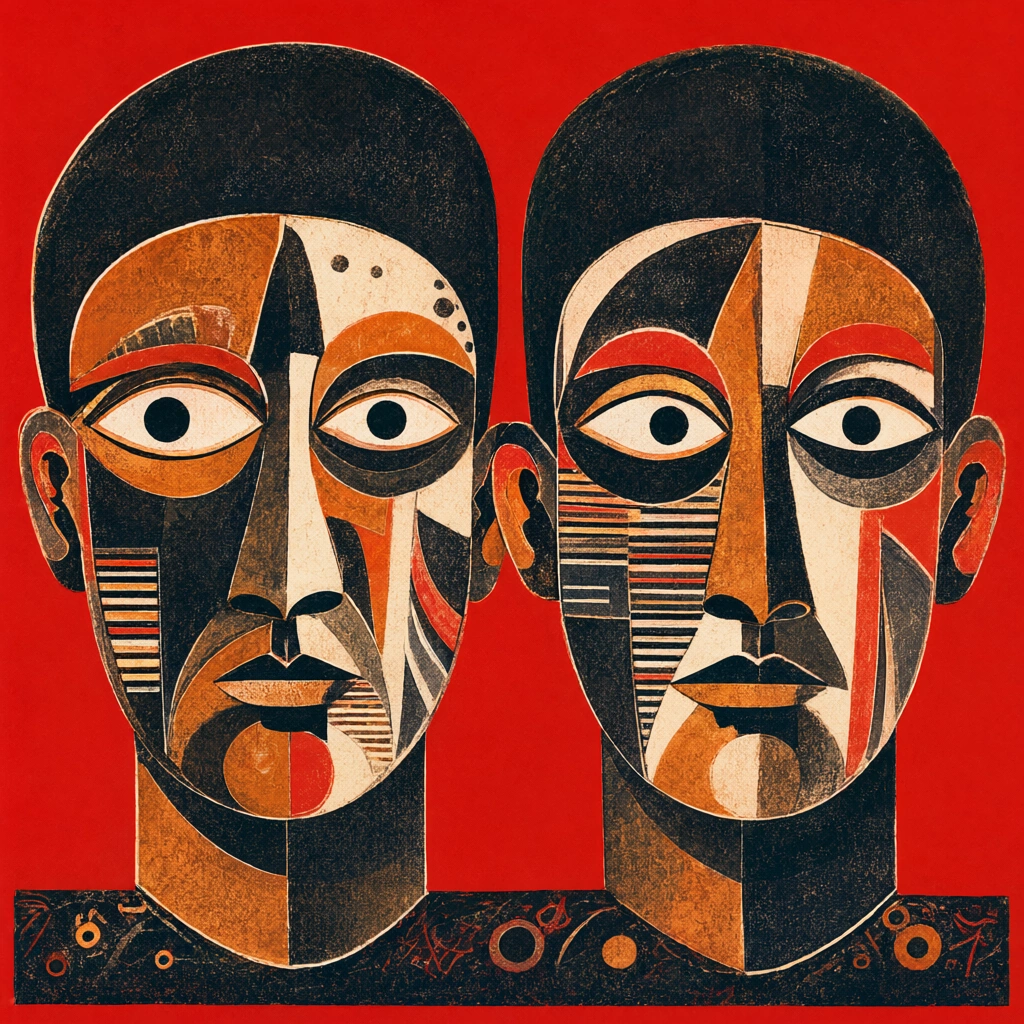 Qwen Image 2.1
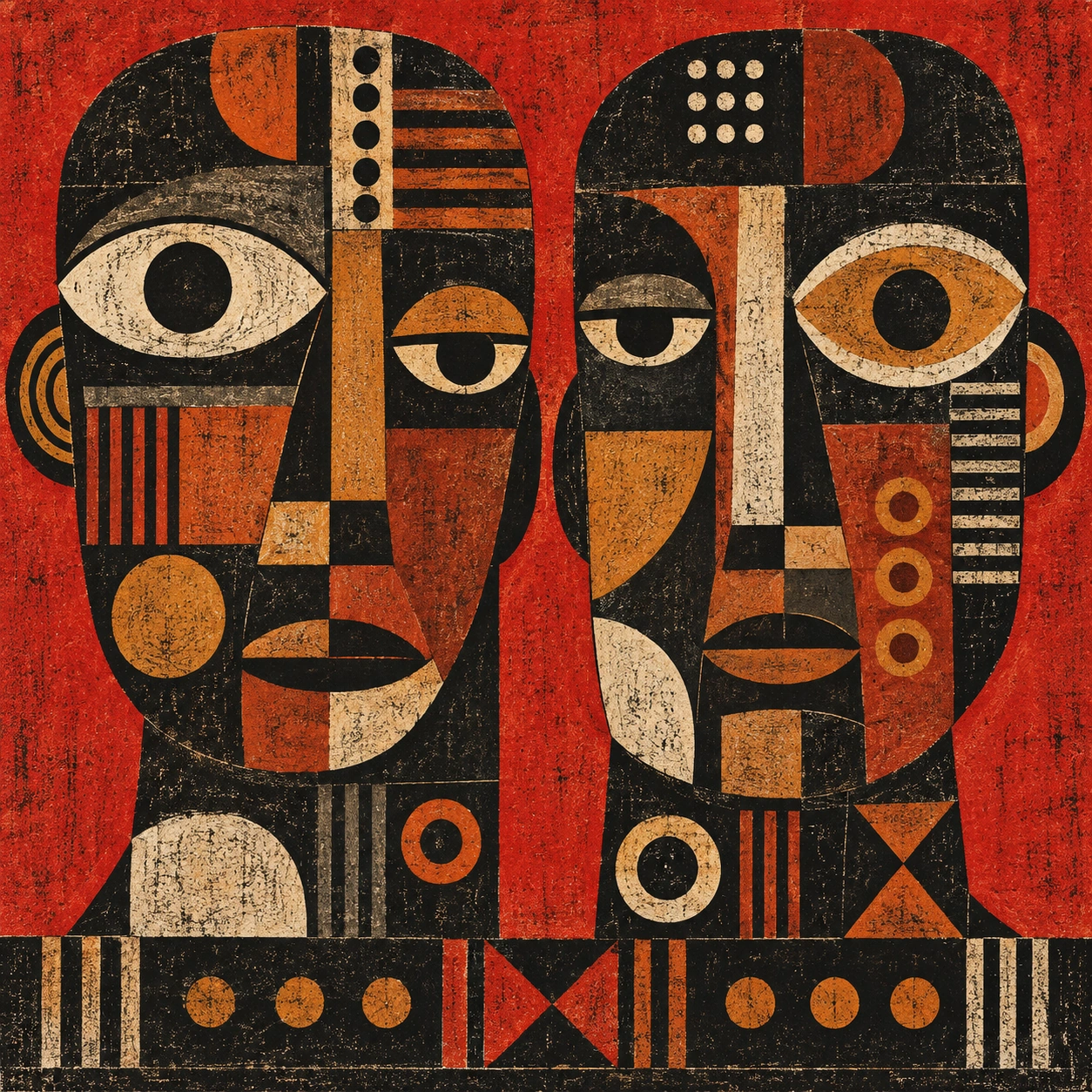 GPT Image 2.5
Reference details
- Reference ID
- 1311
- Category
- Ink & line
Reference prompts
Style prompt
The style is tactile geometric printmaking with coarse grain, distressed pigment and strong interlocking flat shapes. Crimson, charcoal, rust, ochre and cream form a warm high-contrast palette. Near-symmetry is animated by differences in eye-like ovals, stripes, rings and small internal marks. Large squared masses read at a distance; stamped texture and symbol-like details reward close viewing. The square frame remains flat and frontal, with a broad grounding band and a narrow central interval maintaining compositional tension.Full example prompt
A square graphic print presents two large frontal faces constructed from interlocking rectangles, circles, wedges and bands. The pair stands close together against a vivid crimson ground, their dark charcoal head masses separated by a narrow red vertical channel. One eye on each face is especially prominent, rendered as a large white or ochre oval with a black pupil, while other facial clues emerge from smaller curved ears, striped cheek blocks and angular nose forms. Earthy orange, rust, black and pale cream shapes lie within the near-symmetrical heads, but each side differs in eye size, internal pattern and color placement. A broad dark patterned band runs along the bottom and gives the image a grounded edge. The entire surface has coarse grain, stamped variation and distressed pigment, as if color has been transferred through a textured plate. Shapes have strong boundaries yet carry slight irregularities, preserving hand-made character. The composition is bold enough to read from a distance but rewards close inspection of embedded dots, rings, hatch marks and small symbol-like accents. There is no realistic depth or background scene. The visual emphasis is rhythm and relationship: two related forms seem to face the viewer together while maintaining distinct internal identities. The finished image feels ceremonial and modern, with tactile printmaking energy rather than slick vector cleanliness.