
Styles
#1371
Alvaro Castagnet style reference and prompts
Explore the “Alvaro Castagnet” reference with broad brushstrokes, rough surface texture, and warm color tones. View the images, copy the style or example prompt, and discover related styles on Looksift.
Compare the Qwen Image 2.1 and GPT Image 2.5 examples, choose the visual qualities you want, and copy the style prompt for your own project.
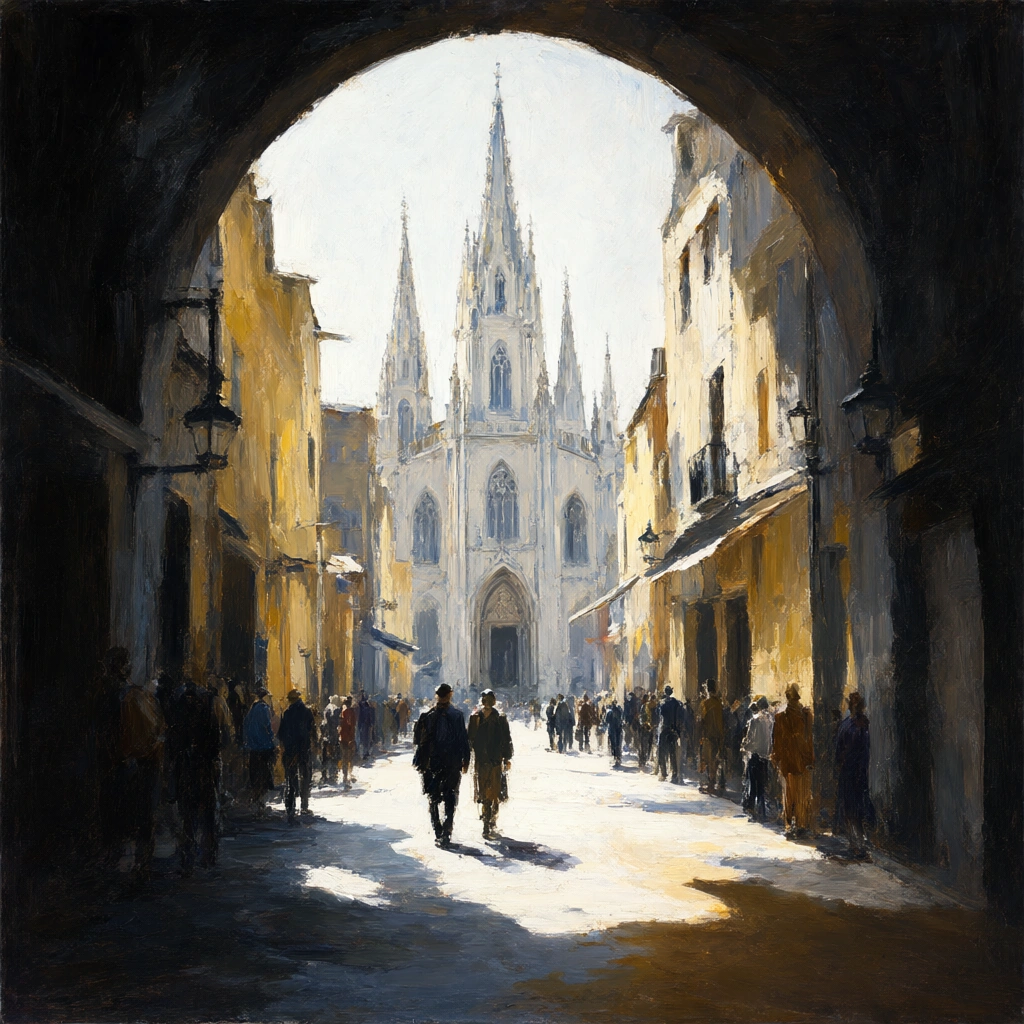 Qwen Image 2.1
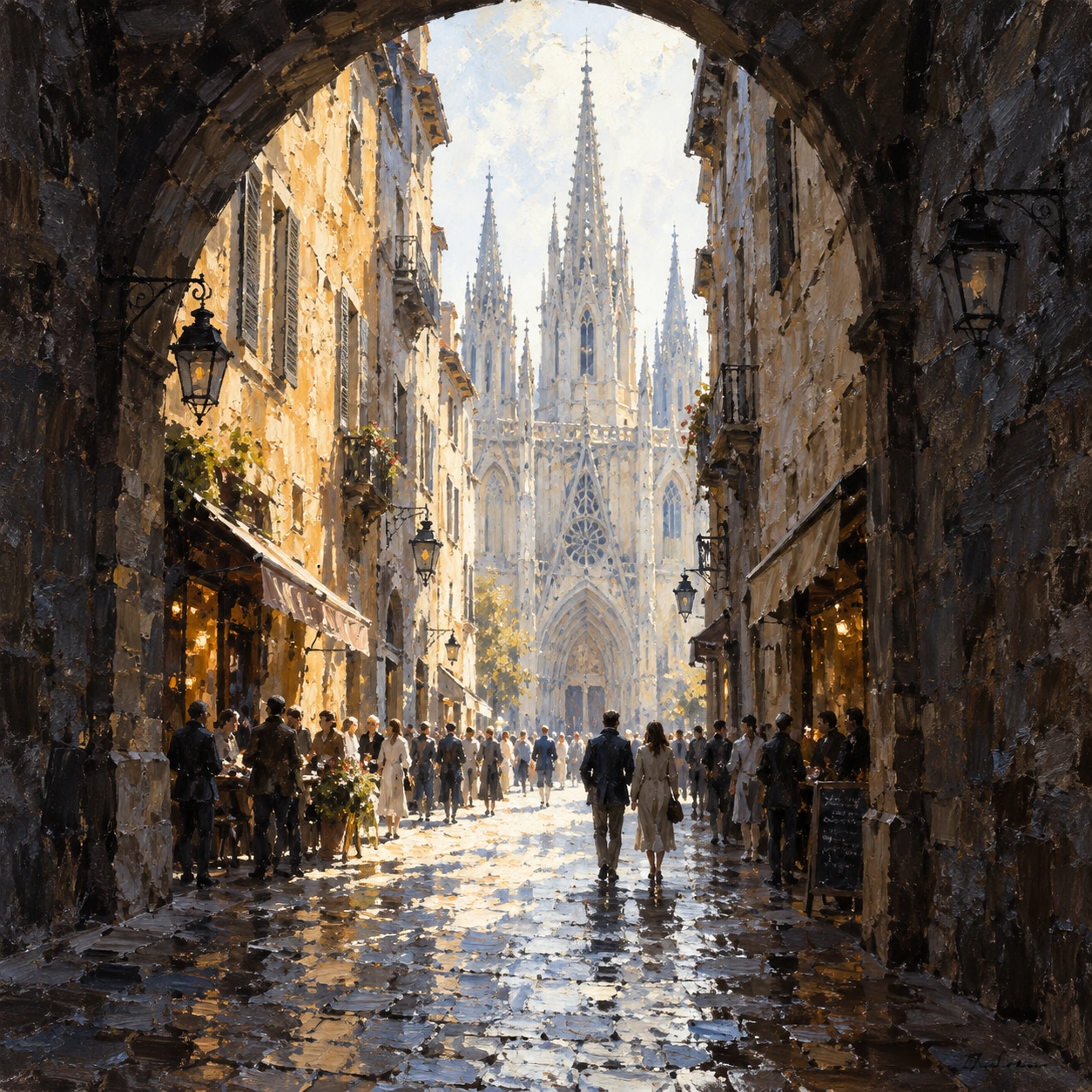 GPT Image 2.5
Reference details
- Reference ID
- 1371
- Category
- Painting
Reference prompts
Style prompt
The expressive painting relies on confident broad strokes and broken edges rather than polished contour drawing. Large dark masses enclose a light central opening, giving the composition an immediate route for the eye. Warm ochre and cream planes meet blue-gray and indigo shadow, with selective almost-black accents providing structure. Short vertical marks can imply fine distant detail, while closer surfaces resolve into layered, rough-edged patches of paint. Bright light cuts across the middle plane and loses intensity toward the surrounding shade; reflected cool tones keep the luminous region from becoming flat white. Depth comes from a strong value corridor, overlapping silhouettes, and reduced detail in the distance rather than rigid perspective alone. The rough surface remains visible everywhere, even in the lightest areas. The overall effect is energetic yet legible, balancing atmospheric grandeur with the immediacy of brisk brushwork.Full example prompt
A square expressive painting shows a narrow city street opening toward a tall pale cathedral beneath the shadow of a dark foreground arch. The upper left and right corners are almost black with the heavy masonry framing the view; a bright opening between them reveals a white sky and slender church spires. The cathedral stands in the central distance, its pointed verticals, large arched doorway, and pale stone facade softened by sunlit haze. On both sides of the street, warm ochre and gray building fronts rise close to the viewer. Dark hanging lamps and small awnings punctuate their rough facades. Along the lower sides, loosely painted people gather in small groups, their bodies reduced to upright dark strokes with only a few light edges. Two figures near the center walk away from the viewer into the bright street, giving human scale to the deep passage. The street surface begins dark and mottled beneath the arch, then turns to broad white and pale blue patches where sunlight reaches it. Brown shadow on the right foreground and golden wall light on the left create a strong diagonal pull toward the cathedral. Brushwork is visibly broad and brisk: edges of architecture break into layered marks, while distant spires retain enough fine vertical detail to be recognized. The colors range from charcoal and indigo shadow to warm gold, cream, and cool blue gray, with few fully saturated areas. Light floods from the open space beyond the arch, striking the center ground and high stone surfaces while leaving the near walls in heavy shade. The shallowly defined crowd and the sharper pale cathedral occupy different depths without losing the painting's lively surface. The overall composition uses a dark architectural frame around a luminous central route, making the crowded street feel both immediate and grand.