
Styles
#1377
Charles Marville style reference and prompts
Explore the “Charles Marville” reference with rhythmic lines, sepia tones, and soft diffused light. View the images, copy the style or example prompt, and discover related styles on Looksift.
Compare the Qwen Image 2.1 and GPT Image 2.5 examples, choose the visual qualities you want, and copy the style prompt for your own project.
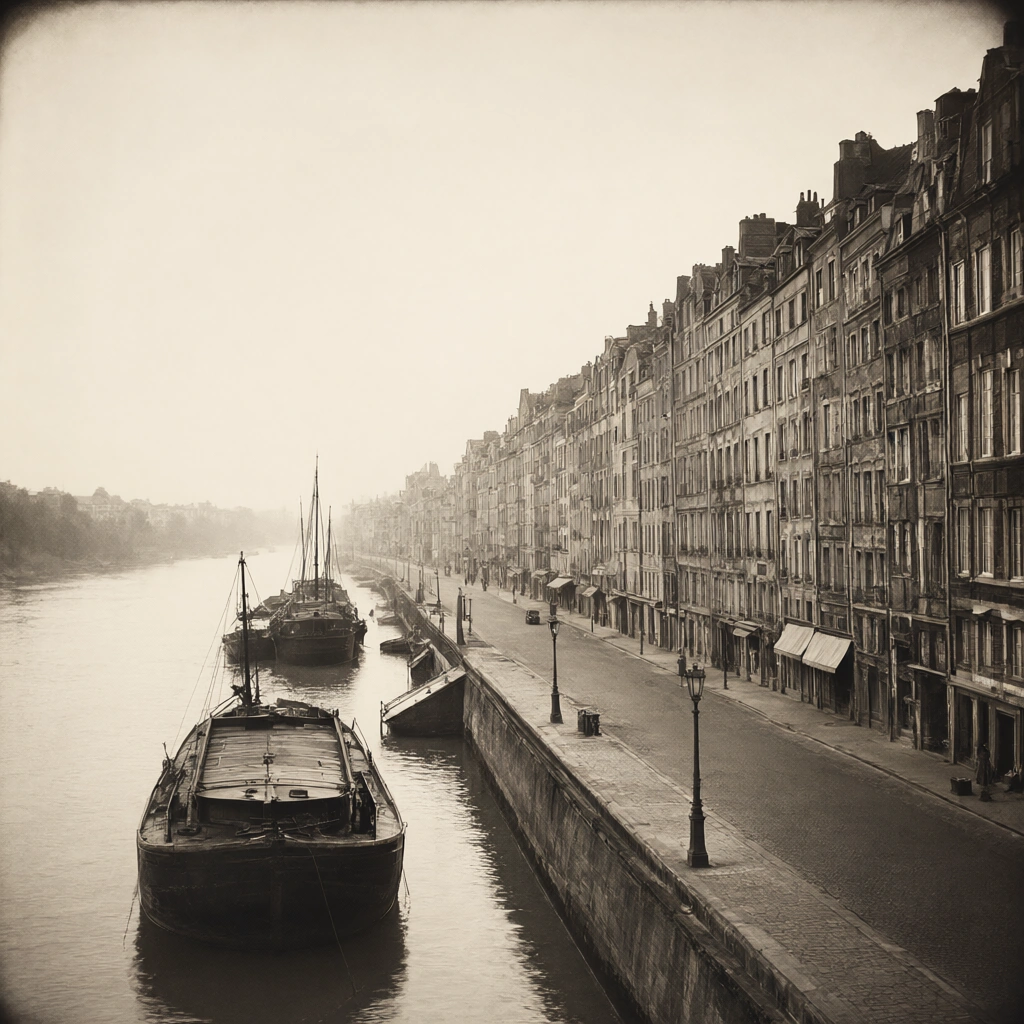 Qwen Image 2.1
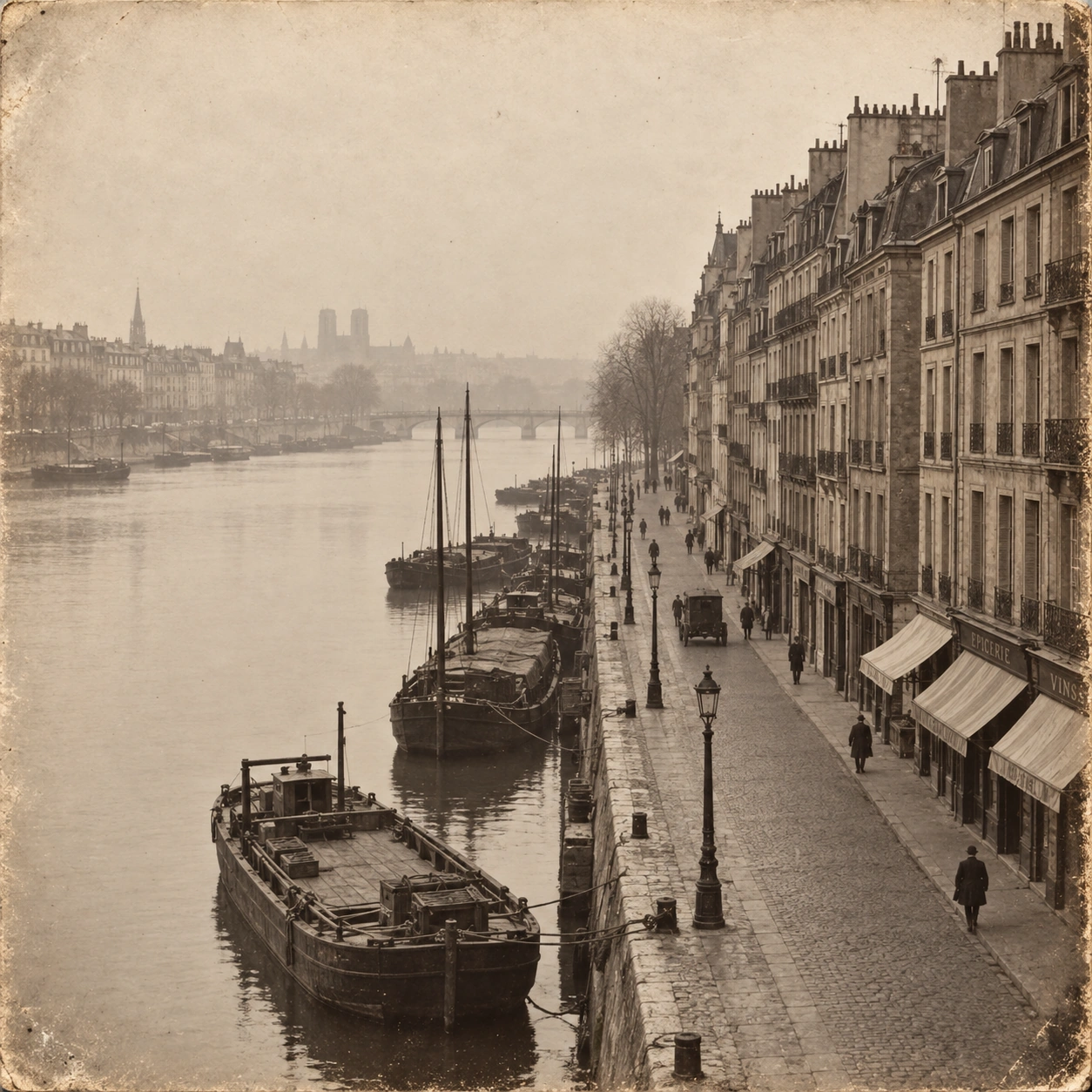 GPT Image 2.5
Reference details
- Reference ID
- 1377
- Category
- Photography
Reference prompts
Style prompt
The archival photographic look uses a narrow sepia range of warm cream, faded brown, taupe, and charcoal. Diffuse light keeps cast shadows weak, while tonal differences between large masses preserve a clear reading of depth. Fine repeated lines and small dark marks gather in one part of the frame; a broad pale field gives them room and sets up an asymmetrical balance. Diagonal recession and gradually softened contrast lead from crisp foreground details into misty distance. Grain, slight blur, and darkened print edges create an aged material surface without hiding the underlying structure. Reflections remain subdued, and highlights are creamy rather than brilliant white. The overall effect is patient and documentary, with atmosphere, repeated geometry, and a carefully weighted light-dark division doing the expressive work.Full example prompt
A square sepia-toned archival photograph looks down over a riverside avenue lined with tall old buildings and moored boats. The view is elevated, opening across a pale river on the left and a close row of many-story facades on the right. In the upper distance, the water bends into haze, while faint building blocks on the far bank become little more than soft gray-brown silhouettes. The right-hand buildings rise almost to the top edge, their repeated window grids, mansard roofs, chimneys, and irregular roofline supplying fine architectural texture. Small shop awnings interrupt the ground-floor frontage near the lower right. Between the buildings and the river, a narrow quay angles from the foreground toward the distant center. A few tiny walkers and a dark vehicle-like shape occupy the road, giving the scene scale without crowding it. Lamp posts and slender poles punctuate the quay at intervals. Boats crowd the river edge: dark barges sit along the middle left, with tall thin masts rising against the light water, and a larger open-deck boat anchors the lower-left foreground. The water is calm and pale, retaining only soft reflections beneath the vessels. Stone paving and the quay wall form diagonal lines that guide the eye toward the foggy bend. Fine photographic grain, slight softening, and darkened corners mark the aged print. Diffuse overcast light arrives through the pale sky, flattening cast shadows while giving the building faces enough tonal separation to remain legible. The palette stays within warm cream, taupe, charcoal, and faded brown. The overall composition balances the dark detailed building mass and boats against a wide luminous river, preserving the quiet distance of an old city view.