
Styles
#1390
Commedia dell'Arte style reference and prompts
Explore the “Commedia dell'Arte” reference with pale neutral tones. View the images, copy the style or example prompt, and discover related styles on Looksift.
Compare the Qwen Image 2.1 and GPT Image 2.5 examples, choose the visual qualities you want, and copy the style prompt for your own project.
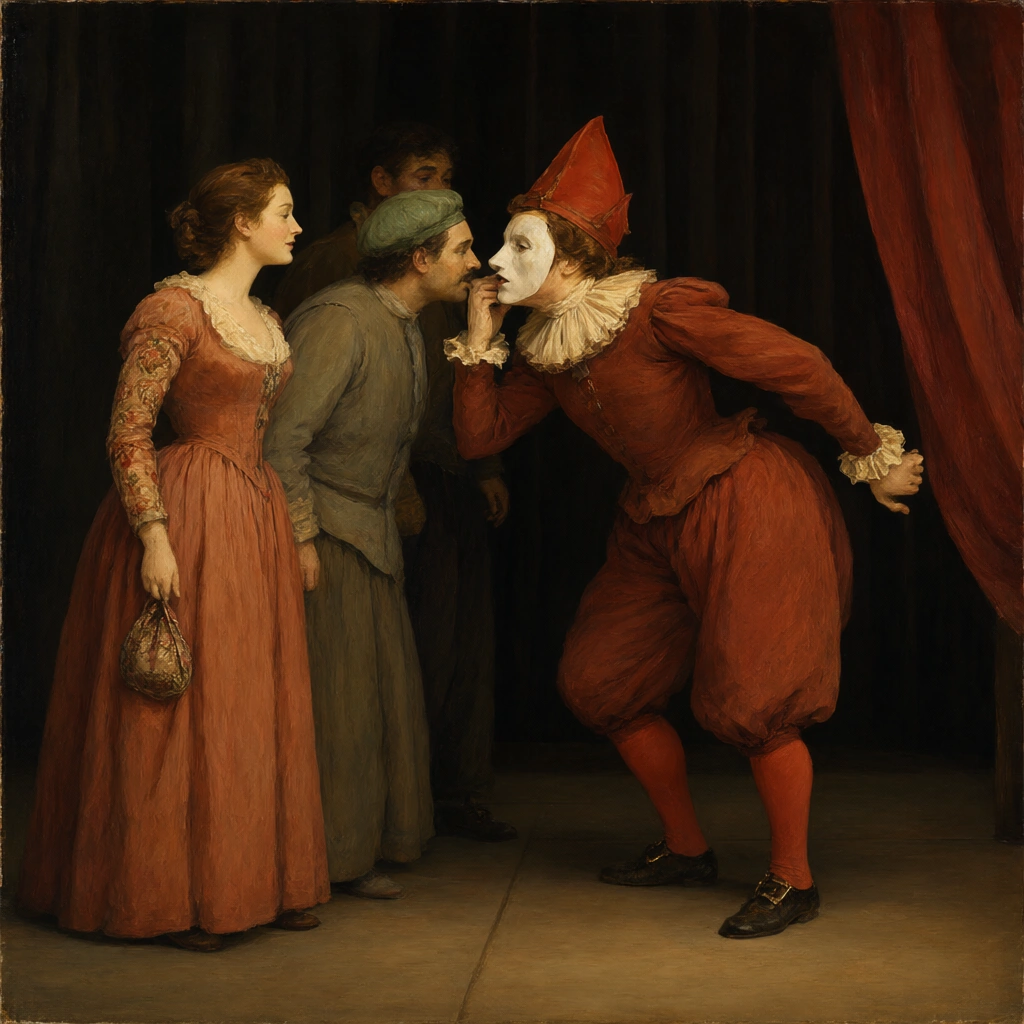 Qwen Image 2.1
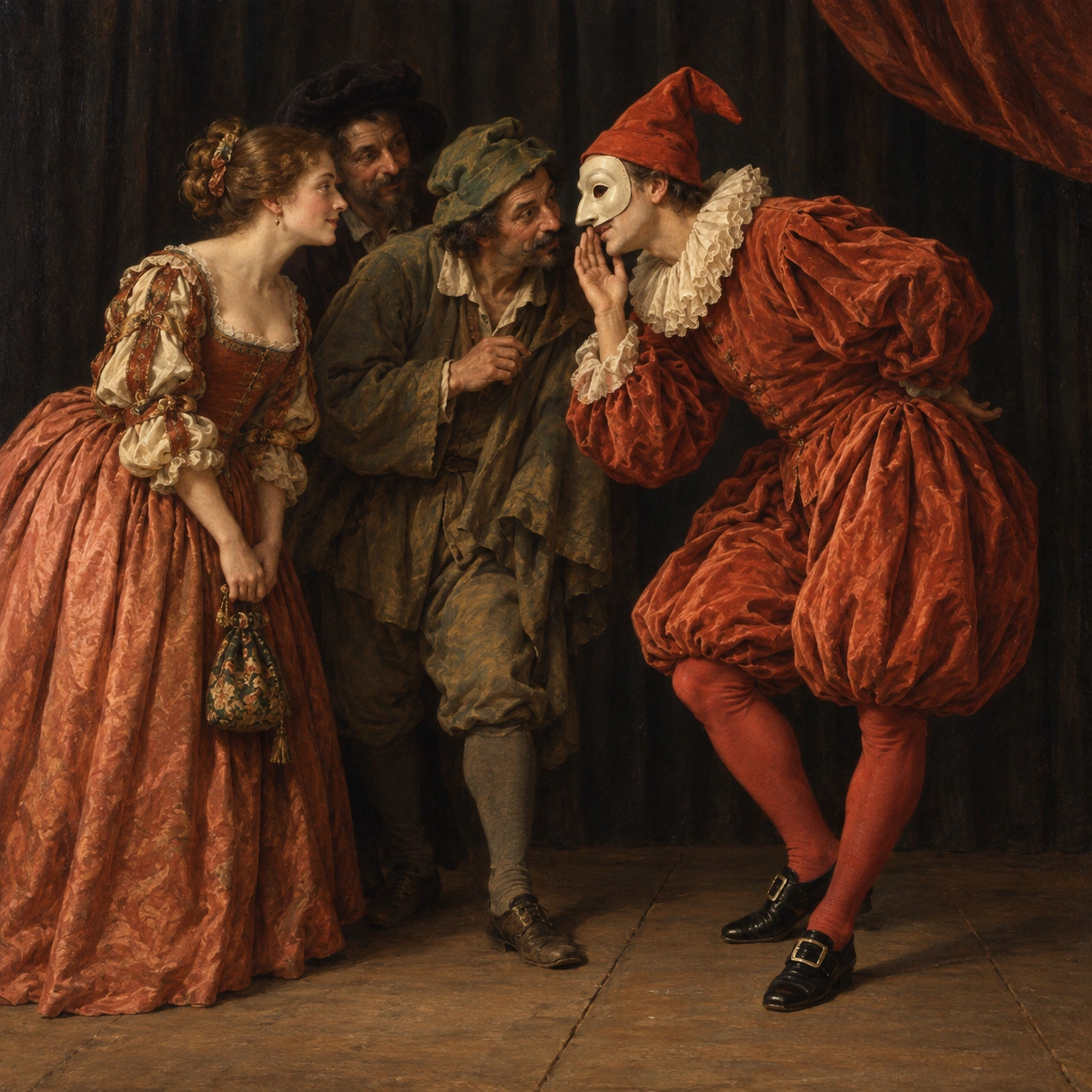 GPT Image 2.5
Reference details
- Reference ID
- 1390
- Category
- Painting
Reference prompts
Style prompt
The theatrical painterly style places richly modeled warm forms against a deep, simple backdrop. Rust red, coral brown, olive gray, and cream are grouped into distinct areas, with light concentrated on pale focal details and folds. Fluid brush blending rounds visible forms, while shorter strokes and dark contour accents pick out costume texture and gesture. The shallow space keeps figures close to the picture plane; their overlapping poses create depth more than the restrained background does. Fabric masses swell and taper in an animated rhythm, countered by stable vertical dark folds. Warm directional illumination behaves like stage light, bringing selected faces and surfaces forward while leaving edges and secondary forms in shadow. The overall effect is dramatic but personable, with expressive movement held together by a controlled earth-toned palette.Full example prompt
A square theatrical oil-like painting shows a masked performer leaning toward a small group on a dim stage. Dark curtains hang across the background, with a warmer red fold visible in the upper right. The floor is a muted brown plane divided by faint straight seams, offering a shallow space for the four standing figures. On the right, the performer wears a pointed red cap, a pale face mask, a ruffled cream collar, and an extravagant rust-red costume. The fitted torso opens into swollen sleeves and large rounded breeches; red stockings lead down to dark buckled shoes. The performer bends one knee, pushes the body forward, and lifts a hand toward the masked mouth as though confiding something to the person at center. That central listener wears a soft greenish cap and loose olive-gray clothing, with a mustached face turned close to the speaker. A second darker-clad man looks on from behind, his head just above the central shoulder. At the left, a woman in a long coral-brown dress and fitted bodice watches in profile, holding a small patterned pouch at her side. Her decorative sleeves and gathered skirt repeat the warm colors of the performer's costume in quieter tones. The figures cluster tightly, their faces and gestures forming the focal triangle; the empty dark curtain around them makes their social exchange easy to read. Smoothly blended flesh tones and more visible brush marks in fabric give the painting both volume and surface. Warm stage-like light reaches from the upper left/front, brightening the mask, woman's face, collar, and red fabric folds while leaving the curtains and rear figure in shadow. The overall composition is intimate and playful, balancing vivid costume movement against a restrained, dark theatrical setting.