
Styles
#1480
John Crome style reference and prompts
Explore the “John Crome” reference with scumbled paint, weathered surfaces, and a low horizon. View the images, copy the style or example prompt, and discover related styles on Looksift.
Compare the Qwen Image 2.1 and GPT Image 2.5 examples, choose the visual qualities you want, and copy the style prompt for your own project.
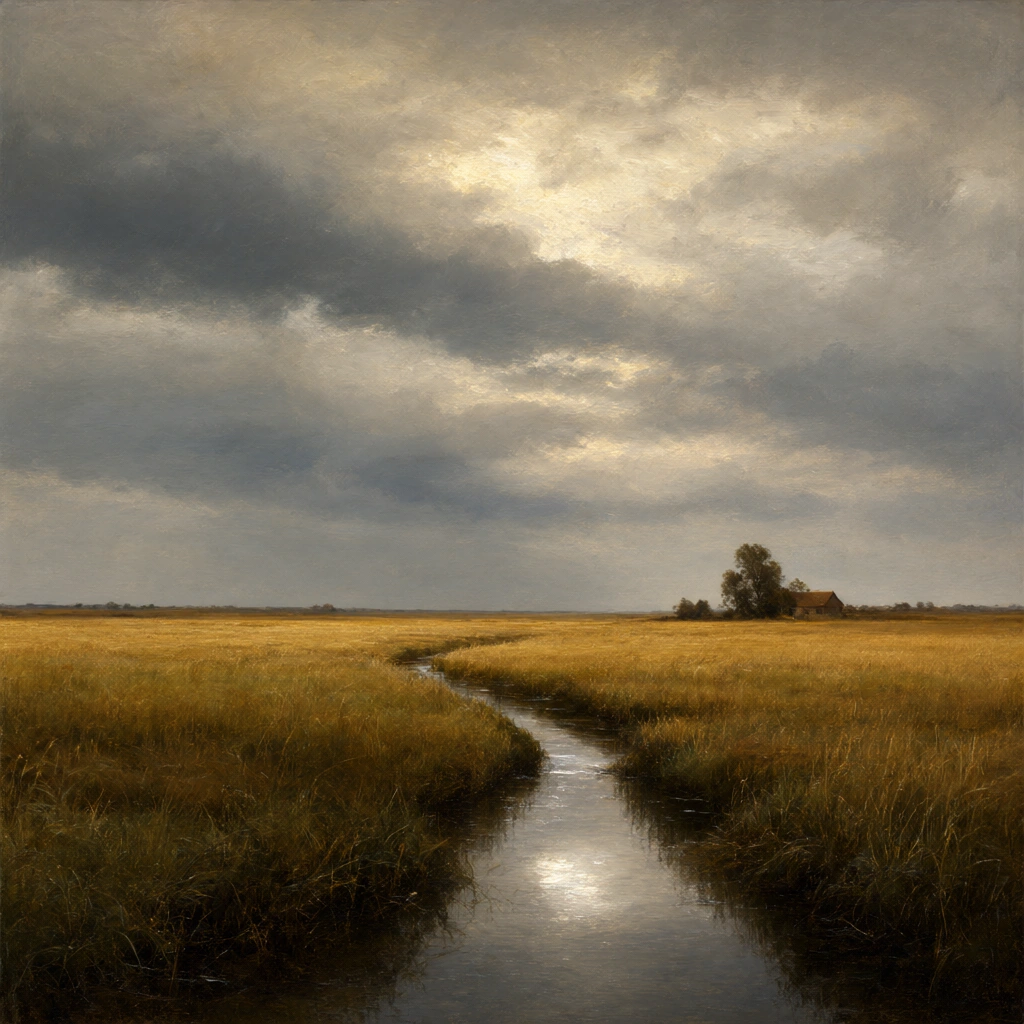 Qwen Image 2.1
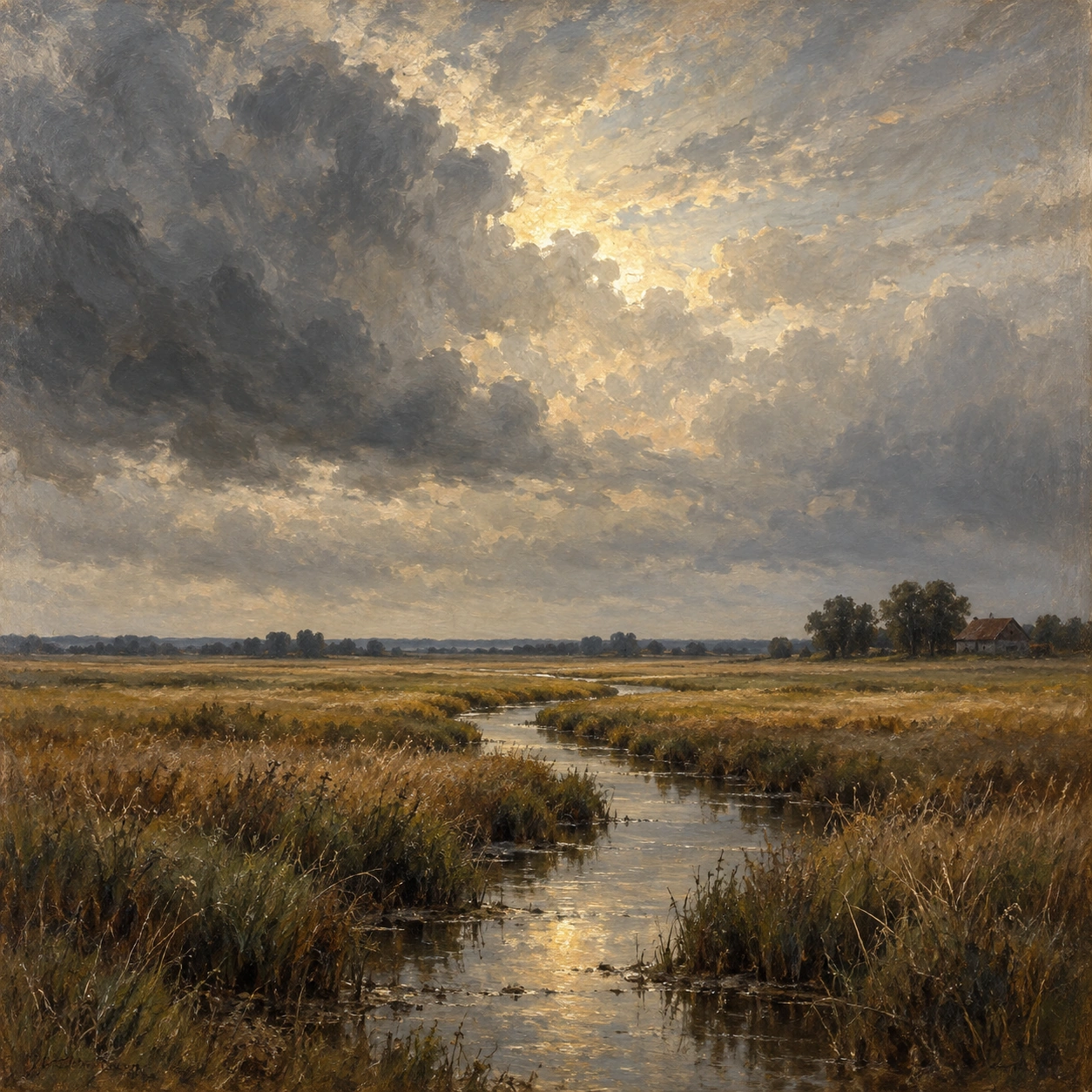 GPT Image 2.5
Reference details
- Reference ID
- 1480
- Category
- Painting
Reference prompts
Style prompt
The oil-painted surface is built from broad atmospheric color masses and small, irregular strokes that become more distinct near the lower edge. Slate gray, olive brown, ocher, and faded straw dominate, while narrow openings of warm cream light interrupt the cooler darks. Layered scumbling makes upper areas feel deep and vaporous; drier broken marks produce a coarse, tactile lower band. A low horizontal division grants generous space to slowly shifting tonal forms. One sinuous, brighter passage cuts through the darker lower area and draws the eye toward a thin, softened distance. Compact dark accents sit near that distant line and supply scale without competing with the expansive tonal field. Light is filtered and directional enough to make selective reflections, yet shadows remain soft and broad. Edge contrast decreases toward the distance, unifying the layers in a humid atmosphere. The overall effect is contemplative and spacious, with weathered paint and subtle light breaks supplying the drama.Full example prompt
A square oil landscape shows a broad golden-brown marsh beneath a vast, cloud-filled sky, with a narrow reflective channel entering from the lower center. The horizon sits below the middle of the painting, leaving most of the frame to the heavy atmosphere. Across the upper left, dark slate-gray cloud masses rise and spread into fine, wind-swept layers. Near the upper center, a pale break in the cloud cover lets muted yellow light glow through uneven edges, while the far right remains veiled in cooler gray. Beneath that expansive sky, the level fields extend toward a thin, dark horizon with a few distant tree shapes. The land is divided into low bands of ocher, straw yellow, and umber. A rough watercourse begins near the bottom edge, bends gently through dark grassy banks, and narrows as it travels toward the center distance. Its shallow surface reflects a small, bright piece of sky close to the foreground, so the luminous patch becomes a quiet visual anchor amid the dark reeds. Taller clumps of brown and olive grass frame the channel on both sides, their thin strokes visibly separating from the flatter fields behind. On the right side near the horizon, a compact dark group of trees stands beside a small brown-roofed building. The building is partly absorbed by the shade and remains secondary to the sky and open ground. There are no visible people or readable marks. Light is diffuse and filtered through the broken clouds, warming the grass and glancing off the water while leaving broad cloud undersides and foreground banks in subdued shadow. Fine brush marks and soft scumbling give the clouds a layered vaporous density; drier, shorter strokes make the grass uneven and tactile. The distance loses contrast gradually, though the small dark tree group still gives the open field a point of scale. The overall composition is spacious and restrained, setting a tiny human structure within a much larger play of weather, water, and muted earth colors.