
Styles
#1505
Rosa Bonheur style reference and prompts
Explore the “Rosa Bonheur” reference with tactile surfaces, pale neutral tones, and low-key lighting. View the images, copy the style or example prompt, and discover related styles on Looksift.
Compare the Qwen Image 2.1 and GPT Image 2.5 examples, choose the visual qualities you want, and copy the style prompt for your own project.
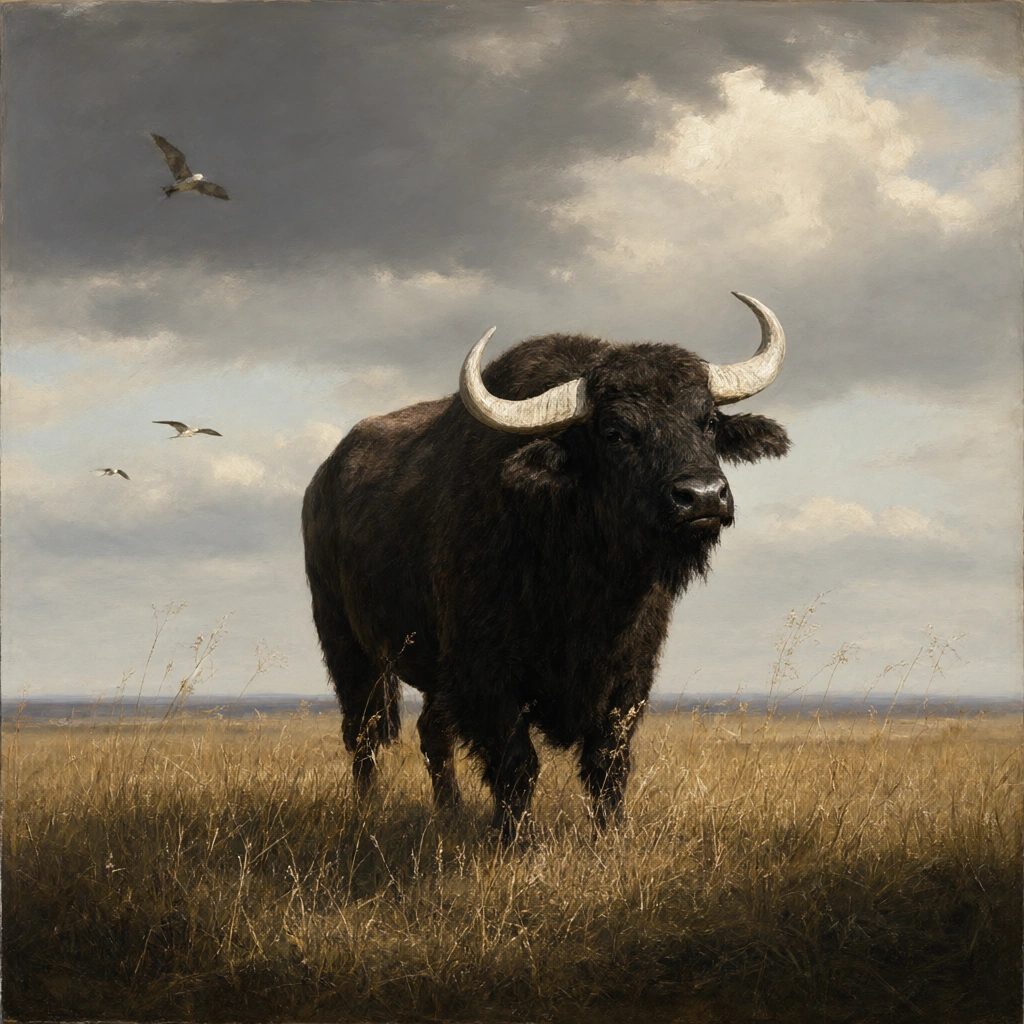 Qwen Image 2.1
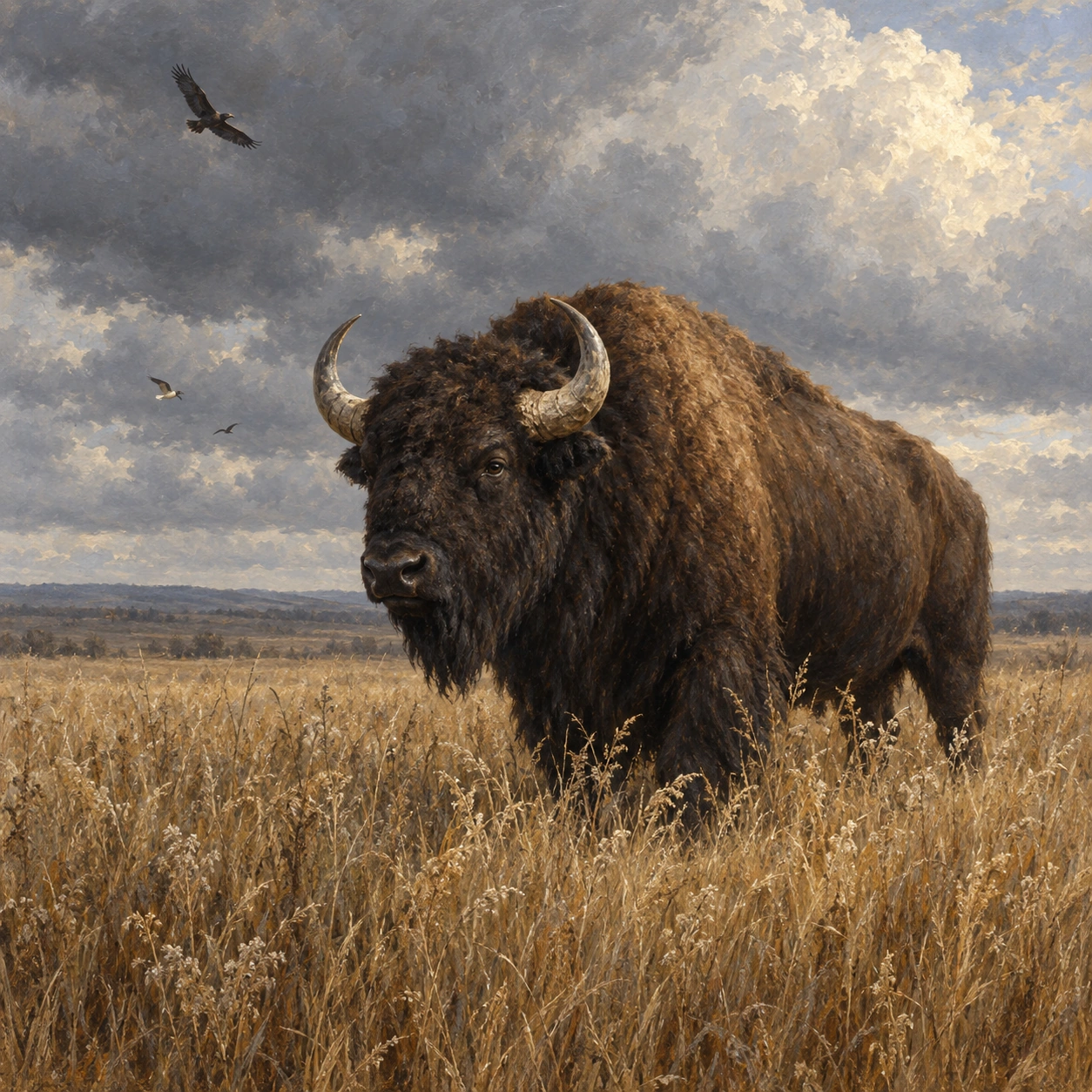 GPT Image 2.5
Reference details
- Reference ID
- 1505
- Category
- Painting
Reference prompts
Style prompt
The naturalistic oil painting models solid, weighty forms with controlled tonal transitions and many small tactile strokes. A low-key range of charcoal brown, weathered gray, tawny ocher, and pale cream keeps the image earthy and restrained. Coarse dark textures contrast with fine dry linear marks and softly blended atmospheric masses. Broad cloud shadow covers much of the field, while selective diffuse light catches raised edges and pale surfaces. Open space surrounds the principal mass, giving stillness and scale to the composition. Foreground marks remain crisp enough to feel fibrous; distant bands flatten and soften toward the horizon. The overall effect is dignified and quiet, with physical texture and weather carrying the drama rather than saturated color.Full example prompt
A square naturalistic oil painting shows a large dark buffalo standing in an open field of dry grass beneath a broad cloudy sky. The horizon lies low, just above the lower third, and a nearly level band of distant land fades into muted gray behind the animal. Tall, ocher-colored stalks and pale seed heads fill the foreground, partly concealing its legs. The buffalo stands slightly right of center with its body turned diagonally away to the right and its heavy head angled left toward the viewer. Its shaggy black-brown coat is modeled with short dark strokes and softer rubbed passages, with warmer highlights following the rounded shoulder and back. Two thick pale horns rise from either side of the head and sweep outward before curling upward; their rough ivory surfaces create the brightest clear accents on the animal. The broad forehead, small dark eye, heavy muzzle, and dark ear are visible beneath them. Its chest and near foreleg sink into the tangle of grass, while the far side of the body merges into shadow. Above, a large cream-gray cloud mound occupies the upper right. Darker gray clouds stretch across the upper left and middle sky, leaving a few softer pale openings. Near the upper left, one dark bird flies with wings extended. Two smaller birds cross the middle-left distance, one catching light underneath and the other reduced to a darker mark. The wide empty air around the buffalo gives its compact mass room to dominate without crowding the frame. Fine brushwork distinguishes the animal's coarse hair from the thin brittle grasses and the diffuse cloud edges. Soft daylight enters through breaks in the sky from the upper right, touching the horns, upper back, and pale grass, while the underside of the body and the near ground remain dark. Shadows are broad and subdued rather than sharply cast. The overall composition is steady and monumental, placing a heavy dark form against sweeping gray clouds and an expansive field of tawny grass.