
Styles
#1518
Jan Urschel style reference and prompts
Explore the “Jan Urschel” reference with negative space, reflections on wet surfaces, and atmospheric perspective. View the images, copy the style or example prompt, and discover related styles on Looksift.
Compare the Qwen Image 2.1 and GPT Image 2.5 examples, choose the visual qualities you want, and copy the style prompt for your own project.
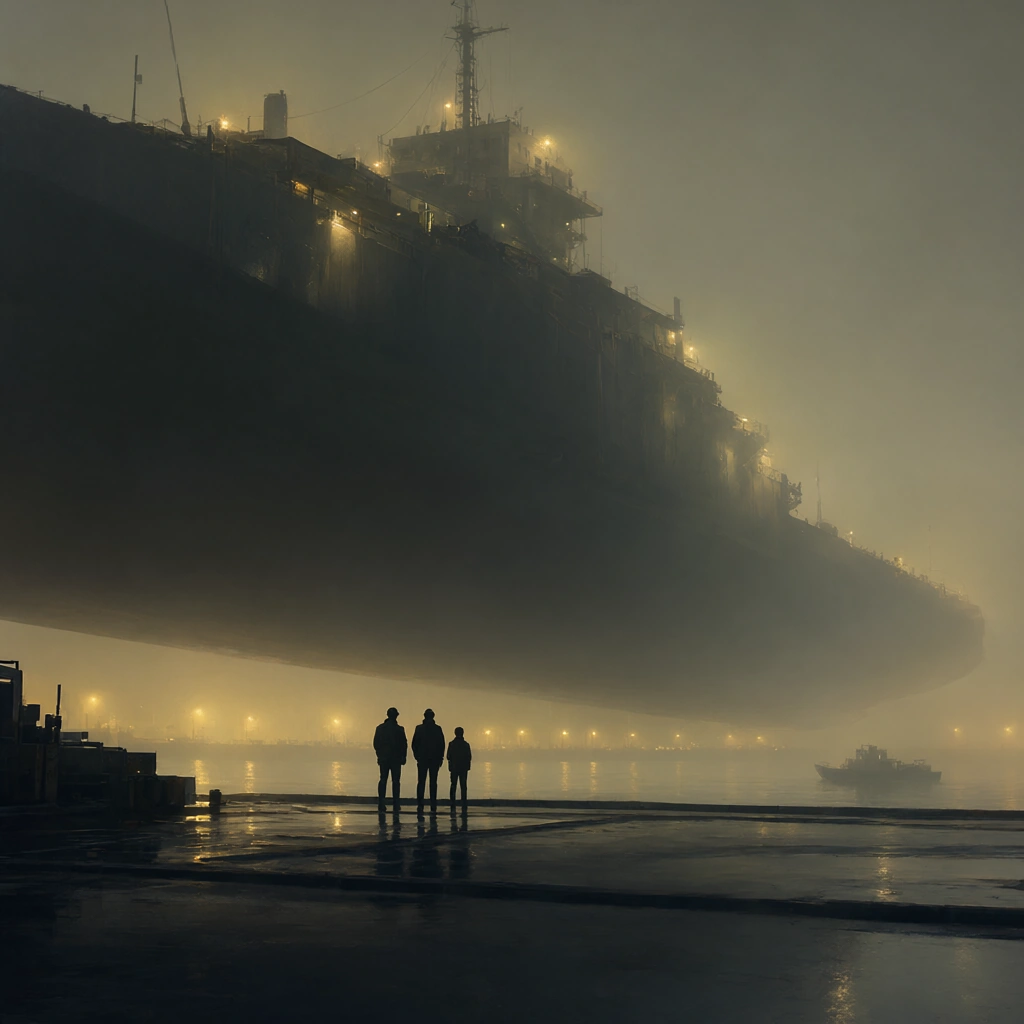 Qwen Image 2.1
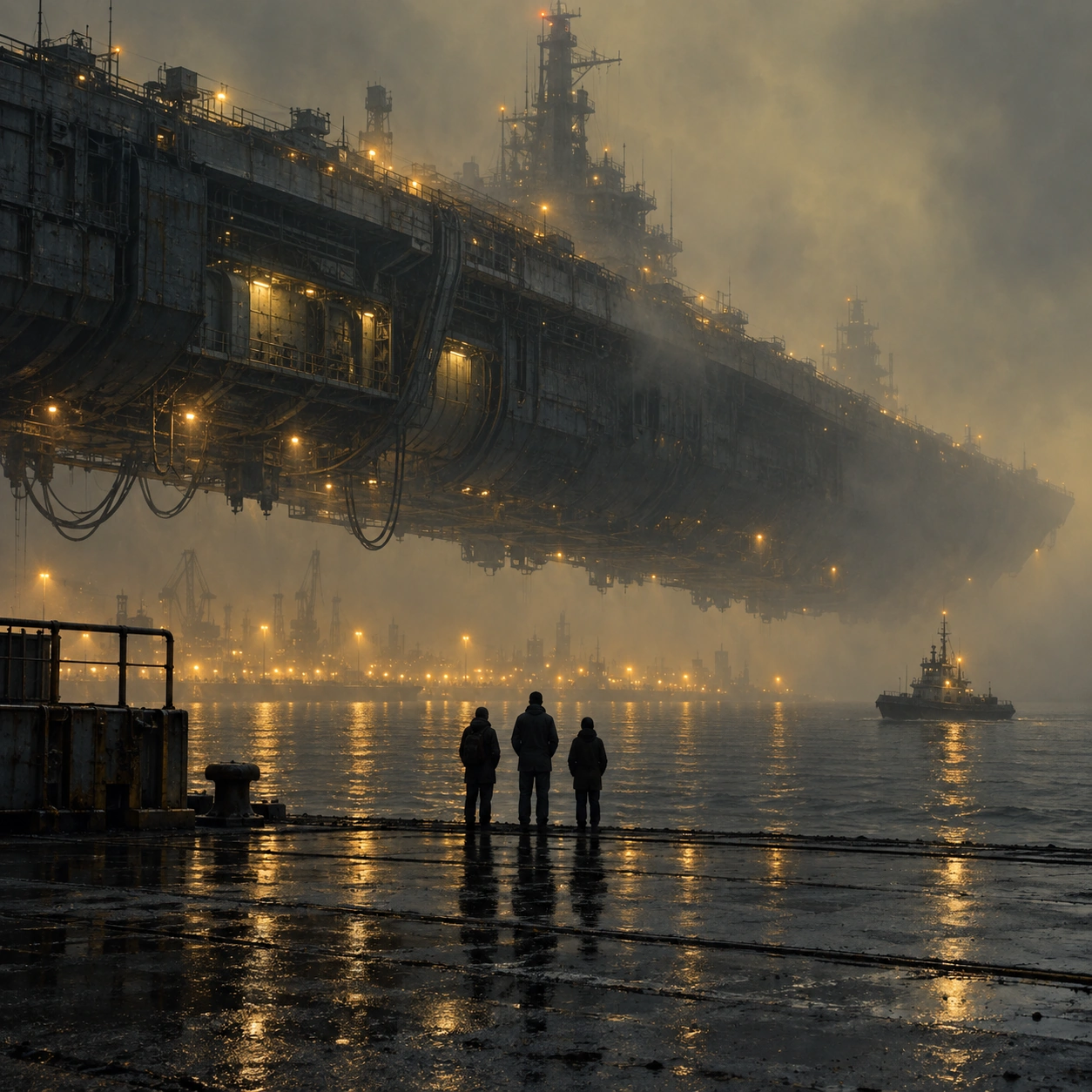 GPT Image 2.5
Reference details
- Reference ID
- 1518
- Category
- Painting
Reference prompts
Style prompt
The cinematic concept painting builds scale through immense dark horizontal masses, tiny firm silhouettes, and deep layers of mist. Olive-gray and muddy blue dominate, interrupted by small amber and sodium-yellow points that bloom softly through humidity. Industrial-looking complexity is suggested with thin verticals, stacked platforms, and hanging linear details, but distance dissolves these into larger atmospheric shapes. Wet lower surfaces echo the lights as long, muted reflections across broad horizontal bands. The upper field is grainy and diffuse, the near focal marks more solid, creating a clear depth hierarchy without bright daylight. Light is local and scattered, leaving most forms in subdued shadow while selected edges briefly emerge from haze. Negative space around the minute dark accents strengthens the sense of monumentality. The overall effect is brooding and awe-filled, with restrained color and atmospheric perspective carrying more force than sharp detail.Full example prompt
A square cinematic concept painting shows three tiny people standing on a wet harbor edge beneath an enormous industrial vessel suspended in yellow-gray fog. The giant dark hull enters from the left and stretches across almost the whole upper middle, its underside layered with decks, ribs, hanging cables, and scattered warm lamps. A tall mast and stacked structures rise from its top into the murky sky, partly lost in mist. The far right end narrows and disappears toward the haze, making the ship's length difficult to measure. A row of amber lights glows along the distant waterfront below it, their points multiplying in the humid air. Near the lower center, three dark human silhouettes stand close together facing the vessel and the water. The middle figure is tallest, the one at the right smaller, and all are reduced to simple upright shapes without facial detail. Their short reflections extend onto the slick, nearly black quay. A low block of dock equipment or railing cuts into the left middle edge. On the water at right, a small dark boat sits against the brighter fog, underscoring the scale of the massive form above. The foreground consists of wide horizontal wet pavement bands and puddled reflections, with only faint surface marks visible in the shadow. The atmosphere is thick and desaturated, shifting among olive gray, charcoal, muddy blue, and warm sodium yellow. Light comes primarily from the ship and distant shore lamps, creating small halos and long soft reflections rather than hard sunlight or clear cast shadows. Fine grain and layered haze soften remote structures while the nearby silhouettes retain firm edges. No lettering is readable on the vessel or dock. The overall composition is imposing and quiet, using a huge horizontal machine over three small witnesses to create awe through scale, fog, and scattered points of light.