
Styles
#1537
Robert Bateman style reference and prompts
Explore the “Robert Bateman” reference with moss-green tones, analogous colors, and soft diffused light. View the images, copy the style or example prompt, and discover related styles on Looksift.
Compare the Qwen Image 2.1 and GPT Image 2.5 examples, choose the visual qualities you want, and copy the style prompt for your own project.
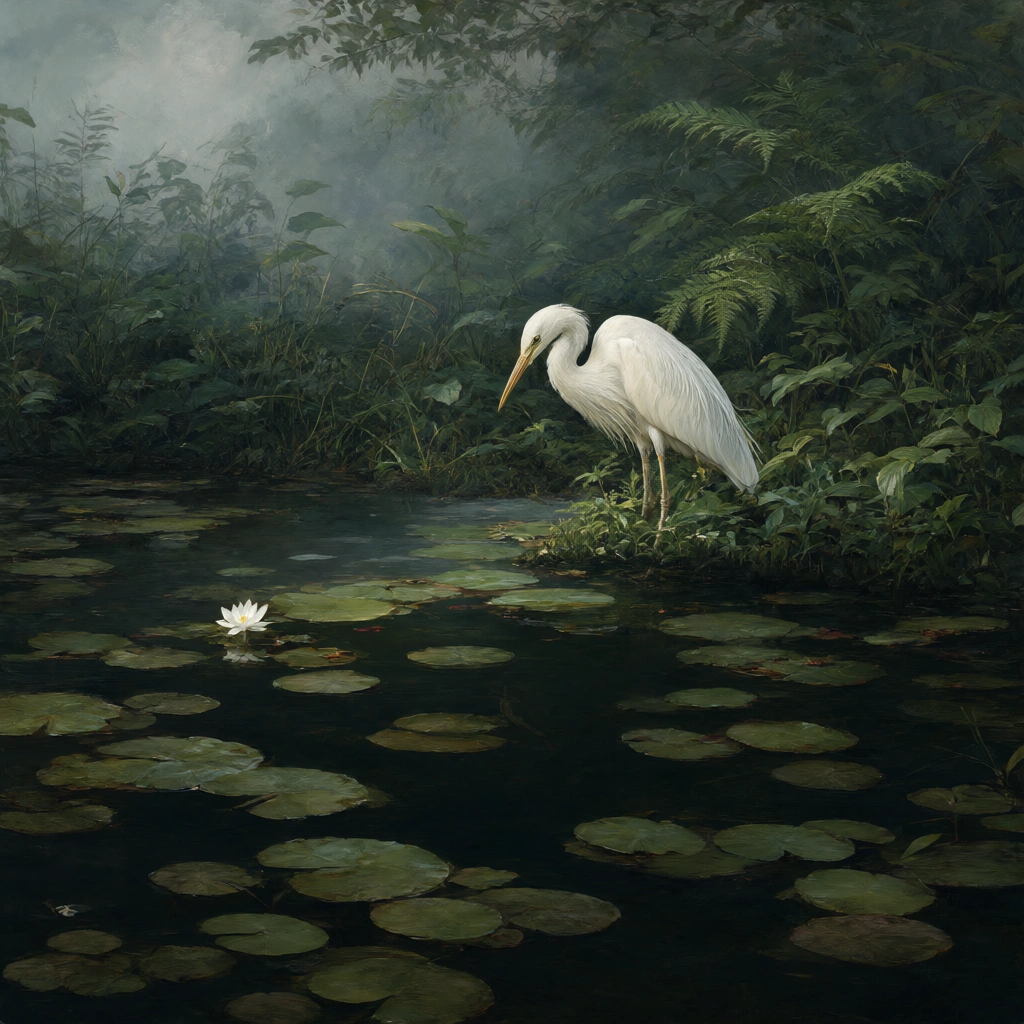 Qwen Image 2.1
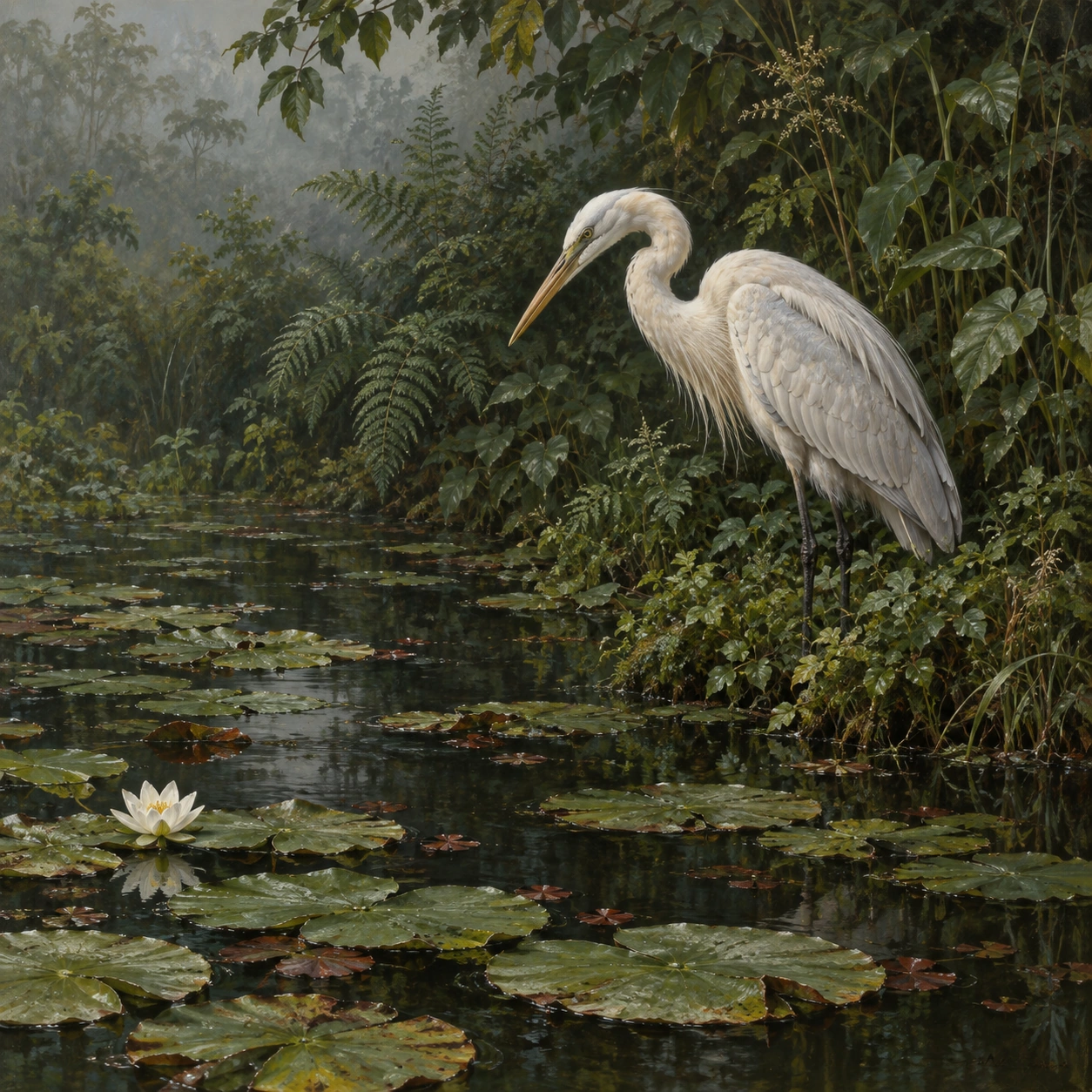 GPT Image 2.5
Reference details
- Reference ID
- 1537
- Category
- Painting
Reference prompts
Style prompt
The naturalistic painting builds a secluded atmosphere through layered botanical-looking marks, dark reflective areas, and selective pale highlights. Deep olive, moss green, sage, and cool gray create a restrained near-analogous palette, with small cream-white accents carrying the strongest contrast. Fine, precise strokes describe textured surfaces near the focal zone; farther layers lose edge clarity in humid gray-green haze. Broad flat rounded shapes alternate with thin vertical stems and softer irregular masses, giving the composition a measured organic rhythm. Diffuse light filters through the scene without a strong cast shadow, so volume emerges from subtle changes in value and overlap. Dark open patches prevent the dense texture from becoming uniformly busy. The surface retains painterly softness while preserving delicate local detail. The overall effect is quiet and observant, with tonal restraint and atmospheric depth making small light forms feel especially luminous.Full example prompt
A square naturalistic wildlife painting shows a pale heron standing at the right edge of a dark pond covered with lily pads. The setting is dense with layered green foliage, and the upper background dissolves into cool gray-green mist beneath overhanging leaves. Fern-like fronds, broad leaves, thin stems, and fine grasses occupy the back bank, their different shapes overlapping without forming a clear horizon. The bird stands slightly right of center on a small patch of low plants. Its long slim legs are partly hidden among leaves, and its body turns toward the left. A gently curved neck carries a small head and a long yellowish pointed beak angled down toward the water. Cream-white feathers along the neck and wing catch the brightest soft light; fine gray strokes indicate individual feather layers across the folded body. Darker shadow gathers under the wing and behind the legs, separating the bird from the foliage without a hard outline. The pond fills the lower half, its nearly black-green water dotted with broad, flat lily pads in olive, sage, and muted brown. Some pads overlap, and small red-brown floating marks break the green rhythm. Near the lower left, one small white flower rises above the pads and gives the foreground a second pale accent. A narrow open patch of water leads back toward the bird, creating a quiet line of attention from the flower to its lowered beak. The light is diffuse, as if filtered through cloud and foliage, with gentle highlights on feathers and pad rims and no sharp cast shadow. The painted surface is detailed but softened by humid atmosphere: nearby leaves and feathers have precise edges, while the distant thicket blurs into layered tones. No human structures or readable text appear. The overall composition is still and secluded, balancing the bright, delicate bird and flower against a broad, richly varied field of dark green water and vegetation.