
Styles
#1546
Robert Munsch style reference and prompts
Explore the “Robert Munsch” reference with pooled pigment and washes, paper texture, and pale neutral tones. View the images, copy the style or example prompt, and discover related styles on Looksift.
Compare the Qwen Image 2.1 and GPT Image 2.5 examples, choose the visual qualities you want, and copy the style prompt for your own project.
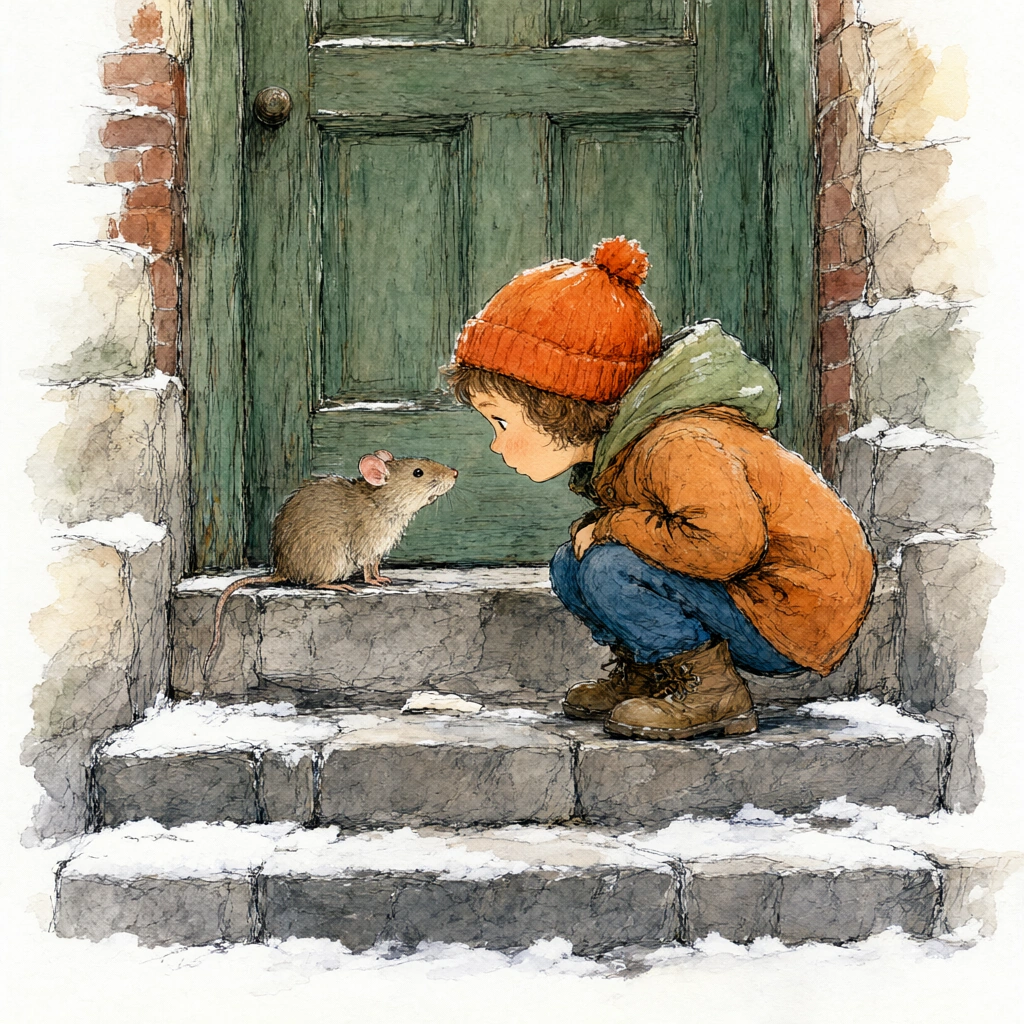 Qwen Image 2.1
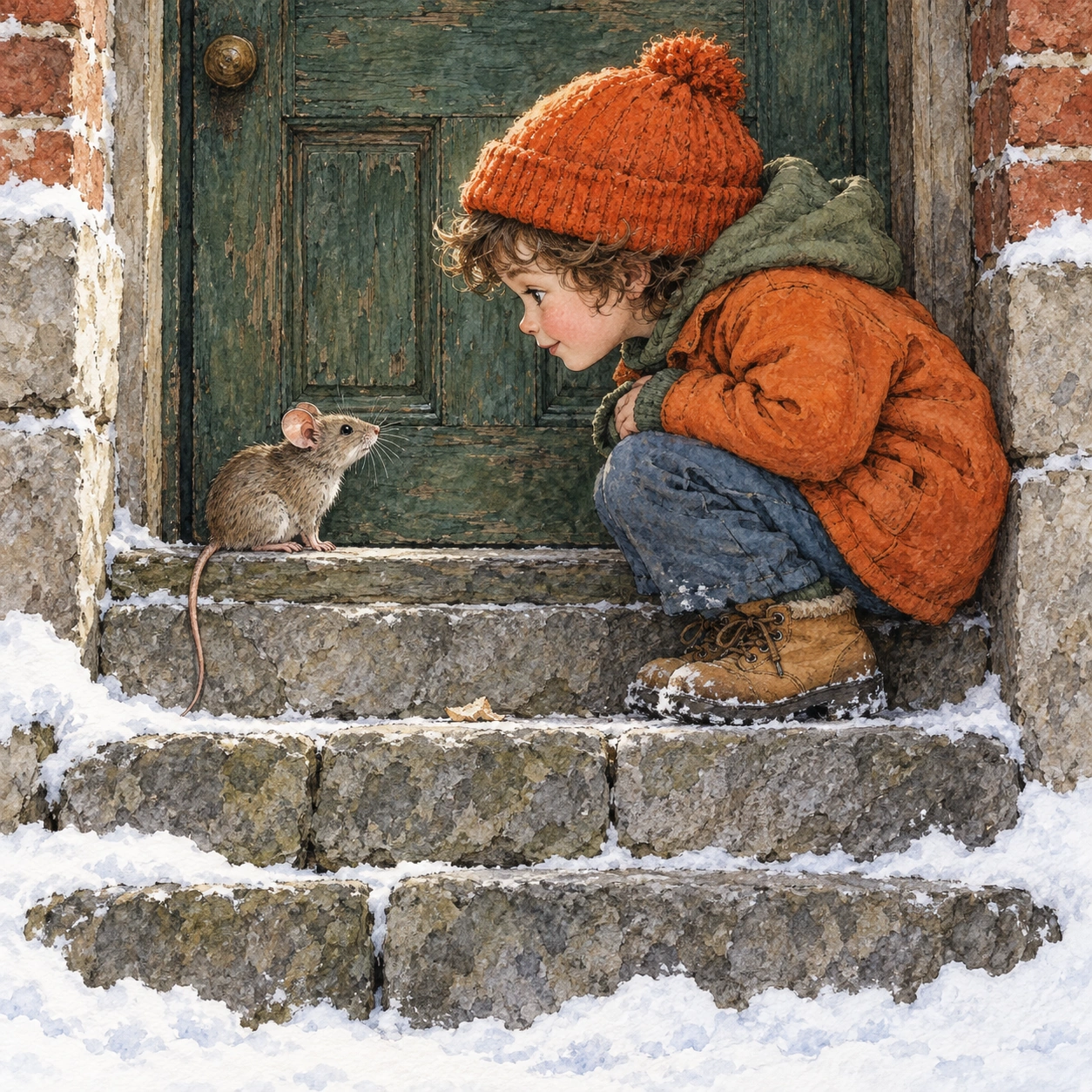 GPT Image 2.5
Reference details
- Reference ID
- 1546
- Category
- Flat illustration
Reference prompts
Style prompt
The storybook image combines lively dark ink contours with translucent watercolor washes and visible paper grain. Muted sage green, stone gray, tan, and cream occupy broad areas, while a compact orange accent draws attention into the center of the action. Outlines wobble with hand-drawn irregularity and become broken or lighter inside textured surfaces. Large blocky forms provide a stable base, while tiny rounded details and fine curved lines introduce tenderness. Diffuse pale light softens cast shadows, letting recesses deepen through layered gray-green wash rather than hard black fill. Pigment pools and dry-brush speckles make the surfaces look worn and tactile. Close spacing between two small focal shapes contrasts with quieter surrounding planes. The overall effect is warm despite the cool palette, with gentle narrative energy carried by the loose line and selective color.Full example prompt
A square watercolor-and-ink storybook illustration shows a small child crouching on a snowy stone doorstep face to face with a gray-brown mouse. The old green wooden door fills most of the upper background. Its inset panels are weathered with darker grain, and a small round knob sits high at the left. Narrow sections of red brick and rough pale stone frame the door on both sides. The child occupies the right half, balanced low on bent legs and leaning forward with hands tucked near the knees. A bright orange knit cap covers much of the curly brown hair, and an orange coat with a muted green hood gathers around the shoulders. Blue trousers fold over sturdy tan lace-up boots whose dark soles rest on the uneven top step. The face is shown in profile, close enough to the mouse for their noses to nearly align. At the left of the doorway, the little mouse perches on the narrow inner threshold. Its rounded gray-tan body, pink ear, small dark eye, pointed snout, and long thin tail are clearly visible; the tail hangs over the lower stone riser. Large gray stone steps fill the lower half, each block outlined with irregular dark ink and softened by watercolor shading. White snow collects along the bottom edge and in gaps around the stones, making the warm clothing stand out. A small pale scrap sits near the middle step, but no other objects crowd the meeting. Light is diffuse and wintry, coming from the open front and upper left; soft highlights touch the cap, mouse, and stone edges, while the doorway recess stays darker. Loose green, gray, and ocher washes show through the scratchy line work, leaving visible paper texture. No readable text appears. The overall composition is intimate and gently humorous, using the paired profiles and rough winter setting to focus attention on a quiet moment of curiosity.