
Styles
#1588
Januz Miralles style reference and prompts
Explore the “Januz Miralles” reference with fine grain, negative space, and a monochrome palette. View the images, copy the style or example prompt, and discover related styles on Looksift.
Compare the Qwen Image 2.1 and GPT Image 2.5 examples, choose the visual qualities you want, and copy the style prompt for your own project.
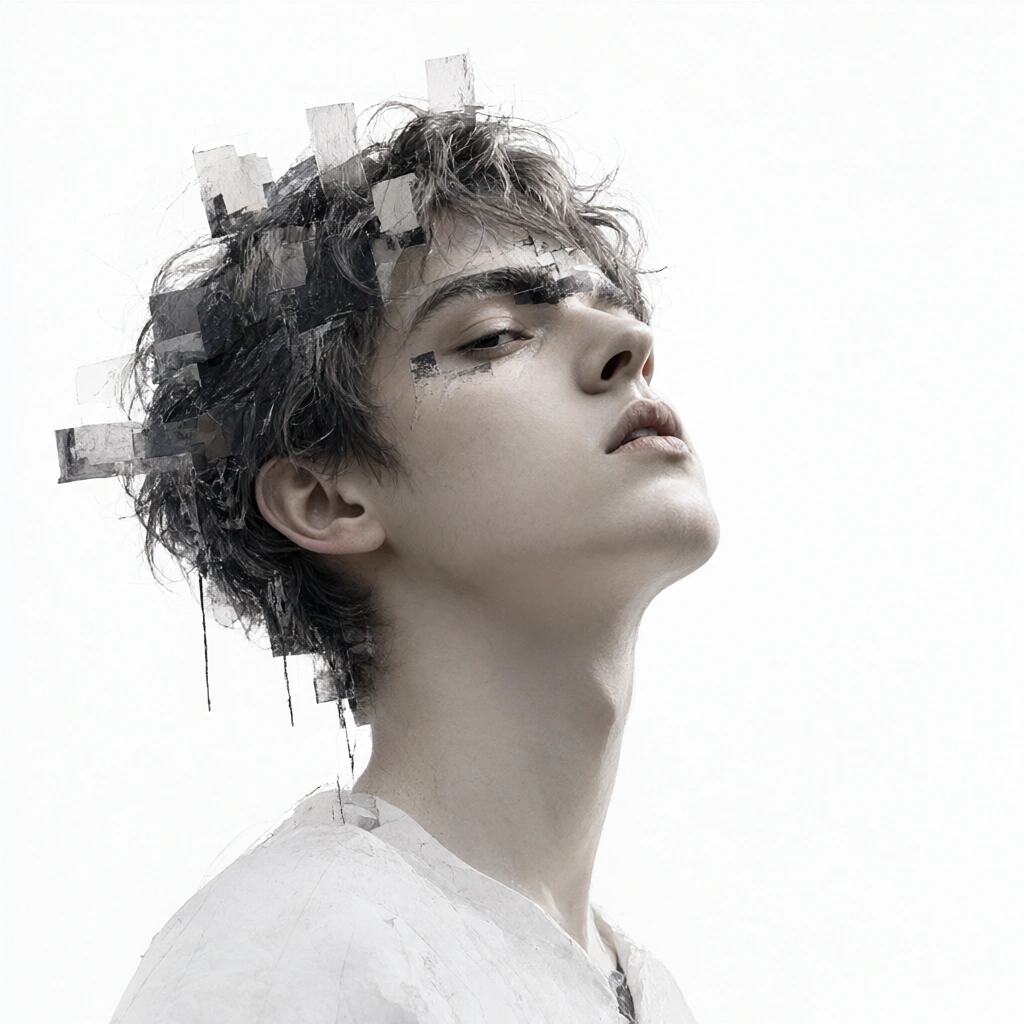 Qwen Image 2.1
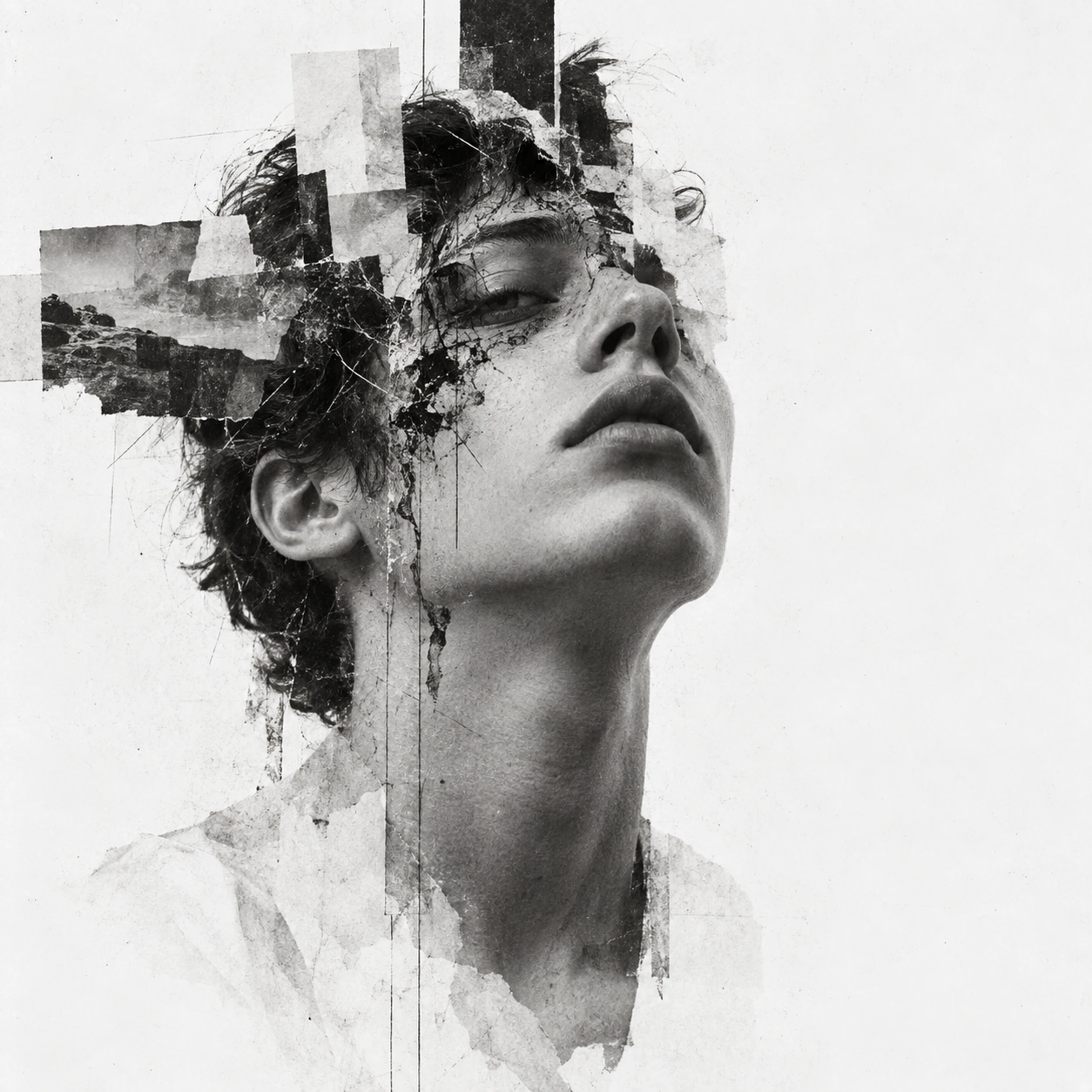 GPT Image 2.5
Reference details
- Reference ID
- 1588
- Category
- Collage & mixed media
Reference prompts
Style prompt
The monochrome mixed-media treatment lets realistic tonal volume emerge from and dissolve into an almost white field. Photographic mid-grays sit beside charcoal-black ink, scratched lines, translucent smears, and misregistered rectangular fragments. Detail is concentrated in a small central zone; large surrounding areas remain blank and luminous. Hard cropped edges interrupt softer anatomical-looking gradients, producing a deliberate collision of precision and damage. Thin vertical runs and occasional horizontal strips create a loose cross-axis without forming a strict grid. Light is broad and soft, so depth comes from layered opacity and local value contrast rather than a dramatic cast shadow. Fine grain prevents the white and gray passages from feeling sterile. The overall effect is spare and psychologically charged, with fragmentation and negative space carrying the main visual rhythm.Full example prompt
A square black-and-white mixed-media image shows a young person's upward-tilted face dissolving into torn photographic and ink-like fragments on a nearly white ground. The head occupies the center-left, with the chin and long neck reaching toward the lower middle. The face is seen from a low angle, nose and lips prominent as it turns slightly to the viewer's right. One eye is half closed beneath irregular dark marks; the other is obscured by layered pieces across the brow and forehead. Short wavy hair and an exposed ear remain visible on the left side. Around the temple, several pale rectangular strips and darker charcoal blocks overlap like misaligned printed photographs. Some fragments extend horizontally toward the left, others rise above the forehead, and narrow vertical lines drop past the neck. The right side of the face stays relatively smooth and light, while the left hair and brow break into scratched texture, dark paint, and translucent gray smears. A pale garment or shoulder is barely indicated at the bottom, its edge fading into the white background. The figure has no visible props, and the open space at the right remains almost empty. Light is soft and broad from the front-left, revealing realistic volume on the cheek, nose, lips, and throat without hard cast shadows. The darkest values are concentrated in the fragmented hair and one side of the face, so the image seems to emerge from and disappear back into the blank surface. Fine grain and faint pencil-like lines sit over the photographic tones. There is no readable text within the collage. The overall composition is sparse and unsettling, using precise human features, broken rectangular layers, and a great deal of white space to convey a suspended, incomplete identity.