
Styles
#1627
Andrew Salgado style reference and prompts
Explore the “Andrew Salgado” reference with rough surface texture, faceted color planes, and cool blue-gray tones. View the images, copy the style or example prompt, and discover related styles on Looksift.
Compare the Qwen Image 2.1 and GPT Image 2.5 examples, choose the visual qualities you want, and copy the style prompt for your own project.
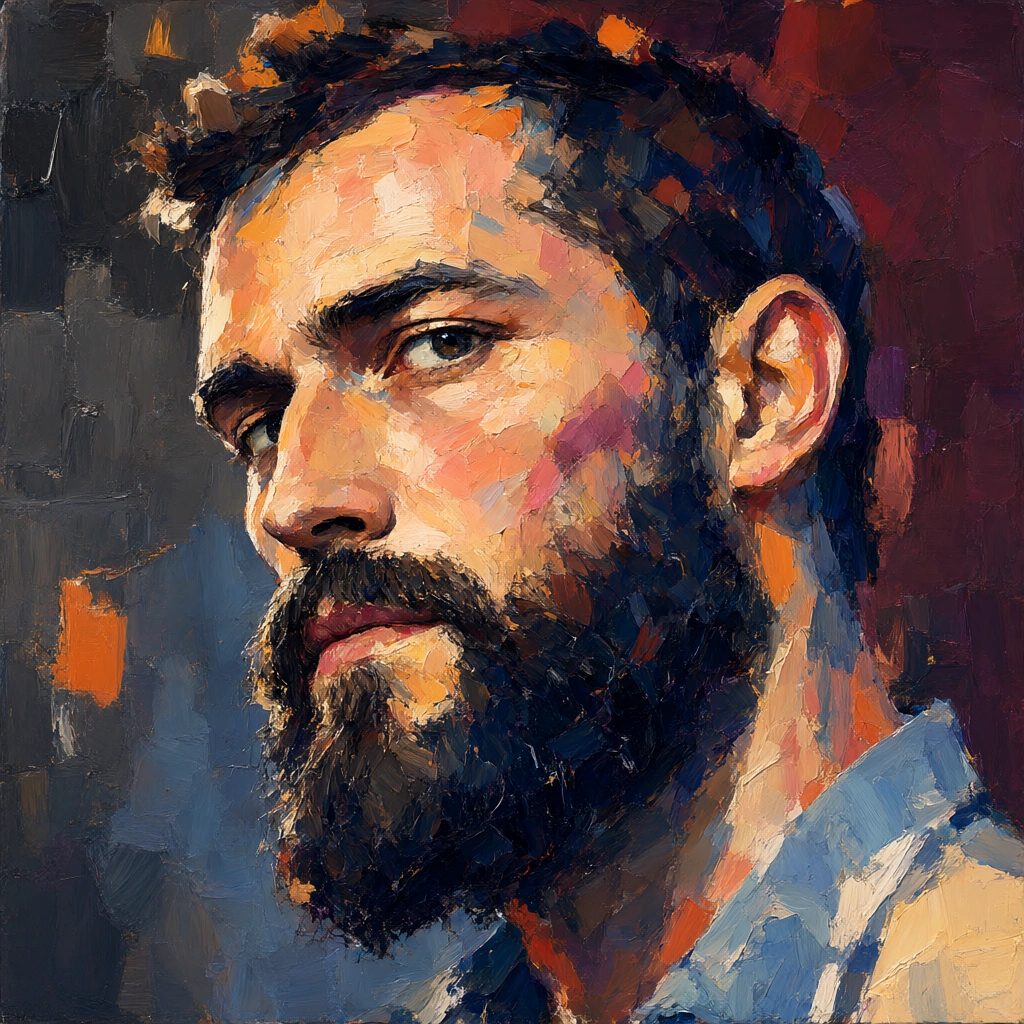 Qwen Image 2.1
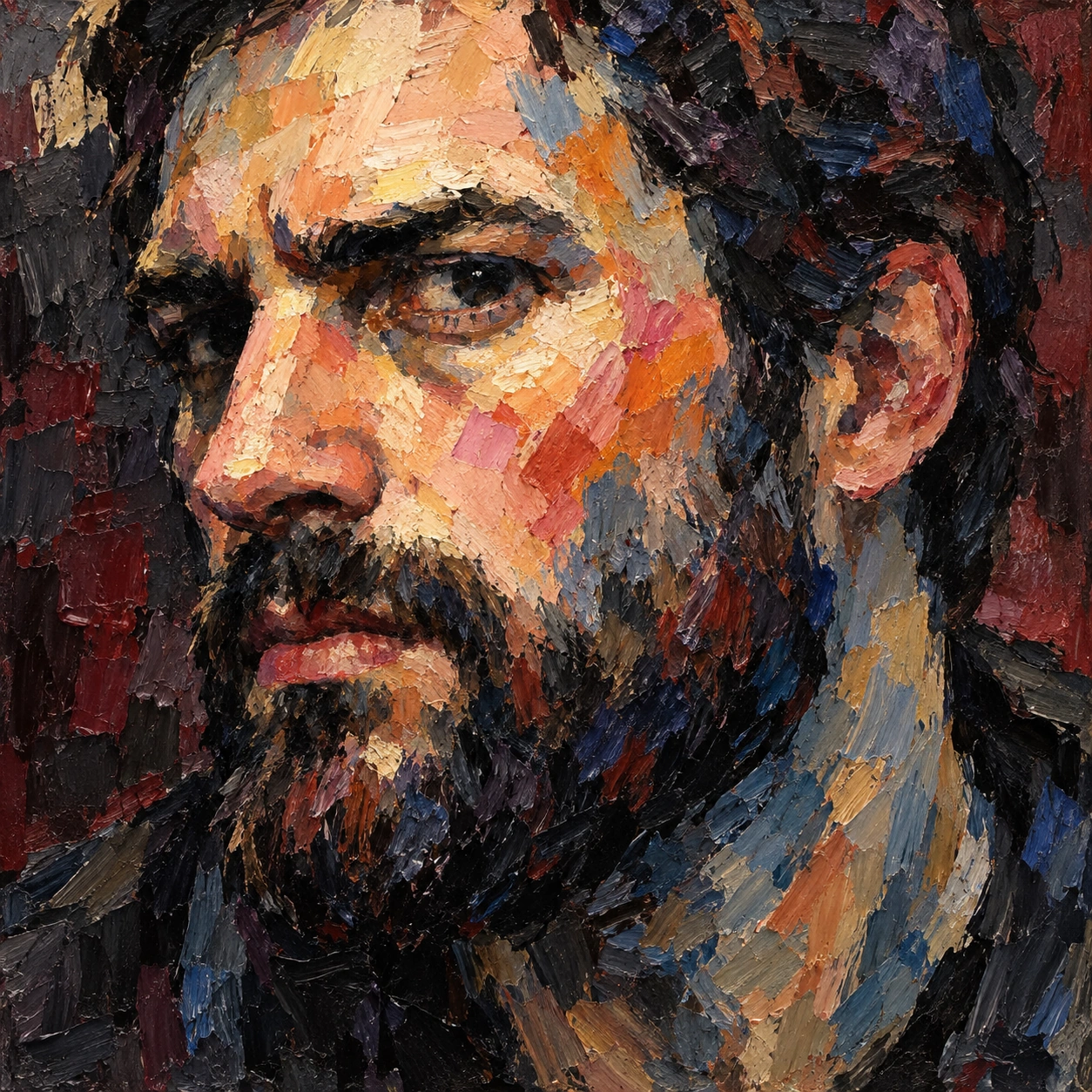 GPT Image 2.5
Reference details
- Reference ID
- 1627
- Category
- Painting
Reference prompts
Style prompt
An expressionist oil-paint language with thick dragged pigment, broken angular facets, and abrupt color collisions. Peach, apricot, orange, magenta, pale yellow, and cream meet cool blue-gray, navy, violet, and charcoal. Broad tool marks build large planes; a few sharp small strokes restore focus within the rough surface. Lighting is directional, with warm highlights confronting deep cool shadow. Tight framing compresses the space so color, gaze-like focal intensity, and physical paint texture dominate. The effect is raw, layered, and psychologically immediate.Full example prompt
A square expressionist oil portrait shows a bearded man from the shoulders upward, his head turning toward the left side of the frame. One intense dark eye becomes the focal point beneath a heavy brow; the other is partly lost in the angle and shadow. His nose, cheek, lips, and beard remain recognizable, but their planes are assembled from thick fractured patches rather than smooth skin. Warm peach, apricot, raw orange, magenta, pale yellow, and cream collide across the face. Blue-gray strokes cut through the jaw and neck, setting cool weight against the warm highlights. Dark hair and beard are built from dense navy, black, violet, and red-brown marks, with abrupt edges that nearly join the crowded background. Behind the head, blocky charcoal and burgundy areas provide only a shallow, undefined space. The paint looks pushed, dragged, and layered with a broad tool, leaving ridges, gaps, and broken rectangular facets visible. Small sharp touches around the eye and mouth bring the expression back into focus after the larger strokes disturb it. Light falls strongest from the upper left and front, catching forehead and cheek, while the far side of the face and lower beard drop into deeper cool shadow. The close crop gives the portrait little breathing room, so gaze, color clash, and surface texture dominate. The overall image feels raw and psychologically immediate, balancing a legible human face with vigorous, almost mosaic-like paint construction.