
Styles
#1629
Gustave Eiffel style reference and prompts
Explore the “Gustave Eiffel” reference with visual framing, a limited color palette, and reflections of ironwork and sky in the water. View the images, copy the style or example prompt, and discover related styles on Looksift.
Compare the Qwen Image 2.1 and GPT Image 2.5 examples, choose the visual qualities you want, and copy the style prompt for your own project.
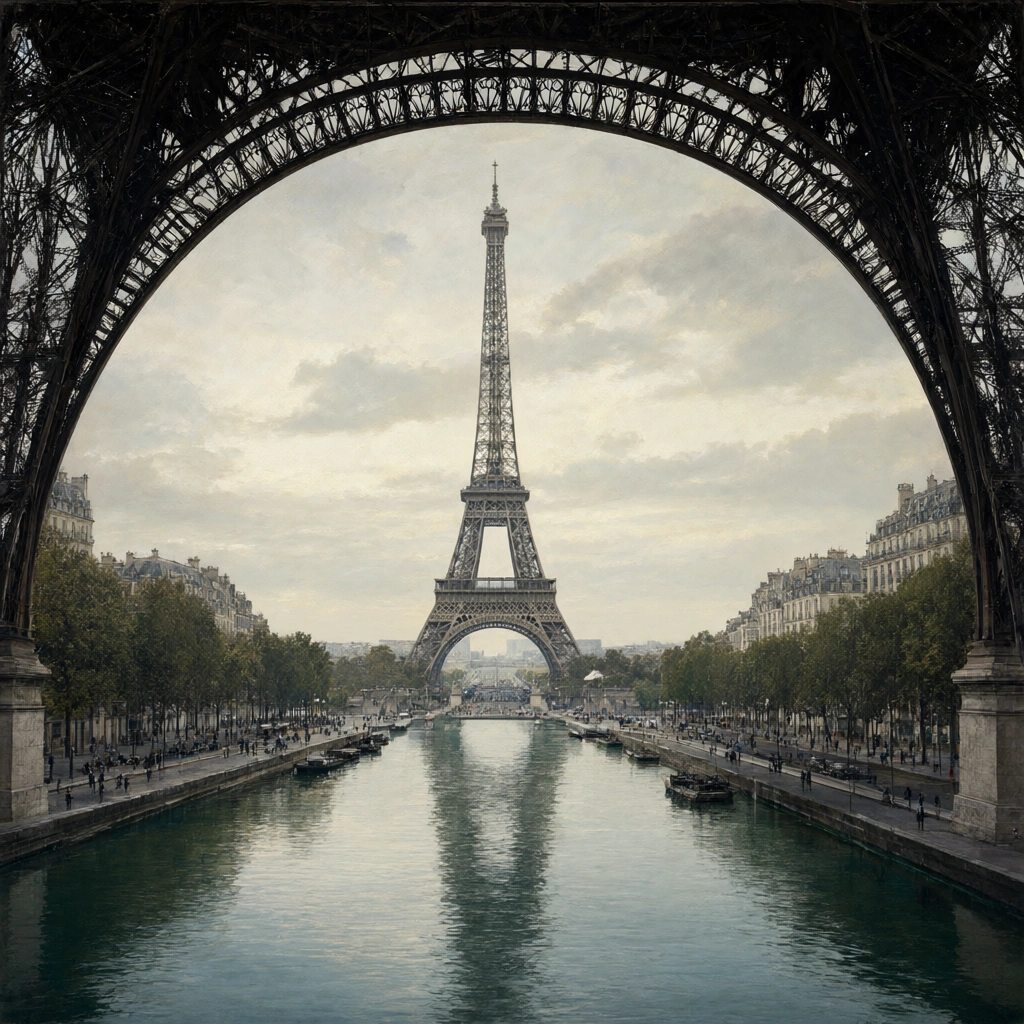 Qwen Image 2.1
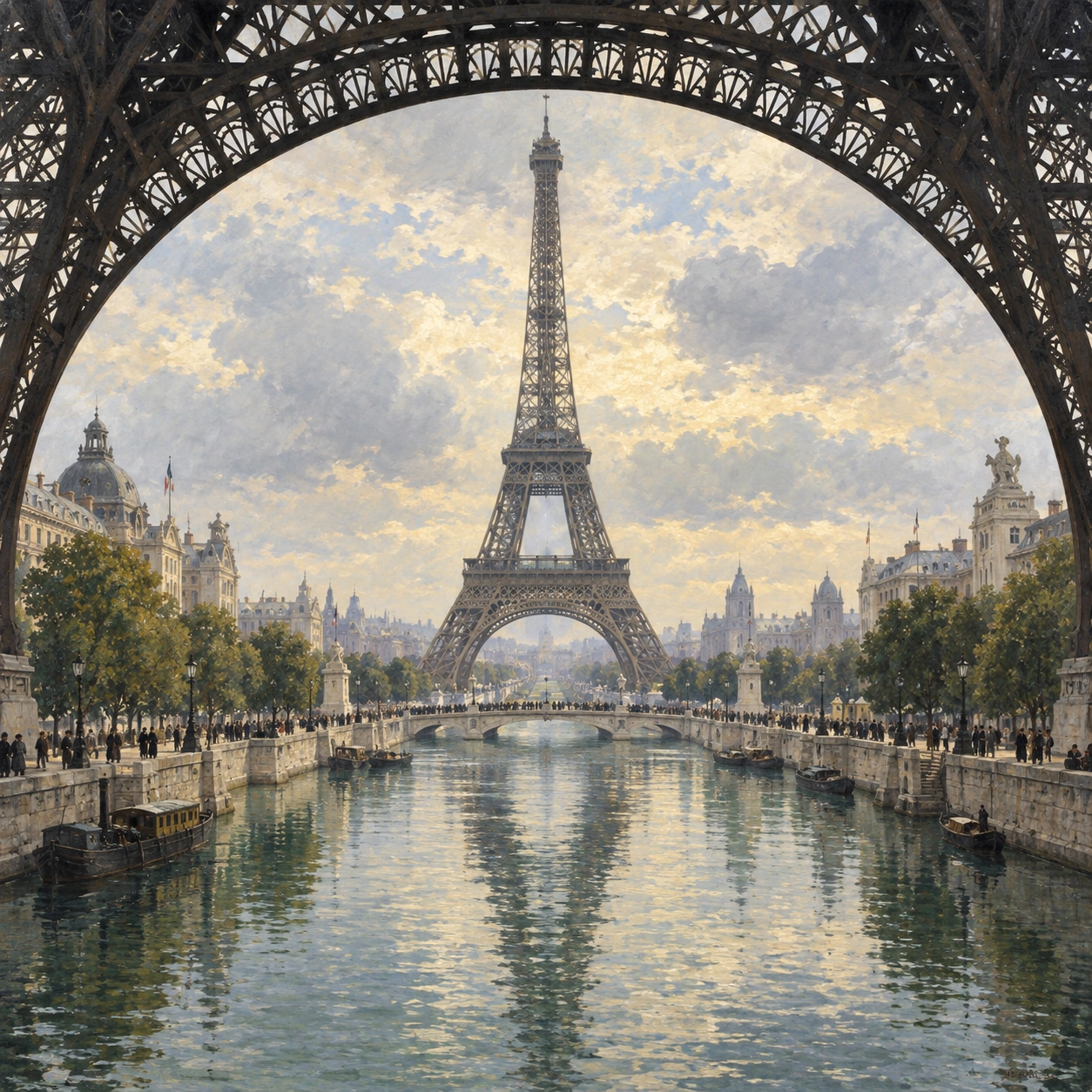 GPT Image 2.5
Reference details
- Reference ID
- 1629
- Category
- Painting
Reference prompts
Style prompt
The historical architectural painting uses a monumental near-dark lattice as a framing device for a bright, deeply receding view. Repeated arcs, cross-braces, and fine iron lines create a dense overhead rhythm; a central vertical and long reflective axis organize the space beyond. Foreground detail is crisp and heavy, while distant stone facades, trees, and tiny activity dissolve into gray-cream atmospheric haze. A restrained palette of charcoal, blue-gray, muted green, warm ivory, and thin yellow light gives the scene the look of an aged print with painterly color. Water reflections break the strict geometry into soft horizontal ripples. Symmetry carries the main composition, with small irregular marks preventing mechanical stiffness. The finish balances careful linear draftsmanship with delicate sky and water brushwork, creating depth, civic grandeur, and observational calm.Full example prompt
A square historical-looking painted view places the Eiffel Tower at the center of a Parisian waterway. The viewer looks through a vast dark wrought-iron arch that fills the entire upper foreground and curves down both sides like an architectural frame. Its repeated lattice members and small cross-braces are sharply silhouetted against a pale clouded sky. Beyond that near structure, the Eiffel Tower rises in the distance on the central axis. The tower is fully legible from broad lower arch to narrowing upper shaft, though its top approaches the dark overhead framing. A long green-blue reflecting basin or channel runs straight from the lower edge toward the tower. Its surface carries subdued broken reflections of the iron framework, sky, and nearby banks. Tree-lined promenades and pale stone buildings flank the water on both sides. Numerous tiny dark figures walk along the banks and gather near the far bridge, supplying scale without becoming individual characters. The architecture recedes in increasingly soft gray and cream tones, while the foreground ironwork stays nearly black and densely detailed. Thin afternoon light filters through layered cream, blue-gray, and pale yellow clouds. The composition is deeply symmetrical: overhead arch, central tower, straight water, and paired banks pull the eye inward. Small boats or dark water objects near the lower banks add irregular touches. The painted surface is fine and slightly grainy, with careful linear detail in the metal and softer atmospheric handling of the distant city. The mood is grand but observational, recording a monumental structure amid everyday urban movement. No readable signs or captions are visible; the image relies on geometry, light, and depth rather than lettering.