
Styles
#1640
Charles Dana Gibson style reference and prompts
Explore the “Charles Dana Gibson” reference with crosshatching, exposed paper, and hatching. View the images, copy the style or example prompt, and discover related styles on Looksift.
Compare the Qwen Image 2.1 and GPT Image 2.5 examples, choose the visual qualities you want, and copy the style prompt for your own project.
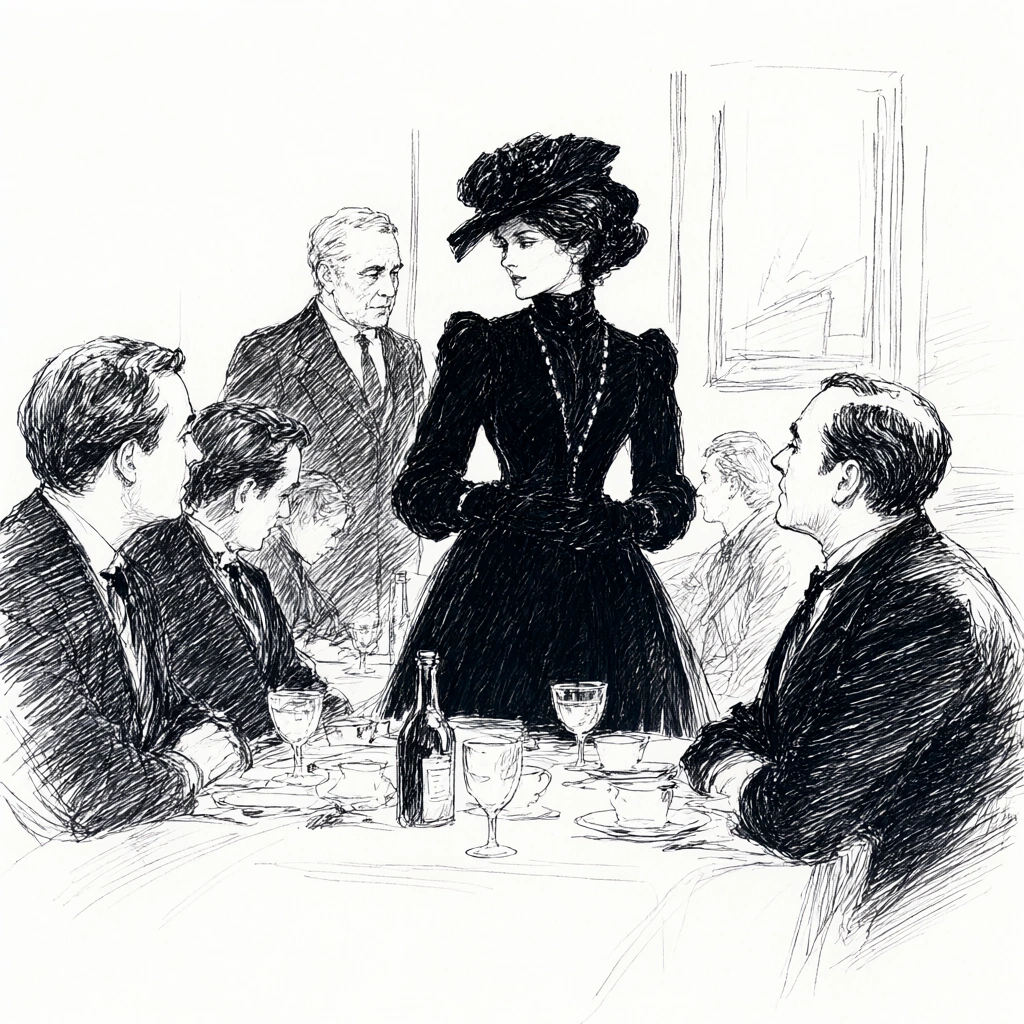 Qwen Image 2.1
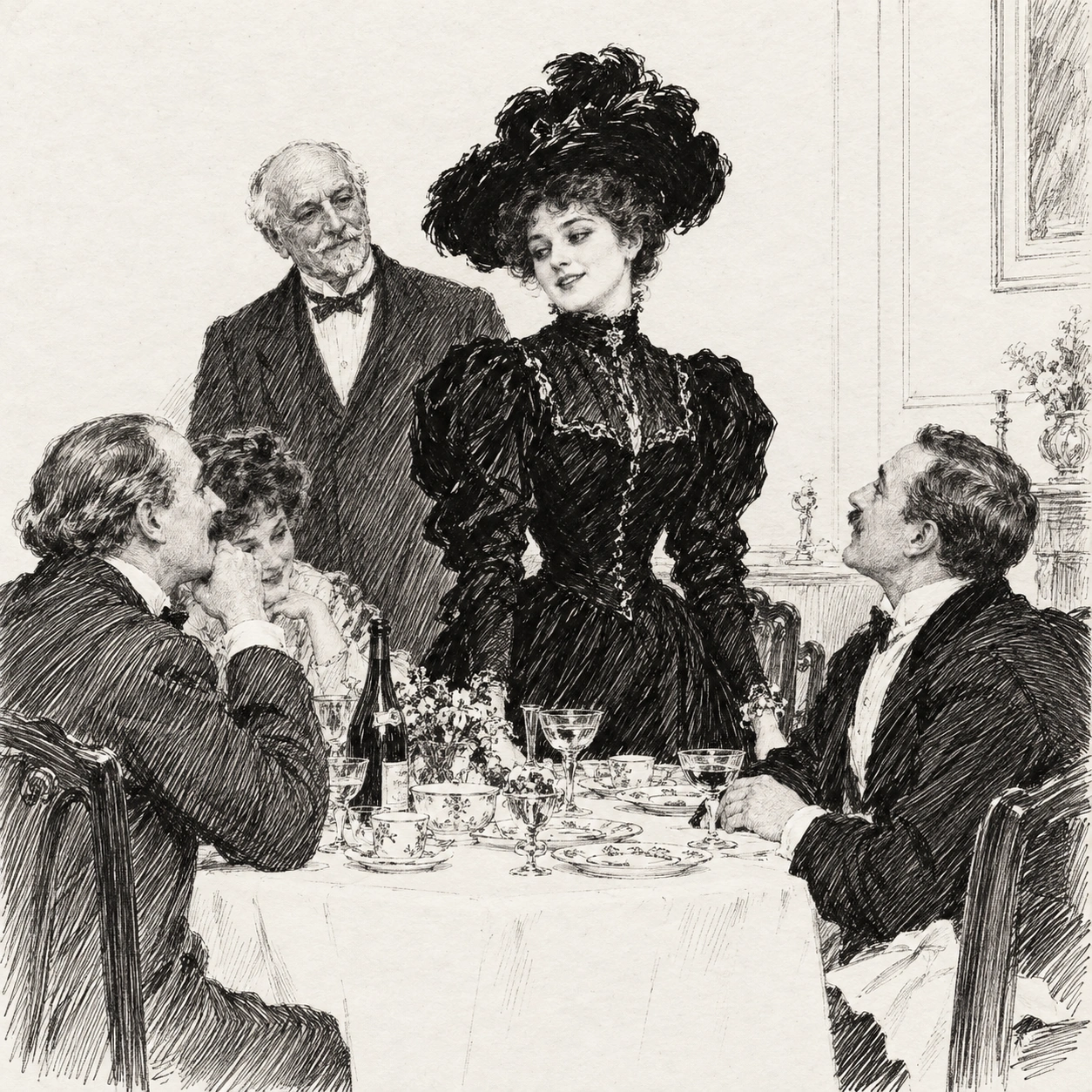 GPT Image 2.5
Reference details
- Reference ID
- 1640
- Category
- Ink & line
Reference prompts
Style prompt
The illustration relies on agile black ink lines over a generous white ground. Parallel hatching and tight crosshatching deepen selected masses, while exposed paper carries highlights and breathing room. Outlines vary between quick broken contours and precise dark accents; the darkest regions remain compact instead of filling the whole frame. Small curls, folds, and surface marks are described with economical strokes, giving rich detail without uniform finish. The palette stays in black, off-white, and many intermediate grays made by line density rather than wash. Light feels broadly even, so changes in value come from the drawing's concentration of marks. Overlapping shapes form a shallow social rhythm, with one strong vertical dark area surrounded by lighter clustered contours. The overall effect is elegant, lively, and editorial, balancing expressive sketchwork with controlled graphic contrast.Full example prompt
A square black-and-white pen illustration shows an elegantly dressed woman standing among guests around a dining table against a lightly sketched interior. The pale background is mostly open paper, with a few straight lines at the upper right suggesting a framed wall or doorway. Near the upper center, an older man in a dark suit stands behind the woman, his head and shoulders defined by short, close strokes. The woman occupies the center of the gathering. Her large dark hat, high collar, fitted bodice, and full sleeves make a strong black silhouette against the white paper. Fine white gaps cut through the dense ink on her clothes, separating trim, folds, and the line of her waist. Her face turns slightly toward the seated guests, with the eyes, nose, and mouth drawn in delicate marks that contrast with the forceful dark costume. At the left edge, a seated man leans toward another guest; his jacket is built from diagonal hatching and his light profile stands out against it. Beside him, a smaller partly hidden figure bends toward the center of the table. On the right, a seated man in a dark jacket looks up toward the standing woman, his head turned in profile and one arm close to the tabletop. Across the lower middle, cups, stemmed glasses, plates, and a bottle are suggested by thin contours and small black accents. The tablecloth remains largely white, preserving space between the closely grouped bodies. Quick parallel lines and crosshatching give the jackets and hair weight, while the surrounding room stays spare and pale. The light reads as even interior illumination, with contrast created mainly by ink density rather than a strong cast shadow. The overall composition is lively and socially crowded, its elegant figures held together by a dark central silhouette and a network of swift, precise pen marks.