
Styles
#1650
Sergei Diaghilev style reference and prompts
Explore the “Sergei Diaghilev” reference with tactile surfaces, pale neutral tones, and gentle shadows. View the images, copy the style or example prompt, and discover related styles on Looksift.
Compare the Qwen Image 2.1 and GPT Image 2.5 examples, choose the visual qualities you want, and copy the style prompt for your own project.
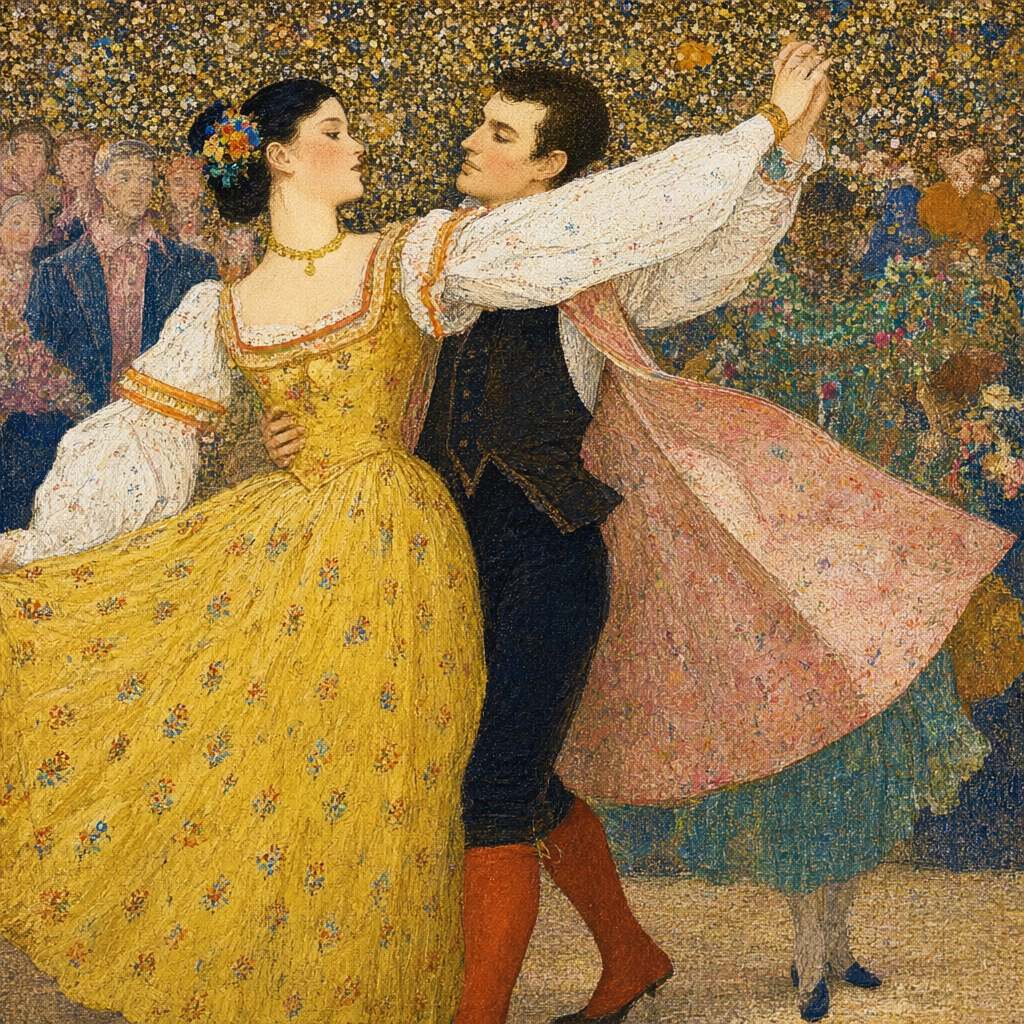 Qwen Image 2.1
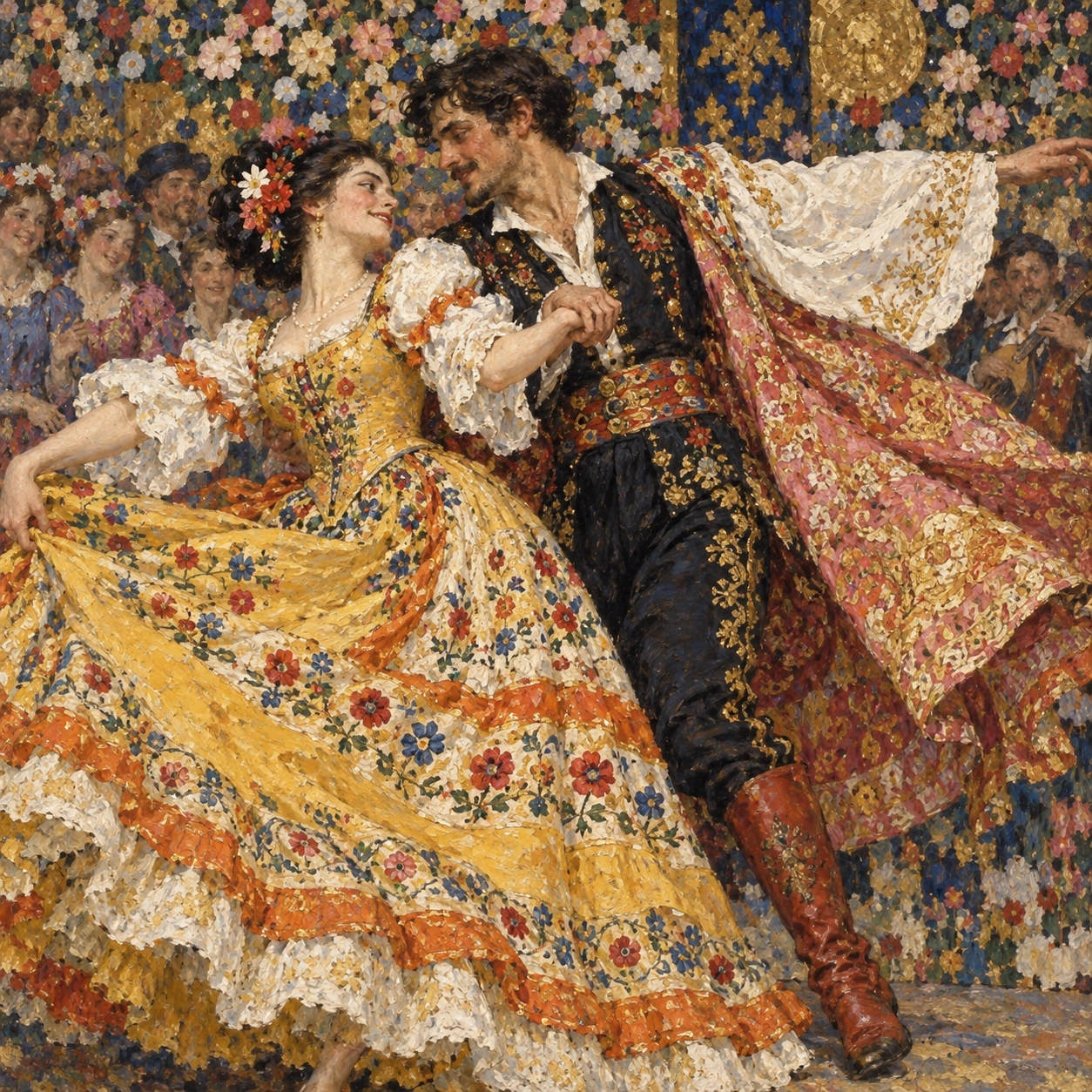 GPT Image 2.5
Reference details
- Reference ID
- 1650
- Category
- Flat illustration
Reference prompts
Style prompt
The painting combines broad flowing contours with densely accumulated ornamental marks. Warm gold, rust, coral pink, cream, cobalt blue, and dark green repeat in many small intervals, so large shapes stay lively without losing their outline. Matte pigment and speckled, almost woven surface texture give patterned areas a tactile depth. Pale volumes emerge from darker, busier fields; contrasting color areas guide the eye through sweeping diagonals and outward flares. Shadows are gentle and warm, with little sense of a single theatrical spotlight, while small high-value accents brighten the densely colored surface. Space remains shallow and decorative, packing peripheral detail around a readable center. The overall effect is festive and stage-like, with rhythmic ornament and expansive movement carrying the visual style.Full example prompt
A square, richly painted theatrical illustration shows a dancing couple in ornate costumes against a crowded backdrop of flowers and spectators. The background fills the upper edge with small circular blossoms, warm gold shapes, and dark blue accents, leaving very little empty space. At the left, loosely painted onlookers in muted pink, blue, and brown form a soft row behind the performers. The woman stands in the foreground on the left, her head turned toward her partner. Dark hair is gathered up with a bright floral accent, and her pale face is modeled gently against the dense pattern behind it. Her dress has a golden yellow bodice and a wide skirt that fans across the lower-left corner. White puffed sleeves, orange trim, and tiny red and blue ornament repeat over the fabric, making the garment seem embroidered and layered. At the center, the partner leans in close with one arm extended outward. A dark vest and rust-red boots hold a firm silhouette beneath a sweeping coat, whose broad white sleeve and pink-gold patterned lining open across the right half. Their hands and upper bodies meet near the middle, while the skirt and coat flare in opposing directions to suggest a turn in the dance. Behind the pair, the crowd and flowered wall merge into a shallow decorative field rather than a deep room. The paint has a woven, speckled quality, with small marks accumulating in costumes and background, while the dancers' faces and larger clothing shapes remain readable. Warm even light lifts the pale sleeves and faces without creating a hard spotlight or deep cast shadows. The overall composition is exuberant and tightly filled, combining jewel-toned pattern, sweeping diagonals, and bright costumes into a single theatrical moment.