
Styles
#1655
Inca art style reference and prompts
Explore the “Inca art” reference with stippled texture, tactile surfaces, and earth colors. View the images, copy the style or example prompt, and discover related styles on Looksift.
Compare the Qwen Image 2.1 and GPT Image 2.5 examples, choose the visual qualities you want, and copy the style prompt for your own project.
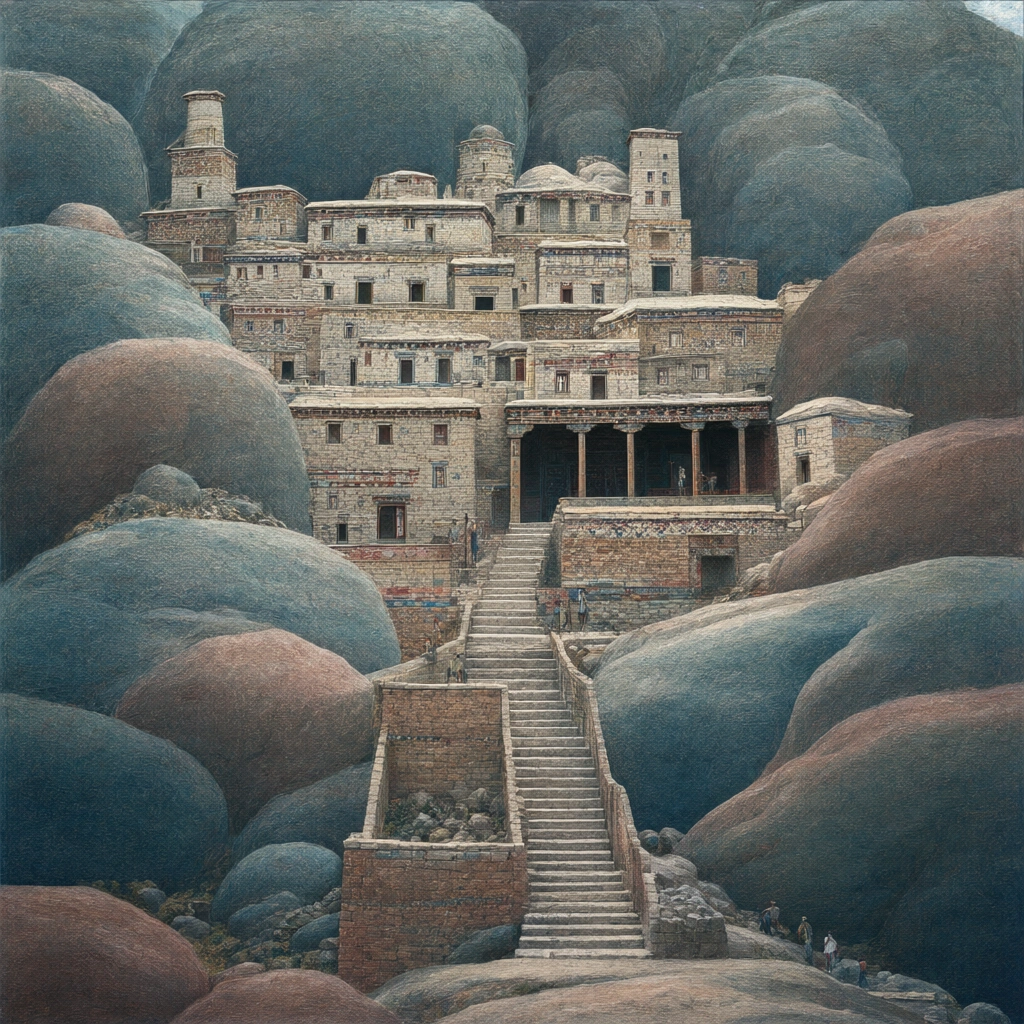 Qwen Image 2.1
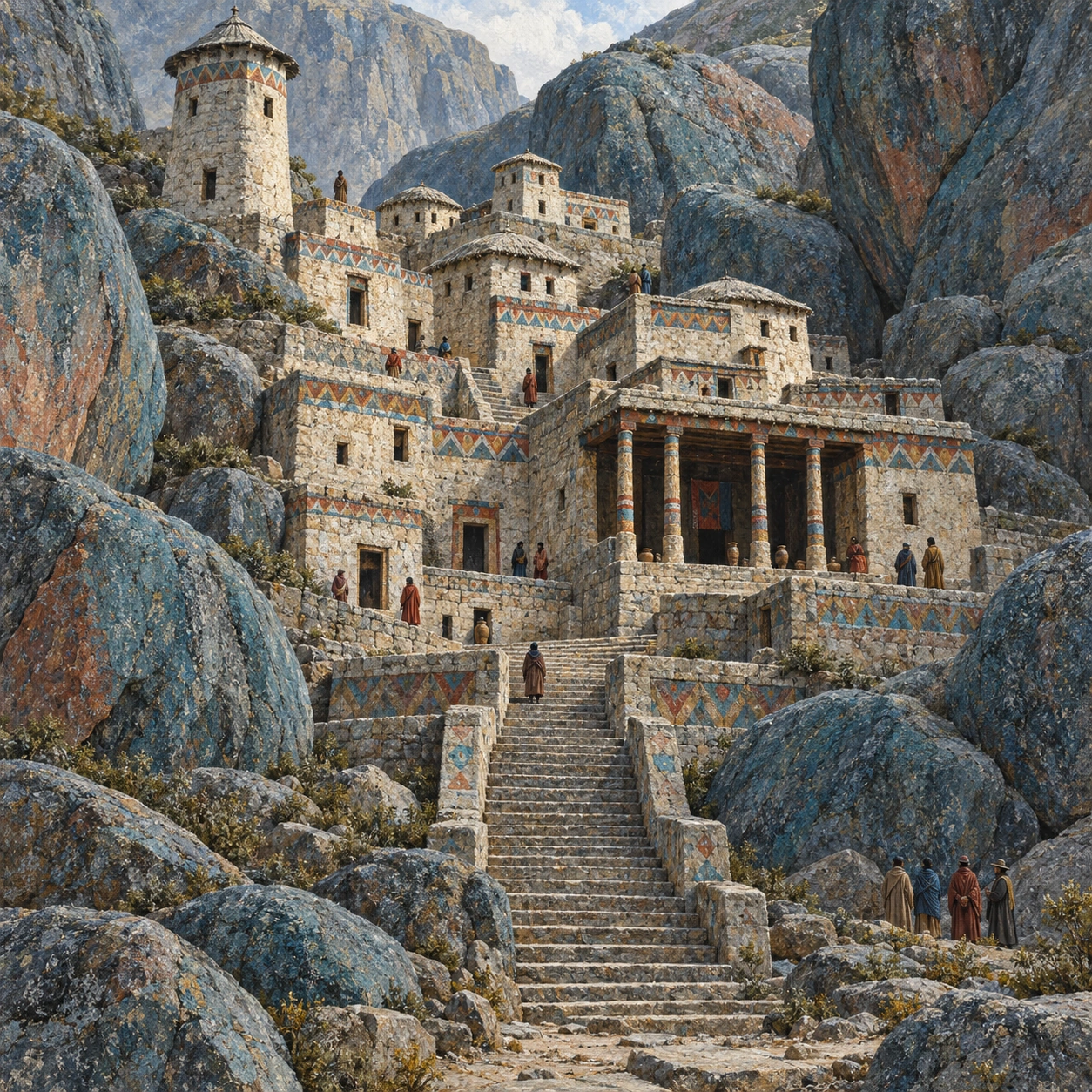 GPT Image 2.5
Reference details
- Reference ID
- 1655
- Category
- Painting
Reference prompts
Style prompt
Ornamental painting builds depth through stacked tiers, tiny repeated geometric bands, and tactile stone-like grain. Rounded large masses provide a muted blue-gray and teal ground for smaller pale ocher, clay, brown, and dull red components. Every surface carries fine stippling, incised-looking lines, or closely spaced pattern, so detail accumulates without becoming glossy. Dark recesses break the pale constructed forms into readable levels, while soft diffuse light catches raised edges and upper planes. The spatial rhythm climbs through several compressed steps, then slows against broad quiet masses behind. Small accent colors are embedded inside the earth palette rather than floating as bright isolated marks. The overall effect is densely crafted, relief-like, and monumental despite the many minute details.Full example prompt
A square, intricately textured painting shows a stepped stone settlement nestled among huge blue-gray rocks. The buildings occupy the middle of the selected panel, rising from a broad stairway at the bottom center toward a cluster of small towers and rounded roofs near the top. At upper left, a tall cylindrical tower with a narrow roof stands above lower stacked rooms. Across the center, many small rectangular doorways and windows interrupt pale stone walls, and colored geometric bands run beneath rooflines and around entrances. A porch-like structure with several thin columns projects from the middle-right level, its dark interior contrasting with bright patterned trim. In the foreground, the long central stair descends between low retaining walls into rocky ground. Several tiny human figures stand on the terraces and steps, providing scale without clear facial detail; a few more gather near the lower right. The surrounding rocks are broad, softly rounded, and streaked in muted teal, slate, brown, and dusty rose. The viewpoint looks slightly upward into the ascending complex, while the lower steps anchor the viewer's entry. Light is diffuse from above, picking out pale roofs and stone edges but leaving recesses under balconies and within openings dark. Fine stippling, rough stone grain, and repeated colored motifs cover the built surfaces. The overall composition stacks small, densely worked structures against monumental natural forms, using subdued earth color and blue stone to create a quiet, ceremonial atmosphere.