
Styles
#1705
The Sopranos style reference and prompts
Explore the “The Sopranos” reference with broken brushwork, fine grain, and close cropping. View the images, copy the style or example prompt, and discover related styles on Looksift.
Compare the Qwen Image 2.1 and GPT Image 2.5 examples, choose the visual qualities you want, and copy the style prompt for your own project.
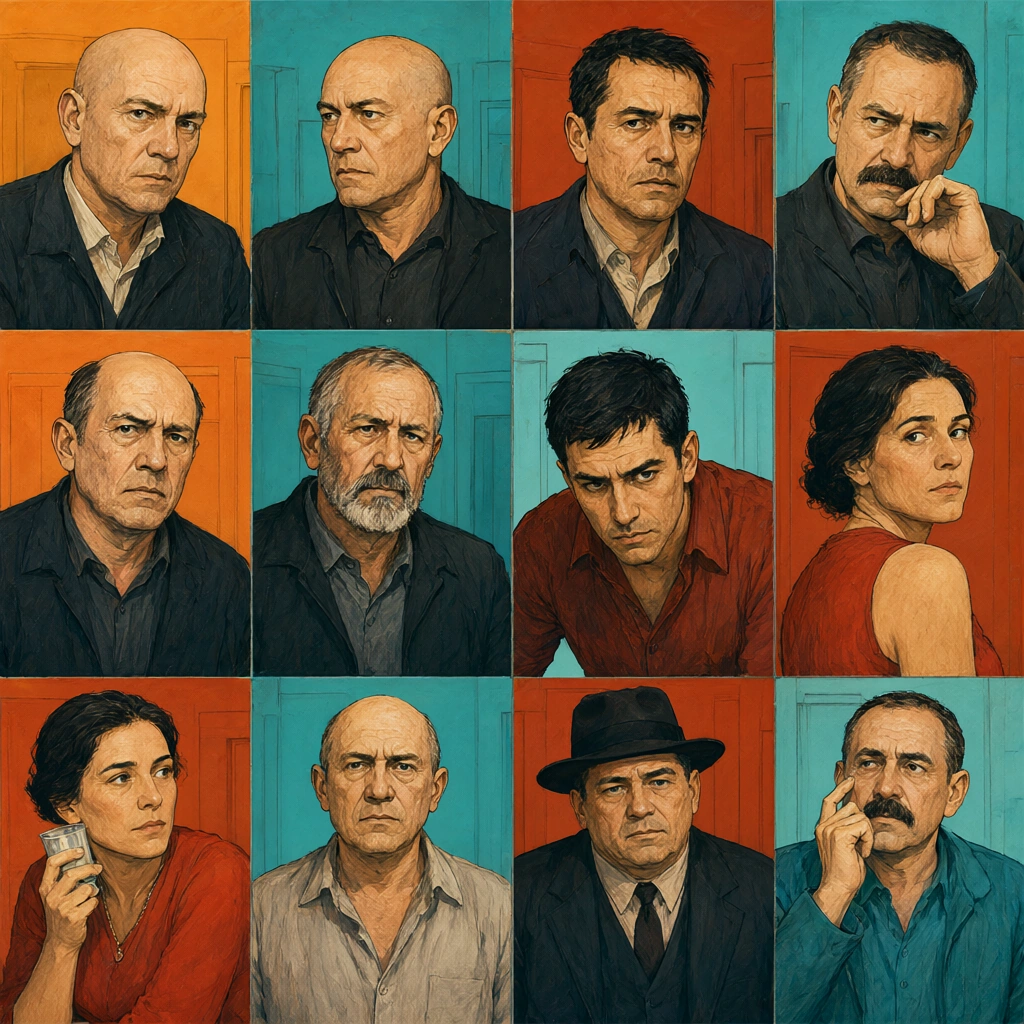 Qwen Image 2.1
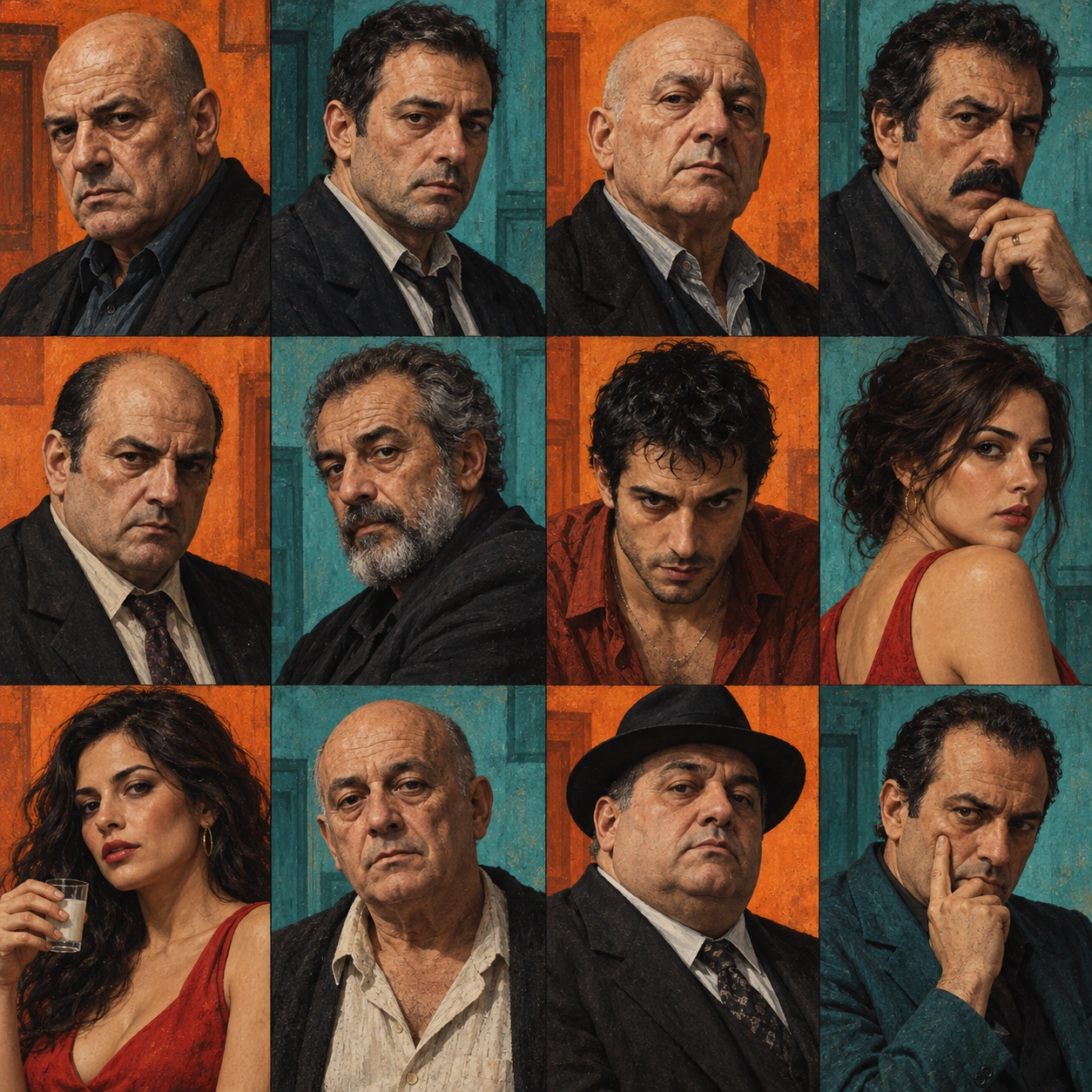 GPT Image 2.5
Reference details
- Reference ID
- 1705
- Category
- Collage & mixed media
Reference prompts
Style prompt
The illustrated collage uses a rigid modular grid to hold many tightly cropped, expressive forms. Thin dividers establish order, while neighboring panels alternate warm ochre, rust red, teal, and blue-green backgrounds. Within each cell, front-facing and angled shapes are modeled with fine grain, short broken strokes, and dark ink-like contour accents. Broad frontal light catches raised surfaces, while deep shadows under small projections create quick dimensional cues. Background structures remain shallow and geometric so the focal forms carry most of the detail. Repetition across equal-sized compartments builds rhythm; small variations in pose, value, and color keep the sequence lively. The warm-cool switching draws the eye across rows without requiring a single central focal point. The overall effect is dense and characterful, balancing a disciplined layout with rough painted texture and individual shifts in expression.Full example prompt
A square illustrated collage divides into twelve close figure portraits arranged in four columns and three rows, alternating warm orange and cool teal backgrounds. Thin straight seams separate the panels, but the faces sit close to those borders and make the whole sheet feel crowded. In the top row, four middle-aged or older men occupy shoulder-up views. Two have bald heads, while the others have short dark hair; one at the far right has a heavy mustache and a hand lifted near his chin. Their jackets, collared shirts, and guarded expressions vary subtly within a common dark palette. The middle row continues with a stern balding man at left and a gray-bearded man beside him. At the center-right, a younger dark-haired man leans forward with a narrow intense look and an open rust-red shirt. At the far right, a woman in a red sleeveless garment turns partly away and looks over her shoulder. Along the bottom, another dark-haired woman in red holds a small pale glass near the left edge. Beside her, an older bald man faces the viewer in a loose collared shirt. A heavier man in a dark hat and suit fills the third panel, and the far-right man in a teal jacket touches his face with one finger. The backgrounds suggest shallow interiors through repeated blocky lines and doorlike shapes, but no panel opens into a full room. Light falls broadly from the front and slightly above, giving cheeks, foreheads, and hands warm highlights while strong ink-like shadows settle around eyes and collars. The surfaces have fine painted grain and lightly broken contours rather than smooth photo realism. Orange, brick red, turquoise, and deep charcoal move across the grid in alternating bands. There is no readable title or caption. The overall composition makes individual attitudes readable inside a disciplined modular structure, using color shifts and compressed portraits for a tense ensemble mood.