
Styles
#1715
Time-lapse photography style reference and prompts
Explore the “Time-lapse photography” reference with fine grain, negative space, and pale neutral tones. View the images, copy the style or example prompt, and discover related styles on Looksift.
Compare the Qwen Image 2.1 and GPT Image 2.5 examples, choose the visual qualities you want, and copy the style prompt for your own project.
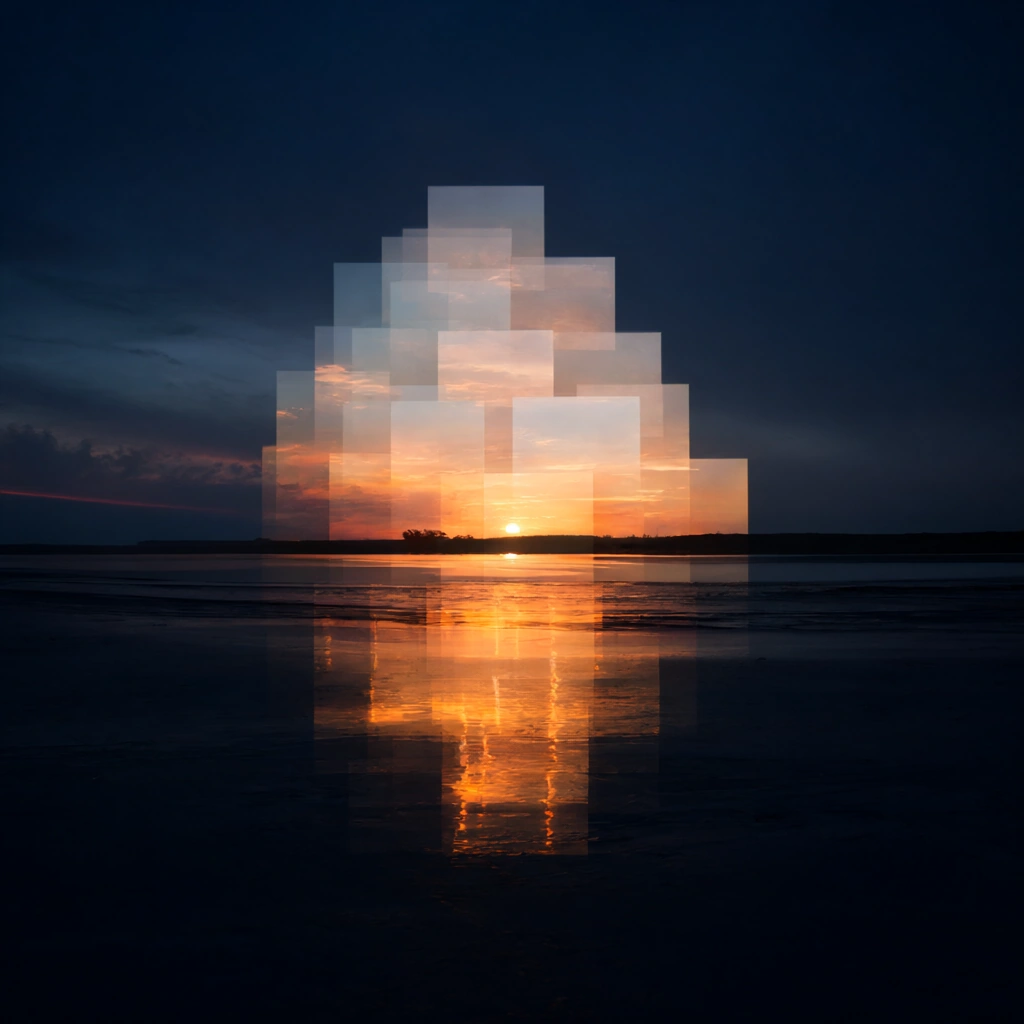 Qwen Image 2.1
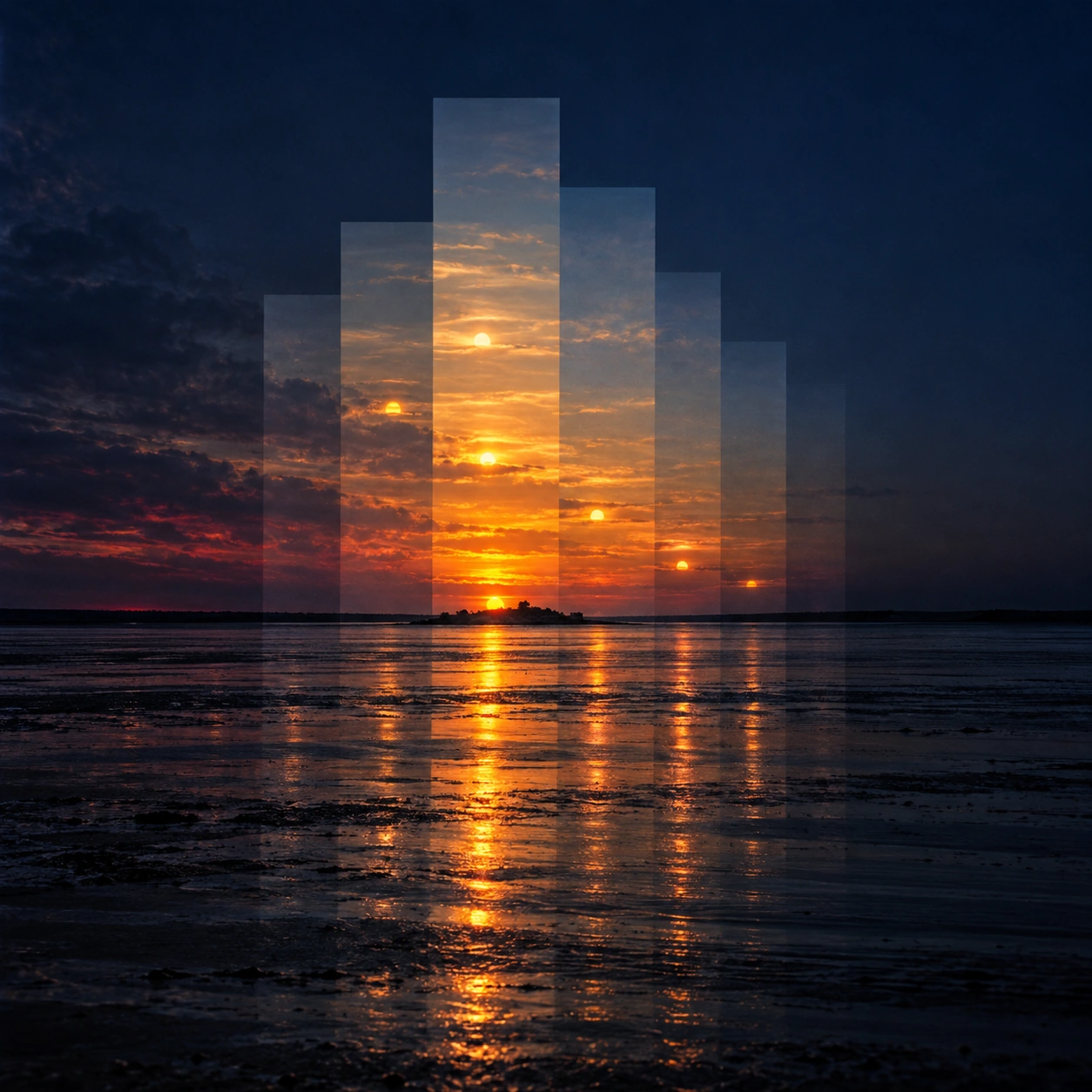 GPT Image 2.5
Reference details
- Reference ID
- 1715
- Category
- Photography
Reference prompts
Style prompt
The experimental photographic image layers semi-transparent exposures of a single view into staggered rectangular time slices. Repeated light bands and slight positional offsets show temporal change while a stable horizon and dark outer field hold the composition together. Deep navy and blue-black occupy most of the frame, allowing a concentrated strip of orange, peach, and pale cream to glow with unusual intensity. Straight panel boundaries remain visible, but their transparency lets clouds, reflections, and tonal bands overlap inside them. Low backlight produces soft flares and elongated reflective marks, with detail falling away toward the perimeter. Fine grain and gentle blur preserve a photographic surface even where the layered geometry looks constructed. Broad negative space around a dense central column gives the image a quiet, contemplative rhythm. The overall effect is meditative and uncanny, turning gradual change into a tangible stack of light without fixing a particular subject.Full example prompt
A square experimental time-lapse photograph shows a sunset over a flat reflective shoreline, with overlapping translucent rectangular exposures rising in the center. The upper half of the frame is deep navy blue, nearly unbroken except for faint cloud texture toward the left. A narrow horizon runs across the middle, separating the darkening sky from calm water and wet ground. At the far left, low smoky clouds carry a faint red-violet line close to the horizon. At the right, the horizon remains spare and nearly black. The central light is arranged as a stepped stack of semi-transparent vertical panels, each holding a slightly different position or brightness of the sinking sun. Some panels reach higher than their neighbors, making an uneven skyline of pale peach and blue-gray rectangles against the open dark sky. Within them, the sun and orange cloud bands repeat with small shifts. The warm band grows brightest near the lower center, where several exposures overlap. Along the lower half, the orange light reflects through shallow water as broken vertical strokes and smears, with each slice contributing another shifted reflection. The surrounding foreground is much darker, showing only a thin wet sheen and faint horizontal ripples. A small dark cluster along the central horizon interrupts the glow, but its details are lost in the backlight. The light comes directly from the low sun, flaring softly within the overlapping rectangles and falling quickly into cool blue-black outside them. The image retains photographic grain and gentle blur; the edges of the temporal panels are straight and visibly layered rather than naturally part of the landscape. Nothing in the scene is sharply posed or staged, and no readable text appears. The overall composition concentrates motion of passing time into a bright central column, balancing warm repeated light against an expansive still dark surround.