
Styles
#1740
Harold Cazneaux style reference and prompts
Explore the “Harold Cazneaux” reference with fine grain, negative space, and sepia tones. View the images, copy the style or example prompt, and discover related styles on Looksift.
Compare the Qwen Image 2.1 and GPT Image 2.5 examples, choose the visual qualities you want, and copy the style prompt for your own project.
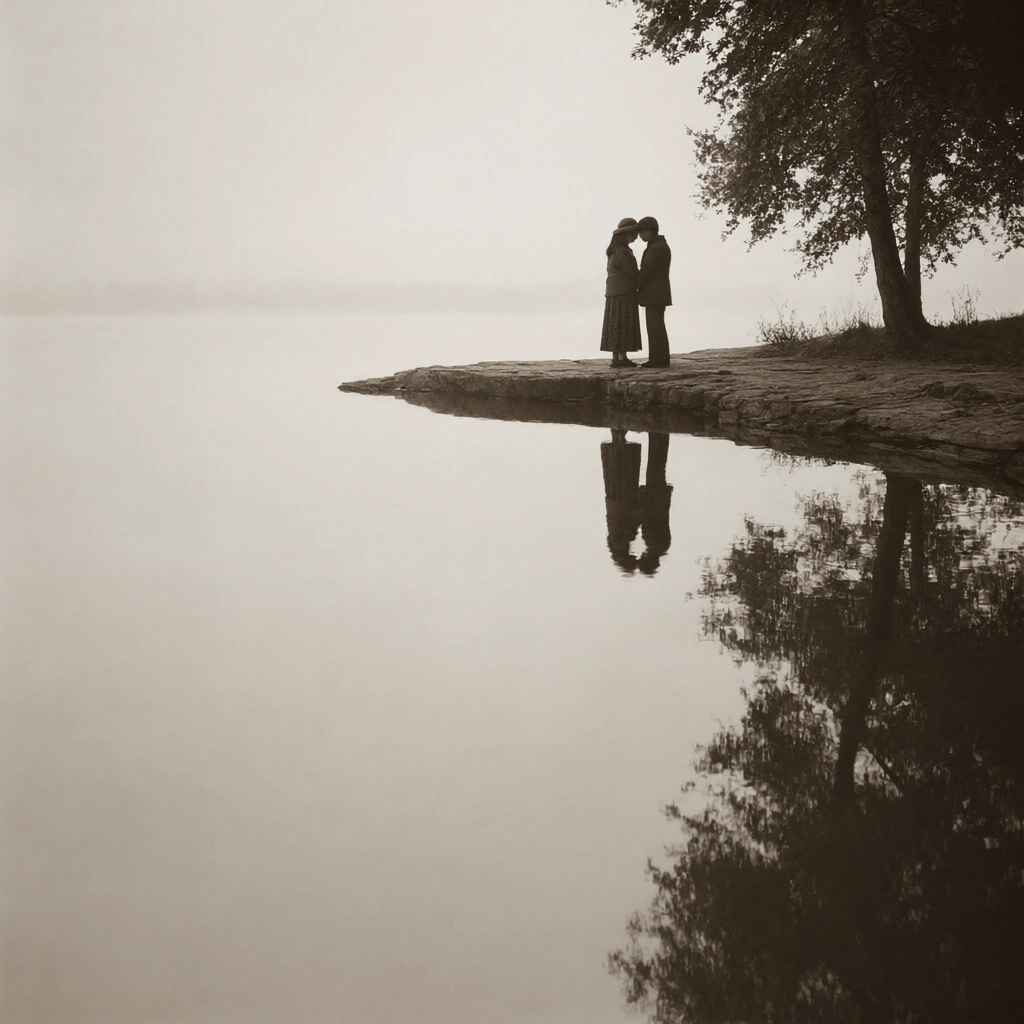 Qwen Image 2.1
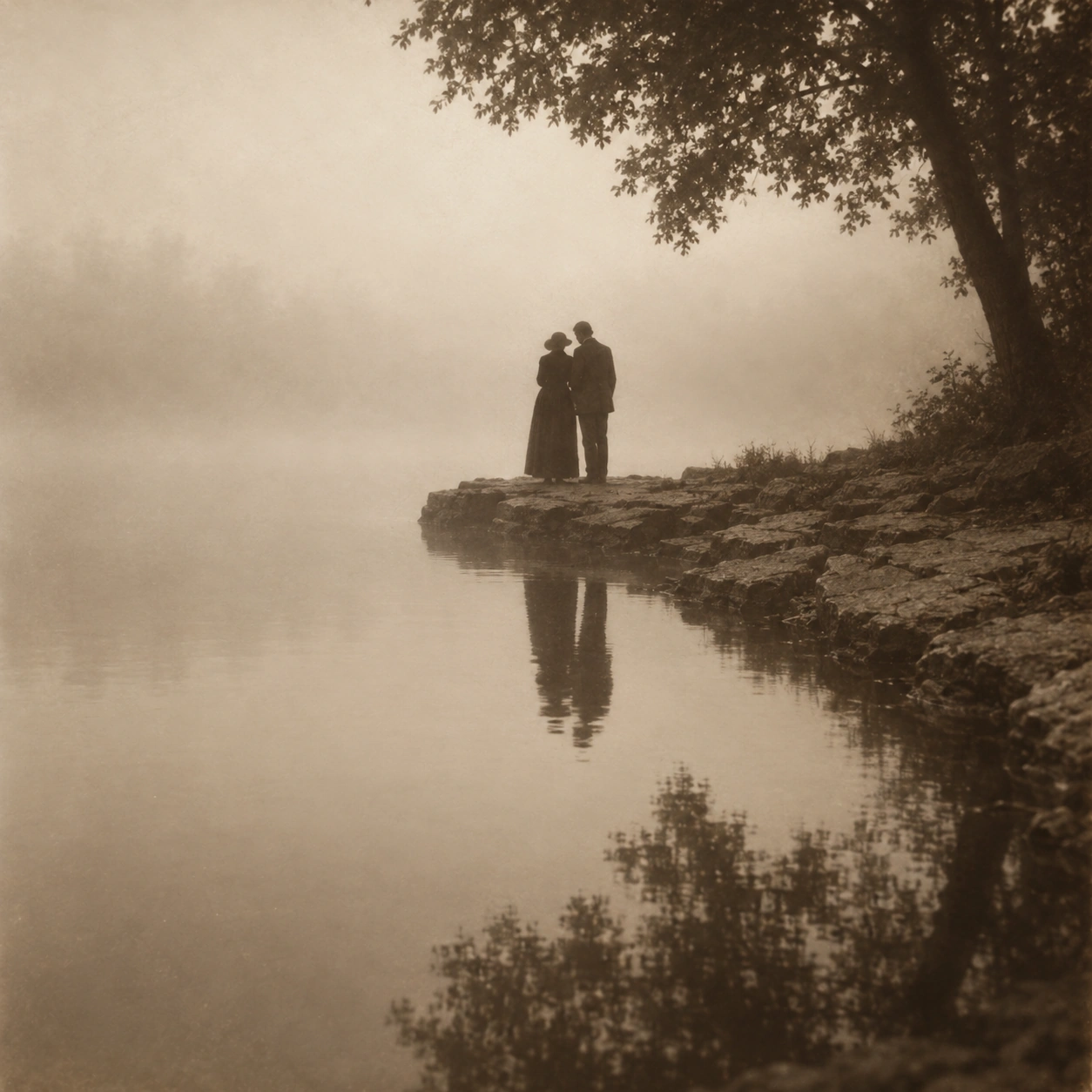 GPT Image 2.5
Reference details
- Reference ID
- 1740
- Category
- Photography
Reference prompts
Style prompt
The pictorial photograph uses a warm sepia monochrome, very soft focus, and broad areas of pale mist. Dark silhouettes occupy a small portion of the frame, gaining weight from their strong contrast with open luminous space. Diffuse backlight removes local color and most surface detail, leaving pose, overlap, and outline to carry the image. A nearly still reflective plane doubles the darkest shapes vertically, creating quiet symmetry beneath an irregular diagonal shoreline. Foreground texture appears in a few rough dark marks, then dissolves toward the distant haze. Fine grain and gently veiled edges give the image a tactile old-print quality rather than modern sharpness. Tonal transitions remain slow across empty areas, with no hard spotlight or crisp horizon. The overall effect is intimate and nostalgic, using scale, reflection, and negative space to let a small encounter feel suspended in time.Full example prompt
A square sepia-toned pictorial photograph shows two dark figures standing close together at the edge of a still misty lake. The upper left is almost empty, filled with pale gray-brown fog that erases the far shore. At the upper right, a tree trunk and a canopy of dark leaves lean into the frame, shading the narrow bank below. The land juts leftward as an irregular stone-edged point near the center, ending in a flat slab just above the water. Two people stand near the outer edge of that point, small against the broad pale mist. One figure has a long skirt and a rounded hat or dark hair shape; the other wears a shorter dark coat and straight trousers. Their heads incline toward one another, and the bodies nearly touch. Because they are backlit, facial details and exact clothing textures remain hidden in silhouette. The rocky shore runs diagonally from the lower right toward the pair, with thin dark cracks and uneven slabs visible before it disappears into fog. Below the figures, their elongated reflections descend into the calm water as two nearly continuous dark forms. The reflected tree and shore also frame the right side of the lake, while the left half remains broad and open. The water has only the slightest tonal ripple, preserving a soft mirror image without a bright horizon line. Light comes diffusely from the fog and open sky across the lake, making the background almost white and reducing the pair and tree to deep brown-black. The photograph is softly focused with fine grain and gentle tonal transitions, and its edges fade into mist rather than cutting sharply. No readable sign or built structure is visible. The overall composition places a tiny private encounter within an expansive reflection and empty air, using silhouette and sepia softness for a quiet, nostalgic mood.