
Styles
#1764
Hendrick ter Brugghen style reference and prompts
Explore the “Hendrick ter Brugghen” reference with tactile surfaces, pale neutral tones, and chiaroscuro. View the images, copy the style or example prompt, and discover related styles on Looksift.
Compare the Qwen Image 2.1 and GPT Image 2.5 examples, choose the visual qualities you want, and copy the style prompt for your own project.
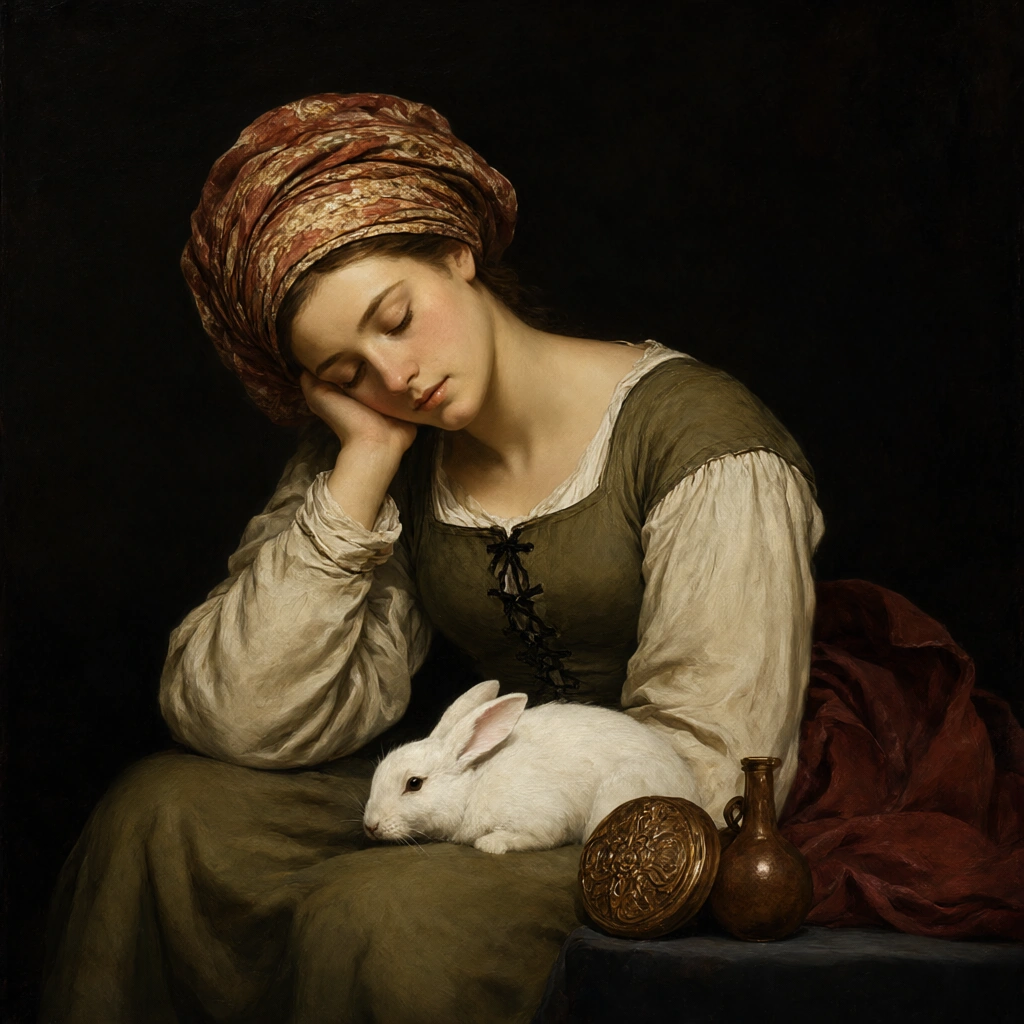 Qwen Image 2.1
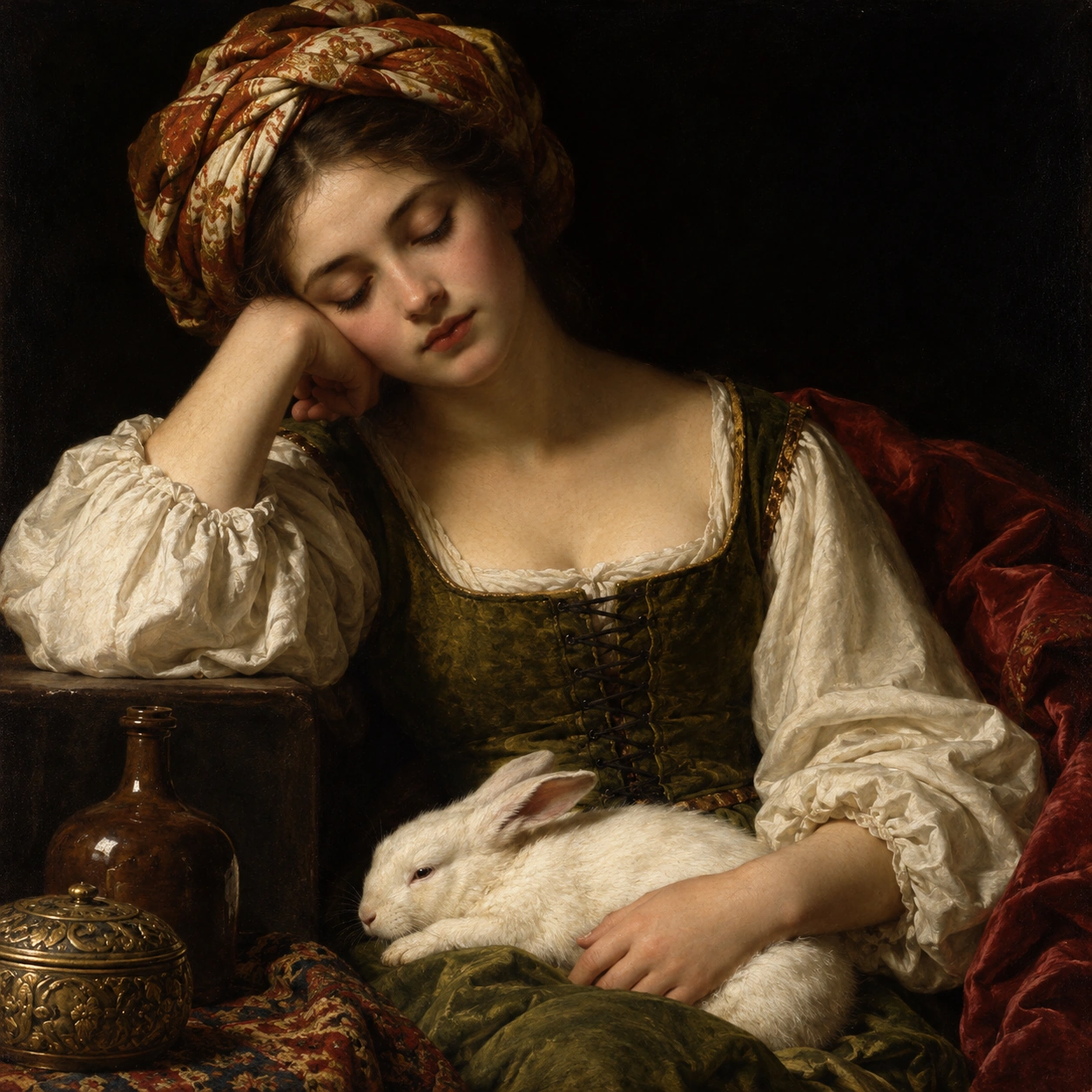 GPT Image 2.5
Reference details
- Reference ID
- 1764
- Category
- Painting
Reference prompts
Style prompt
Use Baroque chiaroscuro with warm focused light emerging from a near-black ground. Model skin or similarly smooth focal surfaces with delicate transitions, while fabrics, fur-like textures, and carved details receive more tactile brushwork. Balance olive, russet, cream, dark red, and umber in a compact diagonal grouping. Let highlights descend in a deliberate visual sequence and allow secondary areas to disappear into shadow. Preserve intimacy and quiet theatricality in the square frame.Full example prompt
The painting shows a young woman seated in a dark, undefined interior, her eyes closed as though asleep or lost in thought. Her head tilts to the left and rests on one hand, with the elbow supported by a low surface. A patterned turban in russet, cream, and gold wraps her hair. She wears an olive-green bodice with dark lacing and voluminous pale sleeves gathered at the wrists. Her expression is gentle and unguarded; warm light models the eyelids, nose, cheek, and relaxed lips. A small white rabbit lies across her lap, its soft body touched by the same light. Near it stand a brown bottle and an ornate round object with carved or embossed patterns. Dark red fabric gathers along the right side, partly disappearing into shadow. The background is nearly black, without architecture to establish a precise location. The forms emerge from that darkness through a controlled sequence of highlights: first the face and white collar, then sleeves, rabbit, and small still-life details. Brushwork is smooth on skin and more tactile in cloth, fur, and the patterned head covering. The square crop keeps the figure close, with a diagonal from turban through the bowed face and folded arms to the pale rabbit. The mood is intimate and quiet, though the theatrical contrast gives this ordinary pause the weight of a staged Baroque scene.