
Styles
#1790
Jonathan Meese style reference and prompts
Explore the “Jonathan Meese” reference with weathered surfaces, close cropping, and tonal contrast. View the images, copy the style or example prompt, and discover related styles on Looksift.
Compare the Qwen Image 2.1 and GPT Image 2.5 examples, choose the visual qualities you want, and copy the style prompt for your own project.
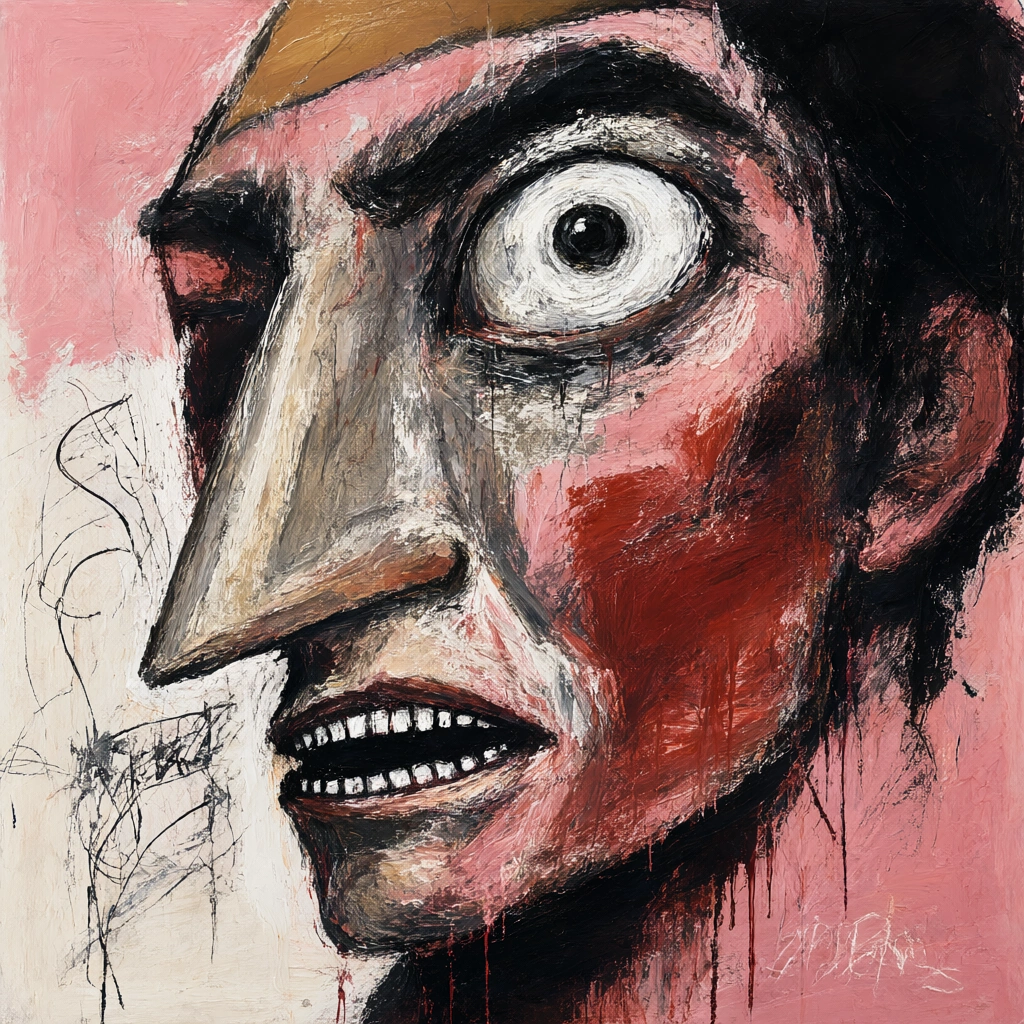 Qwen Image 2.1
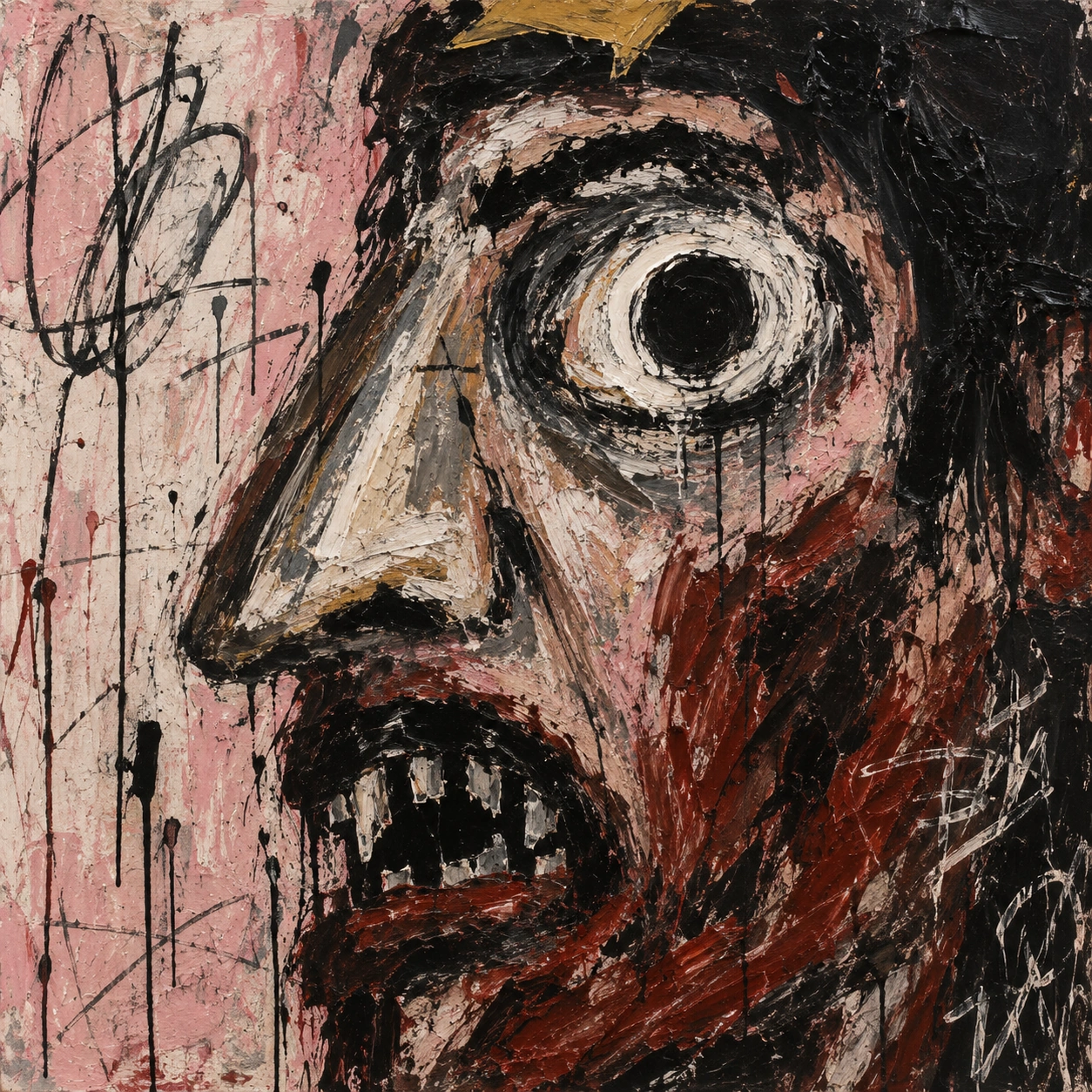 GPT Image 2.5
Reference details
- Reference ID
- 1790
- Category
- Painting
Reference prompts
Style prompt
Raw expressionist painting layers opaque swipes, scratched back passages, drips, and wandering black linework. Dirty rose, crimson, rust, off-white, and near-black collide without smooth blending. One high-contrast circular focal mark can hold attention amid irregular angular masses and half-erased details. Edges are torn, smeared, or aggressively redrawn; surface wear and accidental-looking marks remain visible. Illumination is graphic rather than naturalistic, created by blunt white pigment against dark neighboring strokes. Tight cropping allows the image to push beyond its own borders. The overall effect is abrasive, urgent, and deliberately unstable.Full example prompt
A square raw expressionist painting shows a distorted face pressed close to the picture plane against a dirty pink and off-white ground. One oversized round eye dominates the upper center-right of the selected panel, with a black pupil surrounded by thick white and gray rings. A dark uneven eyebrow arches above it beneath a mass of black hair or paint that fills the top-right corner. The long triangular nose extends down toward the left, built from scraped cream, gray, and brown strokes rather than smooth flesh. Below it, a dark mouth opens into a jagged shape lined by short black marks that suggest broken teeth. Broad red-brown and black swipes cover the lower cheek and jaw, and the face continues beyond the right and bottom edges. At left, pale ground remains visible beneath looping black scribbles, drips, and scratchy line fragments. A muted gold or ocher angular piece cuts into the top edge above the dark head, but its exact form is unclear. Small white scrawls near the lower-right edge are too irregular to read as words. Paint appears layered, partly scraped back, and allowed to run in narrow vertical trails. The viewpoint is frontal and extremely close, leaving no room or landscape around the head. Light is not a natural source in the scene; the brightest values come from opaque white paint around the eye and nose against heavy black marks. The overall composition is crowded and unstable, using the single eye, abrasive surface, and clashing pink-red-black palette for confrontational energy.