
Styles
#1864
Stephen Wiltshire style reference and prompts
Explore the “Stephen Wiltshire” reference with crosshatching and a monochrome palette. View the images, copy the style or example prompt, and discover related styles on Looksift.
Compare the Qwen Image 2.1 and GPT Image 2.5 examples, choose the visual qualities you want, and copy the style prompt for your own project.
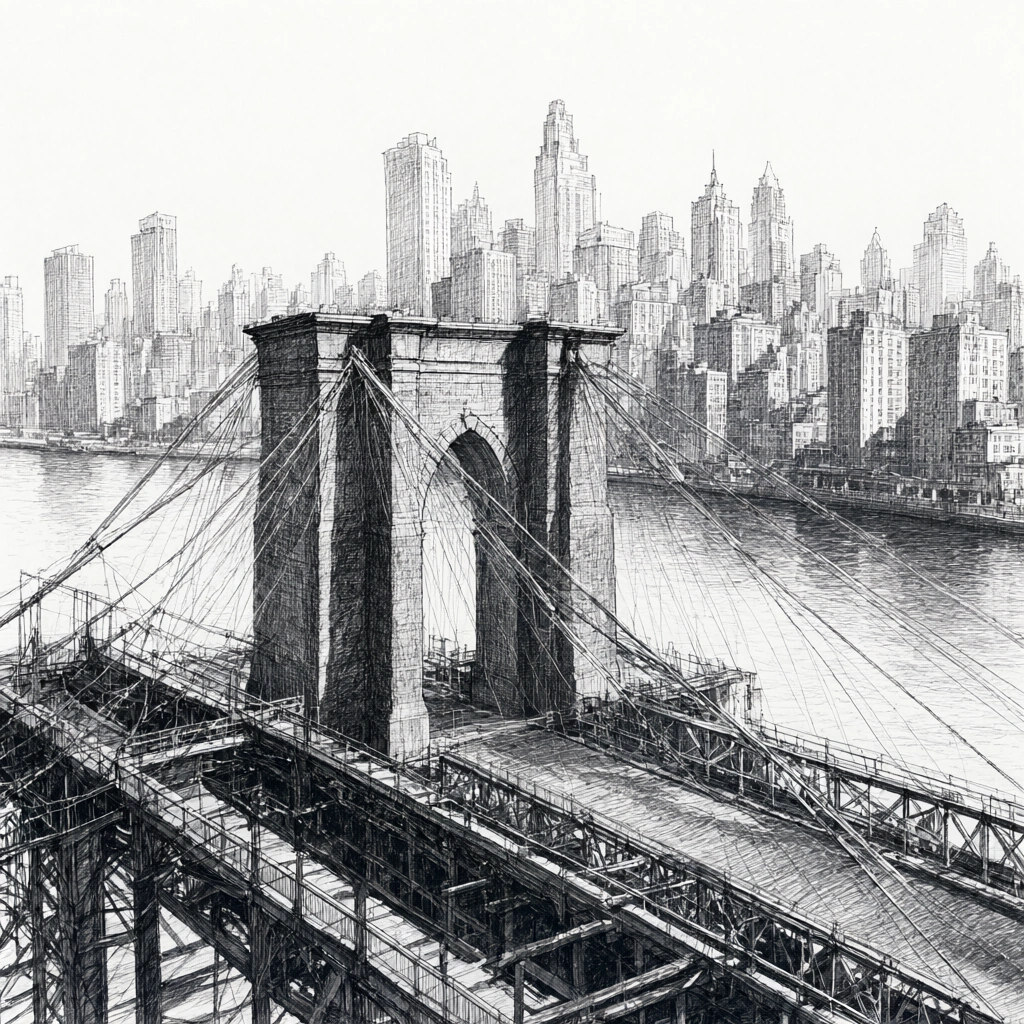 Qwen Image 2.1
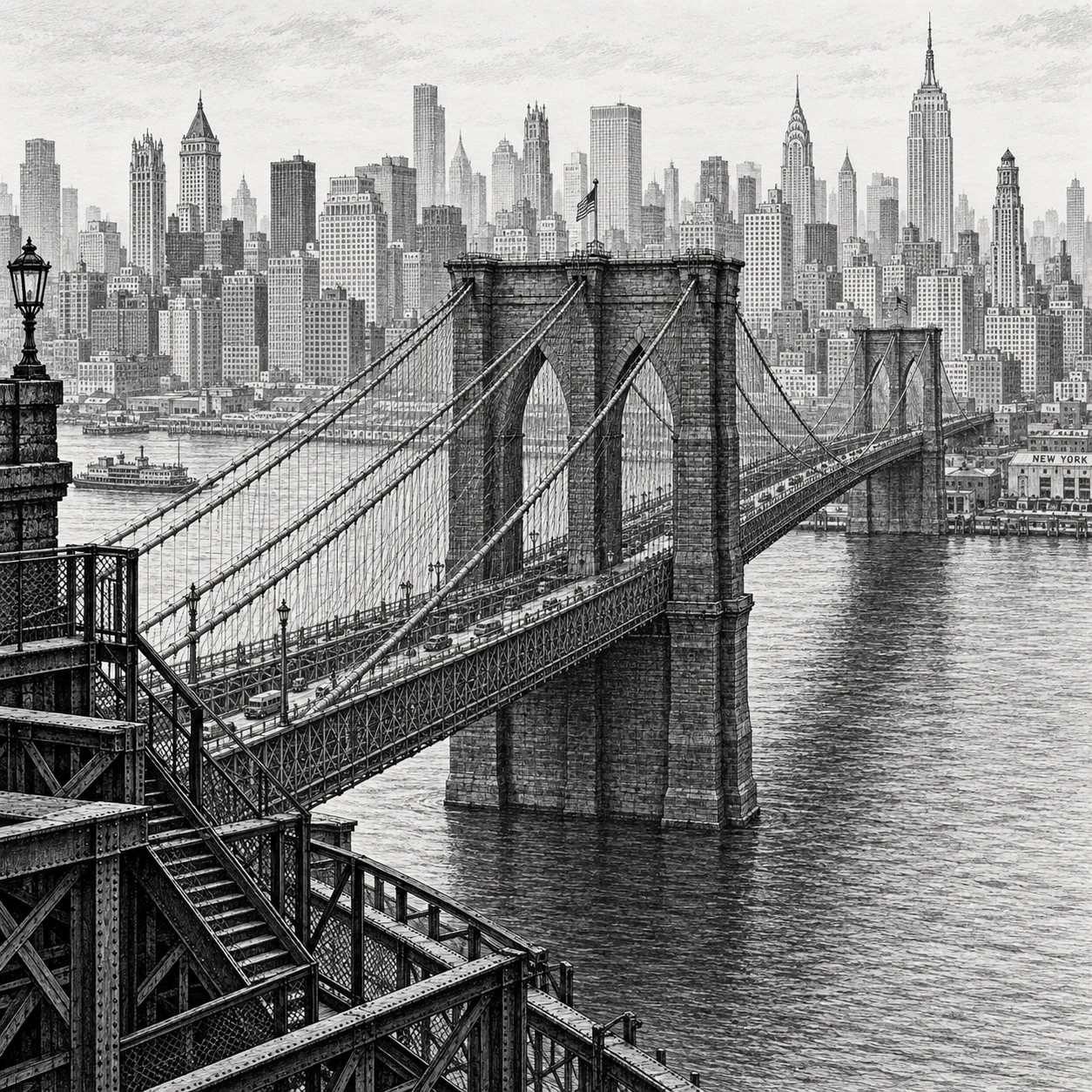 GPT Image 2.5
Reference details
- Reference ID
- 1864
- Category
- Ink & line
Reference prompts
Style prompt
Detailed monochrome pen work builds scale from countless short lines, crosshatched shadows, and repeated tiny structural marks. Firm diagonals and verticals establish a strong spatial framework; dense foreground blacks gradually relax into pale atmospheric linework in the distance. Windows, seams, cables, rails, and water texture are differentiated by stroke direction and spacing. The light is broad and neutral, so tonal density rather than color or spotlight gives the scene depth. A high oblique viewpoint allows layered near, middle, and far planes to remain simultaneously legible. The overall effect is patient, observational, and architecturally exact, with a hand-drawn surface always visible.Full example prompt
A square black-and-white pen drawing looks obliquely across a suspension bridge toward a dense city skyline. Two heavy stone towers stand in the middle distance, their tall arches cut through by the pale sky and distant buildings. Bundles of suspension cables fan outward from the towers in long diagonal lines, while the bridge deck crosses the lower half of the frame and recedes toward the far shore. In the near left foreground, dark girders, railings, and a staircase are packed into a complex web of straight edges. The broad river lies behind and below the bridge, rendered in quieter horizontal hatching; a darker stretch of water fills the right side. Across the river, narrow high-rise blocks cluster so closely that one building overlaps the next. Their rooflines rise and fall, with a few distinct pointed or stepped towers breaking the upper silhouette. Small rows of windows and structural divisions are repeated with patient linework, but atmospheric paleness softens the farthest buildings. The drawing is largely monochrome, using dense crosshatching and stippled darks for the bridge and foreground, then lighter thin lines for distant architecture. Even daylight gives the scene a broad readable clarity rather than a dramatic shadow pattern. The viewpoint is high enough to see the deck and river simultaneously, yet the towers dominate the central structure. The composition balances the bridge's precise engineering geometry against the packed, irregular rhythm of the skyline, making the whole image feel both meticulously surveyed and expansive.