
Styles
#1932
Alex MacLean style reference and prompts
Explore the “Alex MacLean” reference with an oblique aerial view. View the images, copy the style or example prompt, and discover related styles on Looksift.
Compare the Qwen Image 2.1 and GPT Image 2.5 examples, choose the visual qualities you want, and copy the style prompt for your own project.
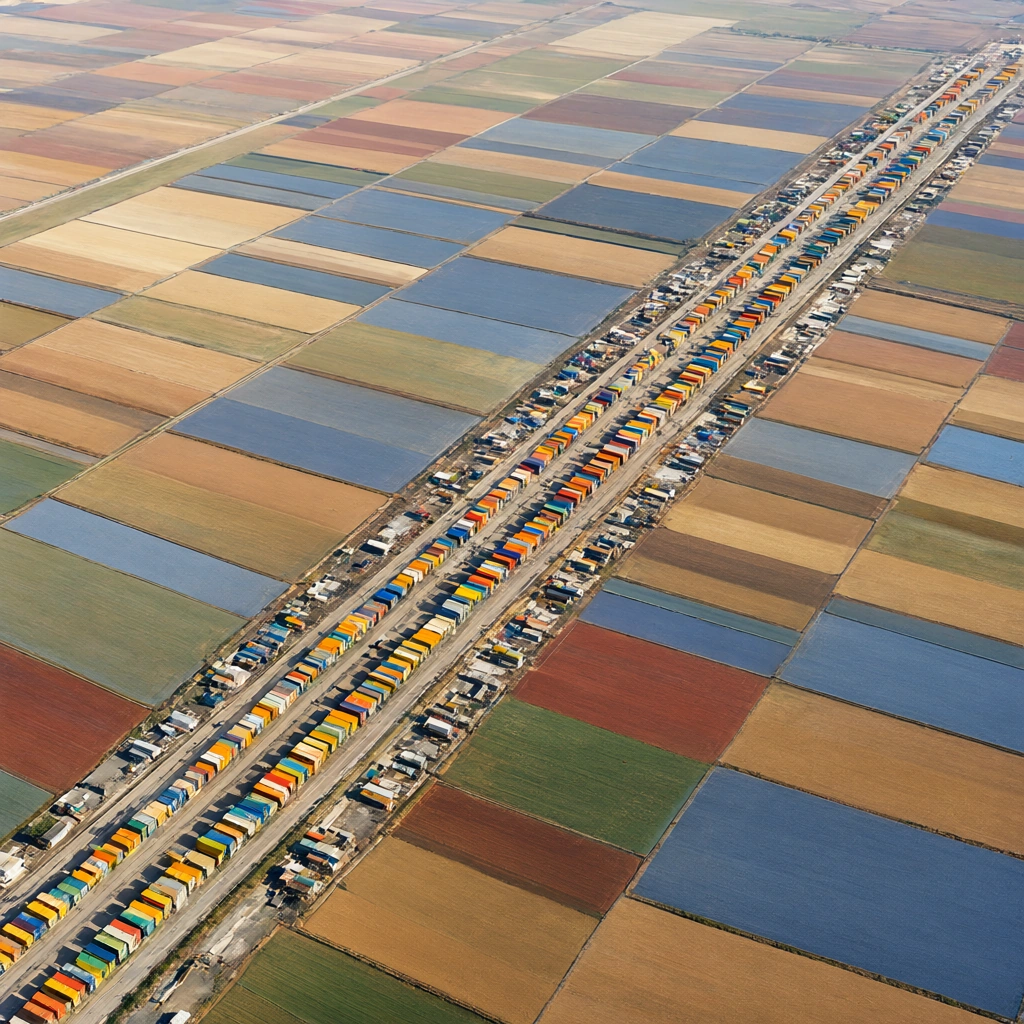 Qwen Image 2.1
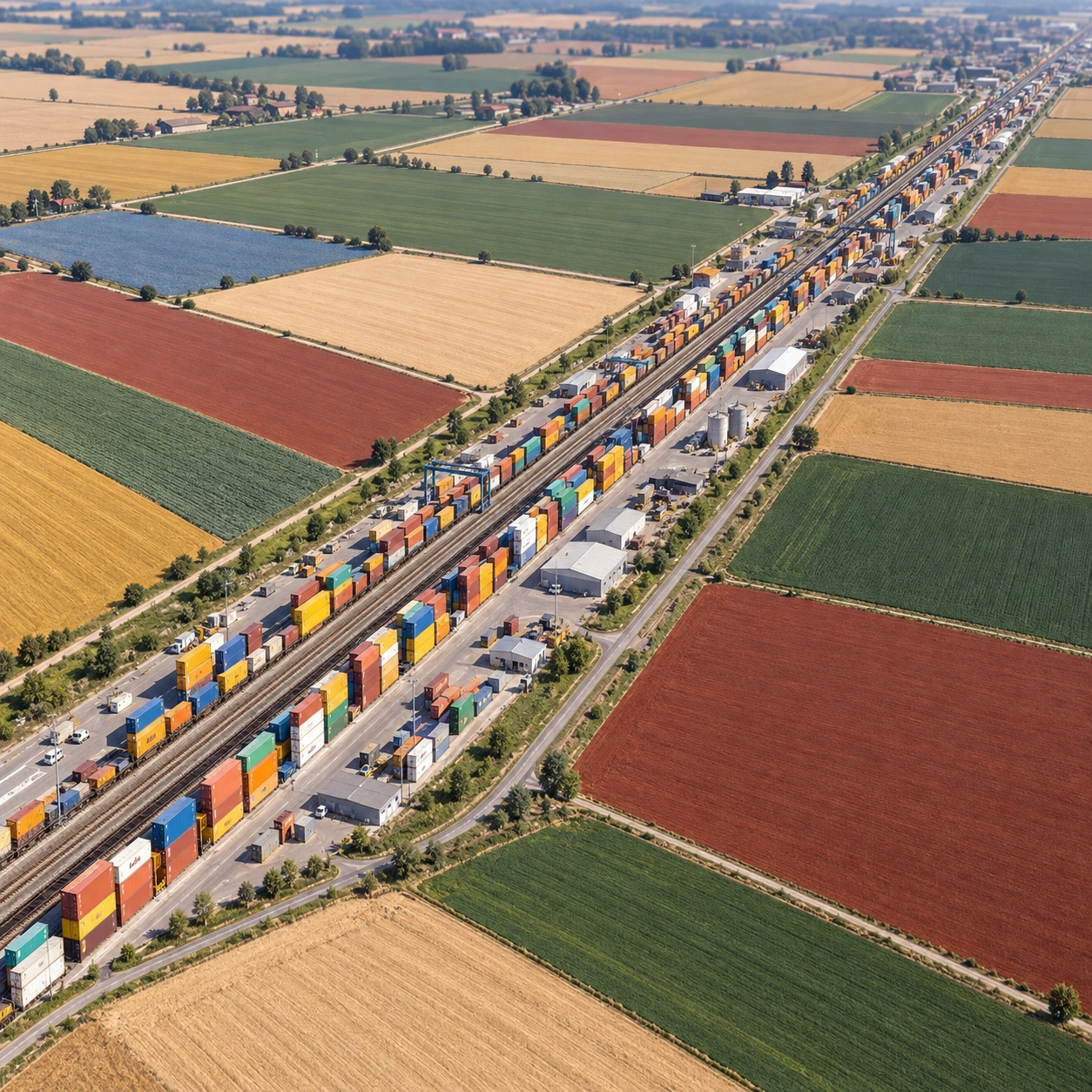 GPT Image 2.5
Reference details
- Reference ID
- 1932
- Category
- Photography
Reference prompts
Style prompt
Oblique aerial photography transforms a large real surface into a graphic network of long strips, repeated small rectangles, and one dominant diagonal axis. Warm clear daylight gives color blocks crisp boundaries and modest short shadows, while distance softens slightly toward the top. Ocher, tan, dusty blue, muted green, rust, and brighter primary accents form a patterned mosaic. Keep enough three-dimensional detail in repeated units to prevent the view from becoming pure abstraction. The composition balances systematic order with tiny irregularities, revealing scale through accumulation rather than people.Full example prompt
A square aerial photograph looks obliquely over a long transport corridor cutting diagonally through a patchwork of agricultural fields. The route enters from the lower left and runs toward the upper right, almost dividing the frame into two colorful halves. Along its edges, tightly packed rows of freight containers and small industrial structures make a bright ribbon of repeated rectangular units. Their sides alternate in yellow, orange, blue, green, white, and rust. On both sides of the corridor, broad fields form an ordered mosaic of long geometric strips and larger rectangular plots. Some are pale tan or cream, others dusty blue, muted green, red-brown, or ocher. Thin service roads and straight boundaries separate these color blocks. The camera is high enough that people are absent and individual objects become graphic marks, yet low enough that container stacks cast short shadows and reveal volume. The upper fields soften into a slight atmospheric blur, while the near sections retain sharper detail. Daylight is clear and warm, enriching the saturated container colors and defining their edges without harsh black shadows. The composition depends on repetition and scale: a single strong diagonal axis intersects many perpendicular and parallel field lines. Buildings near the route look small and rhythmic rather than monumental. The picture reads first as a carefully organized abstract grid, then resolves into land use, transportation, and storage. Its restrained aerial perspective turns ordinary infrastructure into a vivid pattern of movement and color.