
Styles
#1949
Rammellzee style reference and prompts
Explore the “Rammellzee” reference with scratch-like marks and asymmetric composition. View the images, copy the style or example prompt, and discover related styles on Looksift.
Compare the Qwen Image 2.1 and GPT Image 2.5 examples, choose the visual qualities you want, and copy the style prompt for your own project.
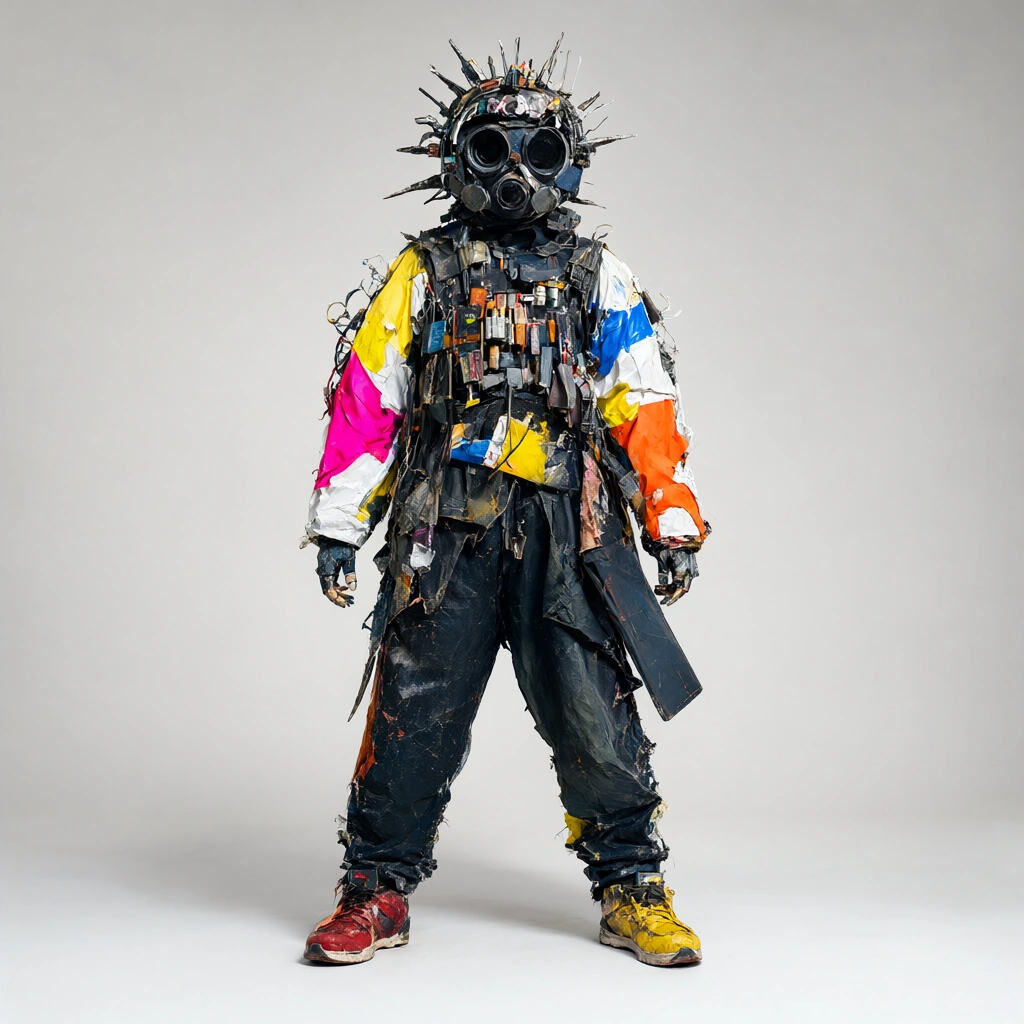 Qwen Image 2.1
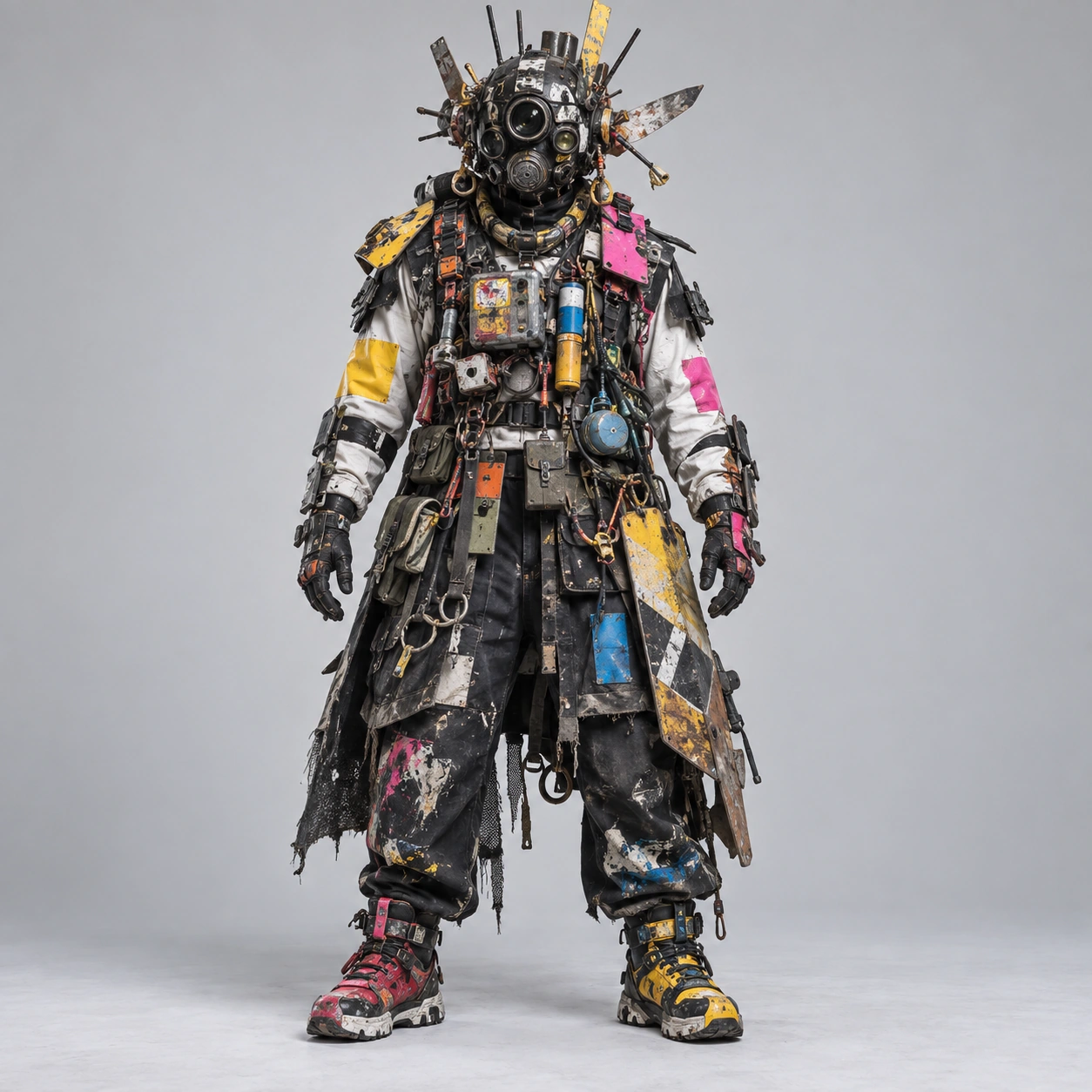 GPT Image 2.5
Reference details
- Reference ID
- 1949
- Category
- Photography
Reference prompts
Style prompt
Studio photography isolates a densely assembled irregular silhouette against an almost empty neutral field. Build the visual surface from layered painted fragments, frayed textiles, straps, protrusions, and small mismatched components, leaving scratches and construction seams visible. Use black and dirty white as a base, then place vivid hot pink, yellow, orange, cyan, and red accents in uneven scattered bursts. Even high studio light reveals each raised piece and casts only a mild grounding shadow. Keep the outline legible from a distance despite the dense internal noise; long spikes or rods can punctuate the upper edge while heavier pieces anchor below. The transferable effect is confrontational and inventive, driven by found-material texture, maximal layering, asymmetrical detail, and a clean presentation ground.Full example prompt
A square studio photograph presents a single full-length costumed figure standing frontally against a seamless pale gray background. The figure is centered with legs apart and arms relaxed slightly away from the body. A large helmet or mask conceals the entire face. The dark front contains several circular lens-like openings and protruding round parts, while thin rods, spikes, and blade-shaped fragments project from the top and sides of the head. Layers of jackets, straps, panels, and hanging objects cover the torso. White sleeves are interrupted by bright yellow, hot pink, orange, blue, and black patches; a crowded set of small rectangular and cylindrical pieces sits across the chest. The lower half consists of loose dark trousers or layered fabric panels, coated with splashes and frayed edges. A large angular piece hangs along the right side, and both shoes have multiple color accents, one more reddish and the other more yellow. No bare skin is visible. The surface appears assembled from painted plastic or metal fragments, textiles, tapes, and cables, with scratches and uneven edges kept visible. The pale floor under the shoes has a faint diffuse shadow. Even studio lighting from above and slightly left reveals the many raised pieces without dramatic background shadows. The silhouette is roughly human but enlarged and irregular because of its projecting components. The sparse gray setting isolates the complex wearable structure, so the eye can travel from spiky headgear through layered chest objects to the mismatched shoes.