
Styles
#1960
Massimiliano Fuksas style reference and prompts
Explore the “Massimiliano Fuksas” reference with fine linear detail, cool blue-gray tones, and window-grid light and shadow reflected on the floor. View the images, copy the style or example prompt, and discover related styles on Looksift.
Compare the Qwen Image 2.1 and GPT Image 2.5 examples, choose the visual qualities you want, and copy the style prompt for your own project.
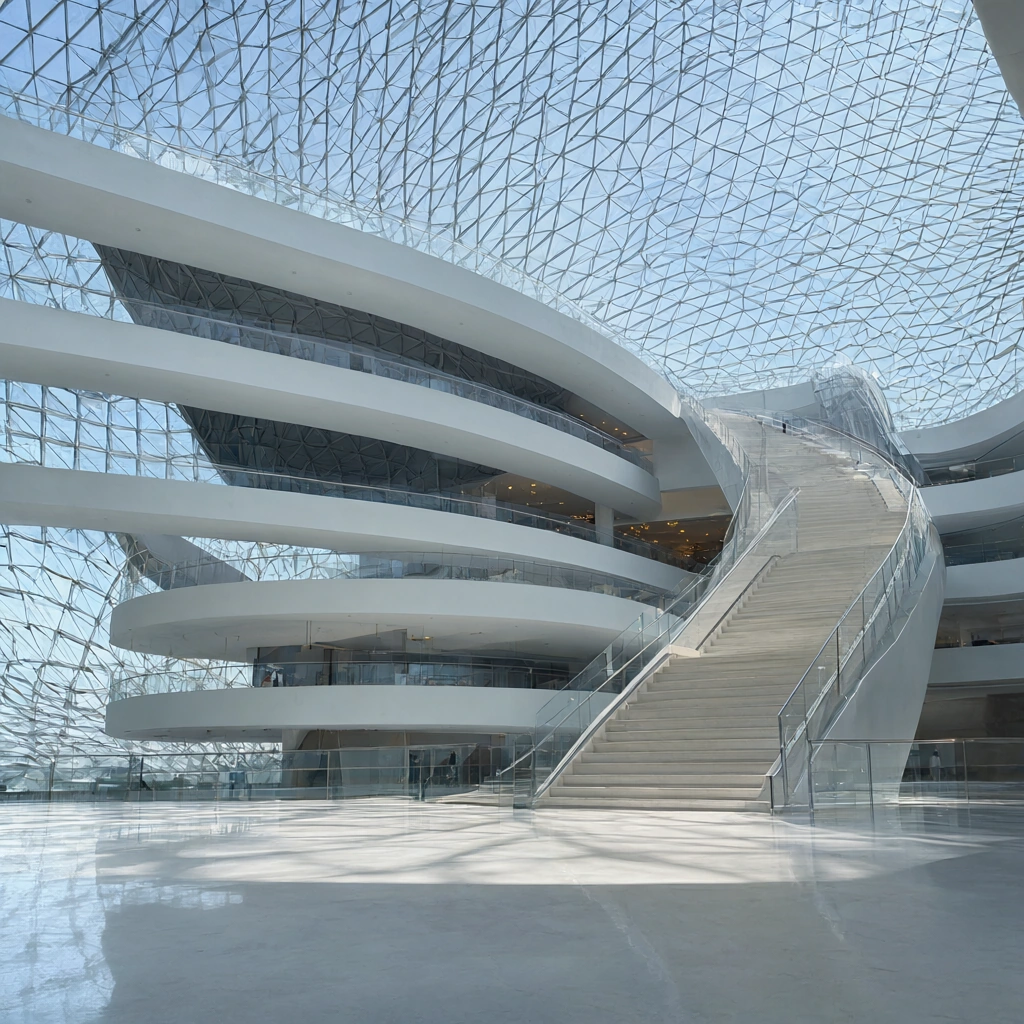 Qwen Image 2.1
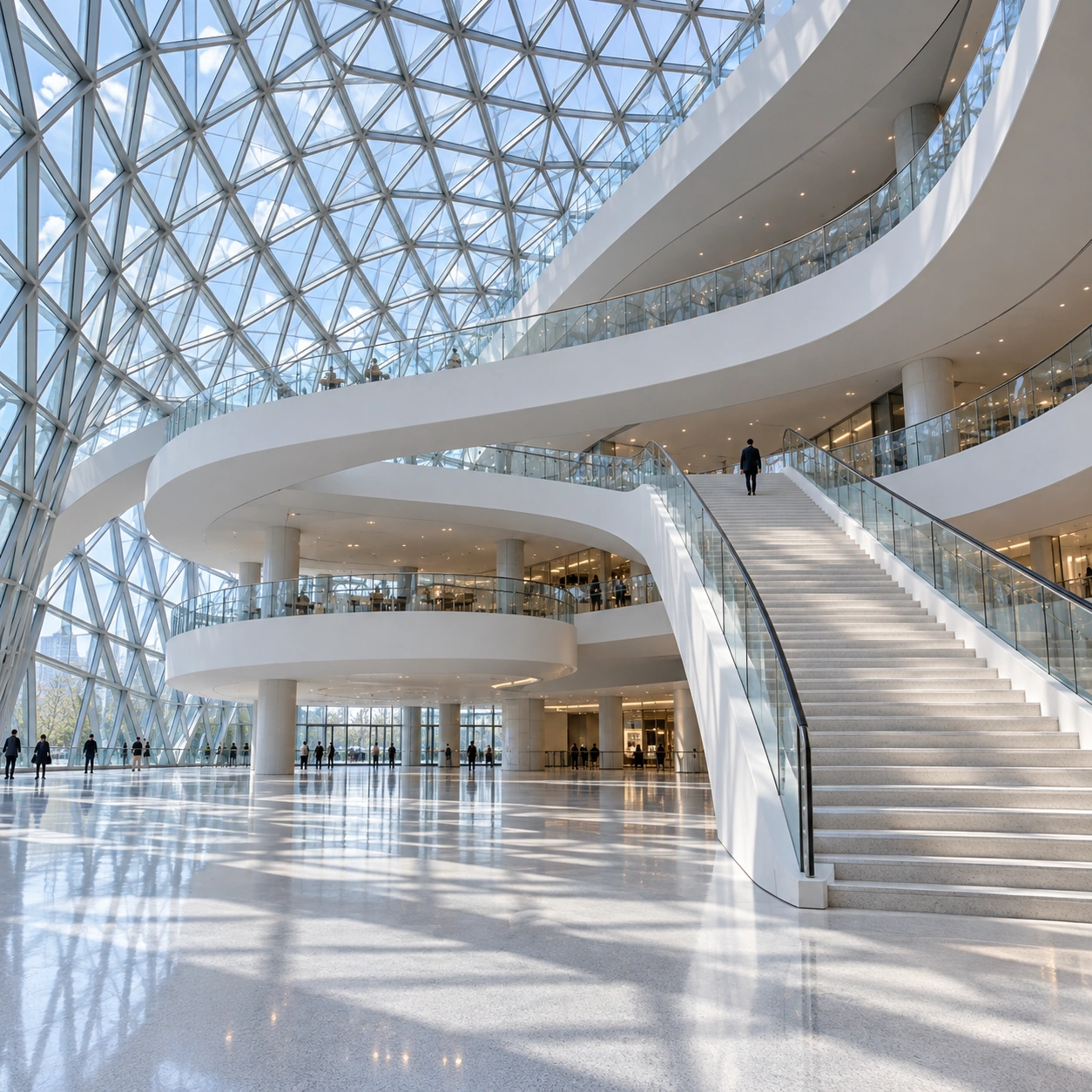 GPT Image 2.5
Reference details
- Reference ID
- 1960
- Category
- Photography
Reference prompts
Style prompt
Photography renders large volumes through sweeping pale curves set against a fine angular grid. Broad matte white planes carry most of the visual weight, while translucent blue-gray areas and dark hairline divisions keep their edges readable. Smooth reflective surfaces catch fragmented bands of daylight; shaded recesses stay cool and subdued, with sparse warm points in deeper layers. Generous open areas alternate with closely repeated triangular lines, creating a rhythm that is both flowing and precise. A low, slightly upward viewpoint lets overlapping planes reveal depth without losing the clarity of their silhouettes. The overall treatment is airy, cool-toned, and spatially layered, with light, transparency, and reflection defining volume.Full example prompt
The image is a square architectural photograph of a luminous interior atrium, where white sweeping balconies and a broad staircase rise beneath a faceted glass roof. A pale blue-gray daylight fills the background and passes through the dense triangular grid overhead. At the upper left, the glass lattice and its slender metal ribs converge across a high vaulted surface, while several thick white horizontal curves cross in front of it. These rounded levels overlap without becoming solid walls, so the spaces beneath them remain visible through broad openings and glass balustrades. Across the center, a large white balcony bends from left to right; a smaller curved platform sits below it, and distant interior openings show warm yellow points of light. On the right half, the stair climbs diagonally toward the upper center, its wide pale treads bordered by clear glazing and thin dark rails. A single small dark figure stands near the top of the stair, giving scale to the unusually broad structure. Farther back, other tiny figures occupy the open floor and the lower levels, but the architecture remains the clear subject. In the lower left and middle foreground, glossy pale flooring reflects the window grid as broken bands of cool light and shadow. The floor's smooth finish and the transparent guards contrast with the matte white undersides of the balconies. Daylight enters primarily through the roof and the left side, striking the stair and floor more strongly than the recessed spaces beneath the platforms. The resulting shadows follow the diagonal ribs and steps rather than forming a uniform gray wash. The camera looks upward slightly from the main floor, allowing the branching geometry of roof, balconies, and stair to fill nearly every edge while a narrow route remains open through the middle. The overall composition uses translucent blue-gray light, crisp structural lines, and broad white curves to make a layered yet airy interior feel expansive.